
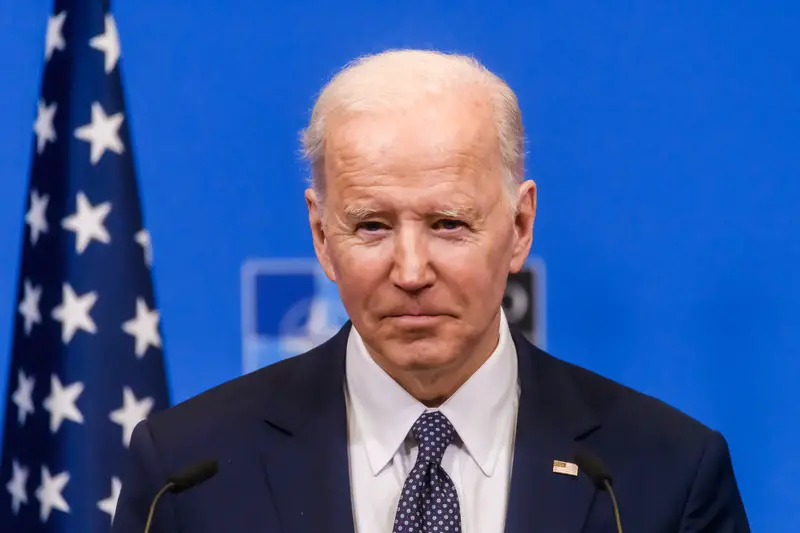
Former President Joe Biden lost his fight to keep sealed the audio recordings and transcripts of the interviews he gave the ghostwriter who helped produce his memoirs, and the material has been public since July 27, 2026. A divided three-judge panel of the D.C. Circuit, the federal appellate court that sits in Washington, refused by a 2-1 vote to block release, ruling late on July 20 in a decision reported the next day. The material was gathered during a criminal investigation that ended without charges.
The panel stopped short of turning the tapes loose right away. It put its own decision on hold until August 3, leaving Biden room to weigh another appeal. The public holds a substantial stake in the material, the majority reasoned, and much of what is personal in the recordings would be shielded by redactions already applied to them.
A Divided Panel in Washington
The majority, in an unsigned opinion, consisted of Judge Gregory Katsas and Chief Judge Sri Srinivasan. “We conclude that any remaining incursion on personal privacy from disclosure of the now-redacted materials likely does not outweigh the public interest in disclosure,” the ruling says.
Someone investigated but never charged normally holds a strong privacy interest in not being publicly identified as a target, the two judges acknowledged. In this instance, though, the special counsel’s appointment and the purpose of his inquiry had already been announced by the Justice Department, they wrote, and the alleged retention and disclosure of classified material for which Biden had been examined was set out at length in the resulting report. That interest is likely to be served by releasing the recordings, the majority found, because they would help the public understand and evaluate how the special counsel reached his conclusion.
Srinivasan owes his seat to then-President Barack Obama, the Democrat who chose Biden as his running mate and vice president. Katsas was put on the court by President Donald Trump, whom Biden defeated in 2020 and who retook the White House in 2024.
Pan Dissents on Privacy Grounds
Judge Florence Pan, nominated by Biden, dissented. “In my view, Biden has shown a substantial privacy interest,” Pan wrote. She noted that the conversations happened inside Biden’s home and that the government came into possession of the recordings through a criminal investigation that produced no indictment.
She also warned about the practical effect of the majority’s order. Refusing an injunction while the appeal proceeds, she argued, resolved the question for immediate disclosure and paved the way for conversations no one disputes were private to come out prematurely — an outcome that, she wrote, would render the case moot.
How the Tapes Reached the Government
Biden sat for the interviews at his residence during 2016 and 2017, the years before he won the presidency, with Mark Zwonitzer, the writer who worked with him on the 2007 memoir “Promises to Keep” and the 2017 memoir “Promise Me, Dad.” Personal subjects came up candidly in those sittings, his attorneys say, and Biden’s understanding was that the recordings would stay strictly between the two of them.
The recordings reached the government through Special Counsel Robert Hur, whose inquiry looked at Biden’s handling of classified documents dating from his years as a Delaware senator and from a vice presidency that concluded in 2017, and ended with no charges filed. The ghostwriter sessions featured heavily in Hur’s 2024 report, which called the recorded conversations “painfully slow, with Mr. Biden struggling to remember events and straining at times to read and relay his own notebook entries.”
The Heritage Foundation, a conservative think tank, filed a public records request for the underlying material Hur had used soon after the report was made public, and congressional Republicans pushed for it as well. Biden went to court for an injunction that would stop Trump’s Justice Department from turning the recordings over to the think tank and to members of Congress; the department had earlier taken the position that the recordings were not subject to public records law.
Whatever privacy interest Biden still held in the material was outweighed by the public interest, U.S. District Judge Dabney Friedrich, a Trump appointee, ruled on June 19. Biden appealed. On July 10 the D.C. Circuit panel granted a short administrative injunction; the freeze on any release was to run 10 days and lapse at 11:59 p.m. on July 20, and the panel cautioned that it was purely procedural — time to examine the emergency motion, and no indication of how the case would come out.
Biden’s Team Alleges Political Payback
“President Biden’s conversations for a book a decade ago that discussed his late son are private, and were provided to the Department of Justice on the express condition they stay that way,” Biden spokesperson T.J. Ducklo said in a statement. “Reversing course and making them public is just the latest example of this Administration weaponizing the DOJ for political retribution. It’s wrong, and while President Biden disagrees with today’s decision, he also respects the courts and the vital role an independent judiciary plays in a healthy democracy.”
The Supreme Court never heard the fight; Biden dropped the suit instead. On July 27 the Oversight Project, an arm of the Heritage Foundation, put the material out as audio and heavily redacted transcripts. “I just found all the classified stuff downstairs,” Biden says in a session recorded on February 16, 2017, in which he also refers to a 40-page memorandum he wrote urging President Barack Obama against sending more troops to Afghanistan. “Some of this may be classified, so be careful,” he says in an April 24 session. “I’m not sure. It’s not marked classified.” He struggles at points to fix dates and details. Jeff Clark, the Oversight Project’s vice president of litigation, said the recordings show Biden “clearly gives away secret after secret to someone not authorized to hold such secrets.”
A new Biden memoir, “Promise Me, America,” is due November 17 from Little, Brown and Company, after the midterm elections.