
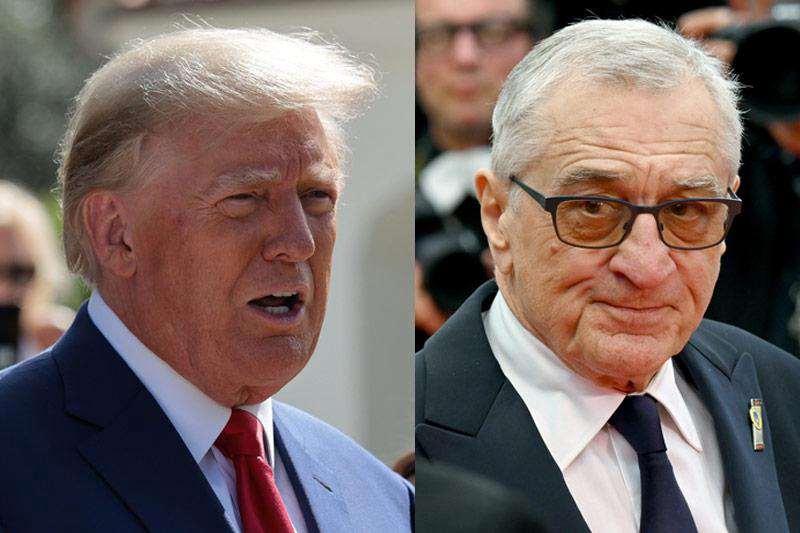
Oscar-winning actor Robert De Niro delivered sharp criticism aimed at President Donald Trump during a speech on June 3, 2026, at the opening night of the Tribeca Festival, though he never mentioned the president by name. Speaking to a packed audience at the Beacon Theatre before the premiere of Ahmir “Questlove” Thompson’s documentary on Earth, Wind & Fire, De Niro made clear who his target was when he paused and told the crowd: “You know who I’m talking about.”
The 82-year-old actor, who co-founded the New York festival in 2002 in the aftermath of the Sept. 11 terrorist attacks, condemned what he called “monstrous leaders” who “are trying to force us apart for their own immoral, cruel and corrupt purposes.” He contrasted this with the festival’s mission to “pull people together.” The sold-out crowd understood the reference immediately, and the moment landed with force.
The Festival’s Founding Mission
Festival co-founder and producer Jane Rosenthal reflected on the founding spirit during opening night, saying she never thought the festival would still be running 25 years later. De Niro framed his criticism of Trump through that founding mission, the idea that art exists to unite communities rather than divide them.
The festival, now in its 25th year, runs in venues across New York City. For De Niro, the message was that the cultural institutions he helped build remain a counterweight to what he sees as an administration hostile to the arts.
A Long History of Political Broadsides
The June 3 remarks marked the latest chapter in a years-long war of words between the actor and the president. De Niro has variously branded Trump an “existential threat to our freedoms and security,” a “philistine president,” a “monster,” a “tyrant,” a “jerk” and a “clown.” For his part, Trump has repeatedly lashed out at De Niro on social media with increasingly heated rhetoric.
De Niro’s public clashes with Trump stretch back nearly a decade. One month before the 2016 election, the “Raging Bull” star declared he would like to punch Trump in the face. In January 2018, accepting an honor at the National Board of Review’s gala, he called the president a “jerk” and a “clown.” That May, while promoting “The Wizard of Lies,” he escalated again, declaring that “America is being run by a mad man” and comparing the president to “Colonel Sanders’ fried chicken.”
At a Tribeca Film Festival lunch event for journalists on April 18, 2018, De Niro delivered one of his most memorable lines, telling the room of reporters that their work was difficult enough “without being attacked by our low-life-in-chief.” He praised the press as “our saviors” and urged cultural institutions to “show that we’re open to ideas different than ours” — a refrain that echoed through his remarks on June 3. Weeks before Tribeca, De Niro also appeared on the penultimate episode of Stephen Colbert’s “The Late Show” — which ended its run on May 21, 2026 — and drew loud applause with a quip that 2.5 million was “the number of Epstein files Trump still hasn’t released.”
From Cannes to Tribeca
The Tribeca speech also recalled De Niro’s most internationally watched political broadside, delivered on May 13, 2025, when he received an honorary Palme d’Or at the opening ceremony of the 78th Cannes Film Festival in Cannes, France. Accepting the award from actor Leonardo DiCaprio inside the Grand Théâtre Lumière, De Niro labeled Trump “America’s Philistine president” and slammed his decision to appoint himself head of the Kennedy Center and to impose a 100 percent tariff on films produced outside the United States.
“In my country, we are fighting like hell for the democracy we once took for granted,” he told the Cannes audience. “That affects all of us here, because art is the crucible that brings people together, like tonight. Art looks for truth. Art embraces diversity. That’s why art is a threat. That’s why we are a threat to autocrats and fascists.”
The Cannes speech ended with a rallying cry to “organize, to protest, and when there are elections, vote.” That ceremony, hosted by French actor Laurent Lafitte, also paid tribute to politically engaged screen icons including James Stewart, Jean Gabin, Josephine Baker, Marlene Dietrich, Richard Gere, Isabelle Adjani, Taraneh Alidoosti, Rock Hudson and Adèle Haenel, and paid tribute to Ukrainian President Volodymyr Zelensky among other figures of courage.
A Familiar Feud Reignited
While De Niro declined to name the man in the White House on June 3, the audience inside the theater — and the millions who would see the clip circulate online — understood exactly who was on the receiving end.
History shows Trump always responds. In late February 2026, after De Niro appeared on MSNBC’s Nicolle Wallace podcast urging Americans to “resist, resist, resist,” Trump fired back on Truth Social, calling the actor “a sick and demented person with an extremely Low IQ” and suggesting he should “get on a boat” out of the country — despite De Niro being a U.S. citizen born in New York. The two men have been trading verbal blows since before Trump’s first term, and De Niro, now well into his ninth decade, has shown no interest in stepping away from the fight.