
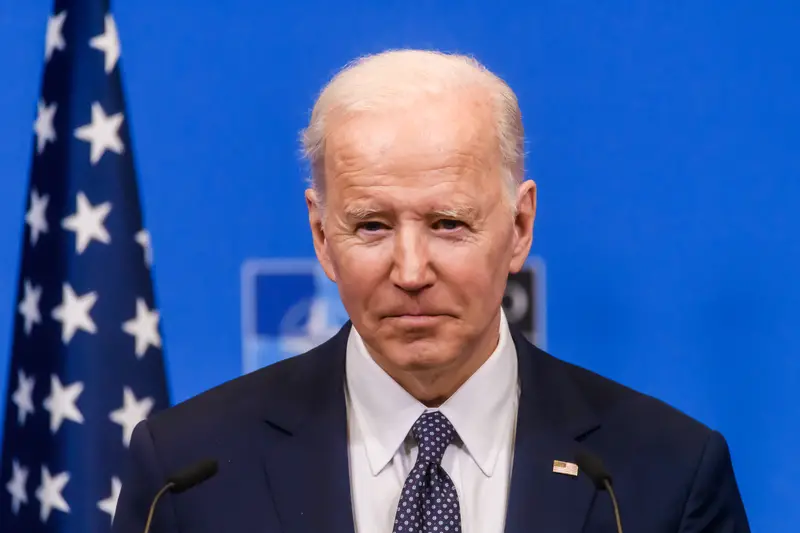
A former president who has spent years shielding audio recordings that captured his memory struggles is now turning to federal court to keep those tapes out of public view, filing a sweeping lawsuit against the Justice Department that demands a judge halt their planned disclosure.
Joe Biden sued the Justice Department on May 26, 2026, challenging a decision by the department to release both audio recordings and transcripts of private conversations to the Republican-led House Judiciary Committee and the Heritage Foundation. The handover is scheduled for June 15.
The recordings at issue document conversations Biden held with Mark Zwonitzer between 2016 and 2017. Zwonitzer served as the ghostwriter for Biden’s memoir “Promise Me, Dad: A Year of Hope, Hardship, and Purpose,” and the tapes were made during and after Biden’s time as vice president under Barack Obama. Special counsel Robert Hur later obtained the materials as part of his investigation into Biden’s handling of classified documents.
Memory Lapses That Derailed a Presidency
Hur, a Republican appointed by Attorney General Merrick Garland to serve as special counsel, questioned Biden for five hours in the days following the Oct. 7, 2023, Hamas attack on Israel. The resulting 388-page report, released in February 2024, found that Biden had “willfully retained and disclosed classified materials after his vice presidency when he was a private citizen,” including records related to military and foreign policy in Afghanistan.
But Hur did not file charges. Instead, he described the then-81-year-old president as “a sympathetic, well-meaning, elderly man with a poor memory,” a characterization that set off a political firestorm and intensified scrutiny of Biden’s capacity to govern. Biden ultimately exited the race and threw his support behind Vice President Kamala Harris, who went on to lose to Trump and JD Vance in November.
Biden mounted a forceful defense at a February 2024 press conference, insisting, “My memory is fine” and noting that the Hur interview occurred while he was “in the middle of handling an international crisis.” A portion of the audio surfaced in 2025, drawing renewed attention to questions about his memory.
A Reversal Inside the Justice Department
The department had long resisted disclosure of the recordings, maintaining they were shielded by exemptions in the Freedom of Information Act. That stance has now evaporated. In the complaint filed by Biden attorney Amy Jeffress, the suit alleges that the department has reversed that position under President Trump.
In February 2026, the Justice Department informed Biden’s lawyers it planned to turn over the audio and transcripts to plaintiffs in the Freedom of Information Act (FOIA) lawsuit filed by the Heritage Foundation. On May 5, the Office of the Deputy Attorney General made the decision official: the materials would go to the Heritage plaintiffs and to Congress on June 15, with limited redactions.
The lawsuit, filed in federal court in Washington, D.C., has been assigned to Judge Dabney Friedrich, a Trump appointee, and charges that the reversal came without formal justification and violates fundamental privacy safeguards. “President Biden—like every American—has a right to privacy in personal conversations he had within his own home,” the suit asserts, describing the planned disclosure as an “unwarranted invasion of President Biden’s privacy.” Biden’s attorneys warn that without a court order, deeply personal recordings made during the preparation of his memoir will become public within weeks.
Heritage Foundation Pushed for Records
Earlier in May, Biden sought to intervene directly in the Heritage Foundation’s FOIA lawsuit, but a judge allowed him to join the case only in part, barring him from pursuing claims related to the congressional request — a limitation that helped prompt the May 26 standalone filing. The Heritage Foundation submitted its FOIA request in 2024, targeting the underlying records behind the most damaging portions of Hur’s report. Those sections described the interview as “painfully slow, with Mr. Biden struggling to remember events and straining at times to read and relay his own notebook entries.” The transcript revealed Biden at times unclear about dates and details, and admitting he was unfamiliar with the paper trail surrounding some sensitive documents he had handled.
The Republican-controlled House voted in 2024 to hold Garland in contempt of Congress after the White House invoked executive privilege to block lawmakers from obtaining the audio. Republicans used the report to claim Biden was receiving special treatment from his own Justice Department.
A Justice Department spokesperson defended the decision to release as a corrective measure. The prior administration, the spokesperson said, tried to hide audio recordings that the current Justice Department believes demonstrate a significant decline in Biden’s cognitive abilities as far back as 2016. The spokesperson added that Trump’s Justice Department would fight to ensure the American people can hear these recordings and draw their own conclusions about the former president’s mental acuity before he sought the presidency.
An Echo of the Trump Documents Case
The dispute plays out amid considerable irony. Trump faced his own investigation by special counsel Jack Smith over classified documents taken to his Mar-a-Lago estate in Florida, a case that was ultimately dismissed by Judge Aileen Cannon. Trump has repeatedly called Biden a Crooked Politician over his document handling.
Jeffress noted in the filing that the Zwonitzer recordings span a period starting at Thanksgiving 2014, described as “among the most consequential of President Biden’s political life and the most painful of his personal life,” alluding to the death of his son Beau. The suit emphasizes that the Justice Department obtained the material solely because it opened a criminal investigation.
Biden, 83, has maintained a limited public schedule since departing the White House, with his most recent appearance coming at a Chicago tribute for civil rights leader Jesse Jackson on March 6. Without judicial intervention, the recordings he has fought for years to protect will be delivered to his political opponents on June 15.