
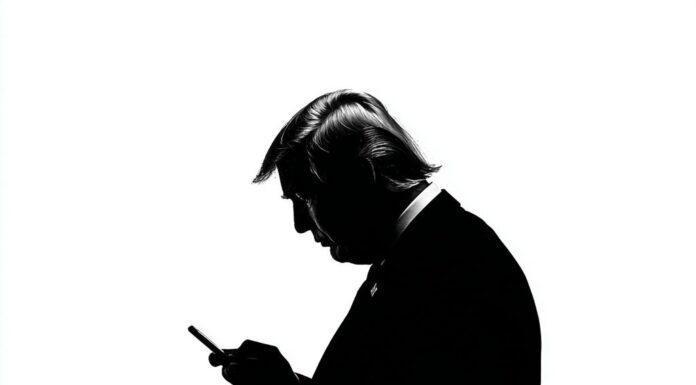
On Aug. 5, 2026, an extended tirade on Truth Social saw President Donald Trump lash out at documentary filmmaker Michael Moore, calling him a “LOWLIFE” and a “Loser” in a personal barrage that came amid slumping presidential approval numbers ahead of the midterm elections.
The confrontation stems from Moore’s call for progressives to seize control of the Democratic Party from its establishment wing. In an Aug. 4 appearance on CNN, the Oscar winner argued that his party needed to begin winning again, expressing dissatisfaction with its current direction.
Hours later, the president responded with venom. “No Michael, just get used to more losing! You’ve been a Loser all your life, and nothing’s going to change,” Trump wrote.
Senate Primary Victor Dragged Into Feud
The president’s vitriol wasn’t confined to Moore alone. Abdul El-Sayed, fresh off a Democratic Senate primary victory in Michigan the previous day, was swept into the onslaught. Trump characterized El-Sayed and Moore as aligned political forces, suggesting the Senate candidate viewed the filmmaker as a failure.
Trump’s lengthy post grouped the two Michigan figures, suggesting neither could succeed in their political aims. The president’s message ended with a vow to confront Moore “on the Political Battlefield.”
The attack relied on a label Trump has deployed with growing frequency: calling Democratic opponents communists. Neither Moore nor El-Sayed embraces that ideology, but the president has made the accusation a centerpiece of his partisan messaging and has encouraged fellow Republicans to follow suit.
Political Pressure Mounts on White House
Trump’s outburst arrives at a precarious moment for his administration. Current polling suggests Democrats are favored to capture the House of Representatives this fall, with the Senate potentially in play as well. At the same time, the president’s approval rating has been falling steadily, battered by an unpopular conflict in Iran and a grinding affordability crisis affecting American families nationwide.
Yet Trump used his social media blast to celebrate what he described as historic economic success. He labeled the current period the “Golden Age of America” and insisted that Moore, El-Sayed, and similar detractors would fail to stop the country’s momentum.
The clash between Trump and Moore is far from fresh. The filmmaker, who has built a career around provocative documentaries, has spent years cautioning audiences never to underestimate the president’s political acumen, while maintaining a posture of fierce opposition.
What makes this confrontation distinct is the environment in which it unfolded. Moore’s television remarks were aimed inward, at his own party’s leadership struggles, rather than directly at the White House. By launching a counterattack and dragging a Senate primary winner from a swing state into the fray, Trump elevated an internal Democratic argument into a national spectacle.
The political calculus behind the president’s move is clear: branding adversaries as extremists has become his signature approach as midterm contests loom. For Moore, the public sparring offers the kind of high-profile confrontation he has cultivated throughout his career. And for progressive Democrats, the episode underscores that their internal struggle for party control has captured the attention of the man in the Oval Office, with the fall elections fast approaching.