
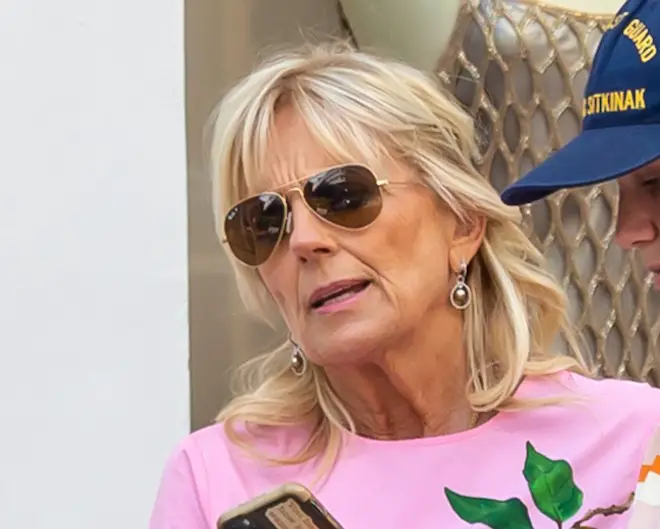
At a packed Washington venue on June 3, 2026, former First Lady Jill Biden confronted Democratic critics of her recently published White House memoir, issuing a direct challenge to one former staffer who publicly questioned her decision to revisit the painful events of 2024.
The former first lady appeared at the Sixth & I Synagogue for her second promotional appearance for “View from the East Wing,” sitting down with Paola Ramos, an MS NOW contributor and journalist who previously worked in the Obama White House. During the conversation, the 75-year-old Biden addressed backlash from Andrew Bates, a deputy press secretary during the Biden administration, who had questioned why she chose to reopen wounds still fresh for party members.
“I want to say to Andrew: Call me up, and say it to my face, buddy,” Biden told the audience.
Bates had expressed confusion to journalists about reopening such raw territory, stating that Democrats “had a duty to win and we didn’t.” Biden pushed back, noting that only a single chapter addresses the political upheaval while the rest documents her four-year tenure in the East Wing.
Debate Night Mysteries
Central to the controversy are Biden’s recollections of the June 27, 2024, debate in Atlanta, where President Joe Biden’s stumbling performance against Donald Trump set in motion his exit from the race. During promotional appearances, Biden has revealed she felt frightened while watching 83-year-old Joe Biden and questioned whether he had experienced a stroke.
She told Ramos she still cannot explain what occurred that evening, emphasizing it was not about concealment. Biden explained she had been campaigning elsewhere while her husband prepared at Camp David, so they did not see each other beforehand. She added that touring to promote the book meant watching the footage over and over as interviewers kept asking about it, despite her desire never to view it again.
In the memoir, she describes dismissing her stroke concerns after talking with him and concluding he was fine. She also wrote that she wondered if someone had drugged him. Her deeper worry, she has said, centered on how viewers would perceive what unfolded on stage.
Biden has characterized what she observed as normal aging rather than serious decline, saying her husband moved more slowly and his stutter became more noticeable when fatigued. A skeptical New Yorker assessment pointed out how little the book dedicates to justifying her version of events, treating the debate mostly as unexplained while portraying her White House experience as magical and comparing it to living inside a snow globe.
Defending Her Candor
Biden positioned her frankness as rooted in personal values, drawing parallels between her approach with 83-year-old Joe Biden and the direct feedback she provided as a community college professor. She explained she speaks truthfully with her husband because others will not, applying that same standard to her grandchildren. She said she aims to help people improve, not harm them.
Democrats have increasingly scrutinized Biden’s influence on her husband’s choice to pursue a second term despite worries about his physical and mental fitness. The memoir and accompanying publicity campaign have intensified rather than quieted those questions, provoking sharp responses from within the party.
Ultimately, Biden has presented herself not as a political operative but as a devoted partner acting on instinct. She has described finding joy during her East Wing tenure, from continuing to teach to international trips. Her justification rests on fidelity above all: she loves Joe, she is his wife, and she stands by him regardless. Whether that stance will ease lingering Democratic frustration over 2024 is uncertain.