
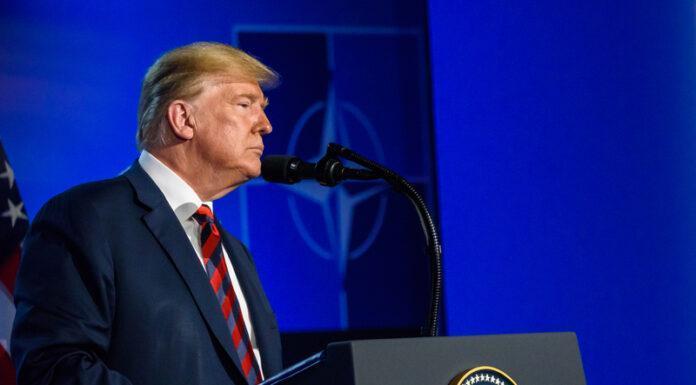
President Donald Trump has survived two impeachments, and he is betting the Democrats who just took Congress will not go for a third.
Trump made that prediction to CBS News “60 Minutes” correspondent Ross Douthat in an interview taped at the White House on Friday, Nov. 6, 2026, and broadcast Sunday, Nov. 8 — his first sit-down since the midterm elections on Nov. 3. Douthat asked whether Democrats would try to impeach him once they run the House and Senate. Trump replied, “I can’t imagine it, you know?”
He went on to defend his record. Trump said, “What have I done? I’ve had the best two years in the history of the presidency.”
Trump raised the earlier impeachments himself, noting that Democrats “impeached me twice” and that some people think it “worked out to my advantage.” An impeachment vote in the House came in December 2019, followed by an acquittal in the Senate in February 2020. The riot at the Capitol on Jan. 6, 2021 led to a second impeachment by the House, and the senators acquitted him once more in February 2021.
Both chambers fell to Democrats on Nov. 3, and the party also captured statewide offices in dependably Republican territory — Texas, Kansas and South Carolina among them — places where decades had passed without such wins. Those new majorities assume control in January 2027, and some Democrats have already called for investigations and subpoenas of Trump administration officials. Impeachment should not be the focus of the incoming Congress, according to Kamala Harris, the former vice president.
Douthat asked whether Trump could still work with Democrats while they investigate his administration. “Well, I did it for four years,” Trump said. Deals with the new majority would come “very easily,” he added, and when Douthat asked whether he could manage it without insulting Democrats, Trump said he could.
Too Tough on Deportations
Trump named immigration as an area where he wants to work with the Democratic majority, and as the policy that “both helped and hurt” Republicans at the polls. His deportation policy had been too tough, he told Douthat, and may have cost Republicans votes.
Trump said, “I think I got an A+ for closing up the border. I get very high marks for getting the bad ones out. But I get hurt because we also took people that had good jobs, that created one violation or breaking of the law, and that was that they came into the country illegally.”
The War Voters Felt at the Pump
Trump’s explanation for the defeat started with his own absence from the ballot. He campaigned hard anyway, he said, holding about 30 rallies in roughly 28 days, and he argued the outcome would have looked different with his name on the ballot. Voters who turn out for him, he said, do not transfer to candidates they didn’t like.
Douthat noted that the president himself had picked many of those candidates. Among them were Ken Paxton in Texas and Darline Graham in South Carolina, whose heavily Republican state went to a liberal challenger. Graham fought hard, Trump said. Ohio Republican Jon Husted was 15 points down and ended up losing by about a point, Trump said.
Gasoline sold for $1.85 a gallon in Iowa before climbing to $3.50 or $4, he said, and voters blamed the Iran war for the increase. He said he has settled eight wars. Trump told Douthat, “And there’s a great dislike, incredibly, for Israel.”
Vice President JD Vance posted an assessment after the election calling the war the reason Republicans lost, and Trump said he does not disagree with him. The economy is strong, Trump said, blaming sour public sentiment on poor messaging, possibly his own. The strike on Iran was one he still defended, calling it a decision that will look good historically even if it did not look good at the polls.
Corruption, Ukraine, artificial intelligence and Trump’s own mortality all came up as the conversation ranged well past the election. Beating China in artificial intelligence justifies the risks, he argued. He saw no reason to escalate the war with Iran now, he said, because the country’s nuclear material is buried under thousands of tons of rock.
Trump said, “And at the end of this whole thing, those countries that we’ve protected are going to pay us back any and all costs that we’ve had for the war, because without us, they wouldn’t exist.” The Strait of Hormuz is effectively open, he said, even though the U.S. military is still policing maritime traffic there.
No Forgiveness Before the Judgment Throne
Douthat, a conservative Catholic writer who wrote the book “Believe: Why Everyone Should Be Religious,” also pressed Trump on forgiveness and the afterlife. He asked repeatedly whether the president could forgive enemies including Nancy Pelosi and former FBI Director James Comey, even “before the judgment throne of God.”
Trump said, “I probably cannot do that, no, because I do hate some of my enemies, and I always will.”
Miller In, Wiles Out
Stephen Miller became the new White House chief of staff about an hour after the interview ended, when Trump named him to replace Susie Wiles, the outgoing chief of staff.
The president said he expects some turnover in his administration. A politics professor at Oklahoma State University, Seth McKee, said the choice of Miller shows the president “doesn’t get it.” McKee said in an email on Monday, Nov. 9, “The best strategy for Trump and Republicans is to make nice with Democrats, given their leverage after the midterms.”