
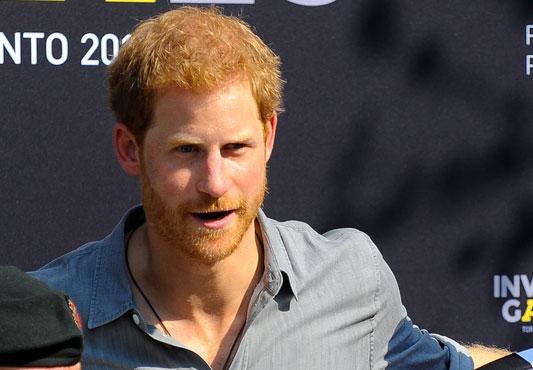
A British court on July 7, 2026, dismissed Prince Harry’s lawsuit against Associated Newspapers Limited, with Mr Justice Nicklin ruling that none of the seven claimants proved their allegations of unlawful information gathering.
The 436-page ruling stated “each of the claimants’ claims is dismissed,” bringing an end to a closely watched case involving Harry and several other high-profile figures who accused the publisher of the Daily Mail and the Mail on Sunday of unlawful information gathering. Associated Newspapers described the ruling as an “overwhelming victory” and a “magnificent vindication of the Daily Mail’s journalism.”
The defeat carries a steep financial cost. Under the English “loser pays” principle, Harry and his fellow claimants face liability for legal costs that have topped £50 million (about $67 million) over the multi-year litigation, and Associated Newspapers has signaled it will seek to recover what it spent defending the claims. A further hearing on costs — and on any application for permission to appeal — is scheduled for July 29 and 30.
Prince Harry and fellow claimant Baroness Doreen Lawrence issued a joint statement calling the judgment “a complete and obvious whitewash” and saying “We came to court seeking justice and accountability. But we have received neither.”
The verdict arrived amid an already tense visit to the United Kingdom for Harry, who just days earlier had learned his invitation to stay at Buckingham Palace had been rescinded after he formally accepted it. His representative confirmed the sudden reversal on Monday, July 6, adding yet another layer of strain between the Duke of Sussex and the royal family.
Court Decision Delivered as Harry Attended Invictus Event
Harry delivered a speech at an Invictus event at Chatham House just minutes after learning of the court decision. Witnesses said he looked visibly shocked and his voice was not as steady as usual during the six-minute speech. His primary reason for traveling to the U.K. without wife Meghan Markle and their children, Prince Archie and Princess Lilibet, was to mark the one-year countdown to the 2027 Invictus Games, which are set to be held in Birmingham. The Invictus Games Foundation, which Harry founded in 2014 to support wounded, injured, and ill servicemembers from around the world, is a cause he has continued to champion since stepping back from royal duties.
Harry is also expected to travel to London for a visit to the Royal Hospital Chelsea during the trip.
The Palace Withdrawal and Security Battle
The accommodation reversal cannot be separated from Harry’s broader, long-running fight over his security in Britain. Harry had initially declined the Palace’s offer of a room because the Royal and VIP Executive Committee (RAVEC) had denied official taxpayer-funded security for Harry and his family. His team spent the better part of early July, 2026, arranging private security alternatives.
Once those arrangements were secured, Harry formally accepted the Palace’s accommodation offer over the weekend — only to be told the offer had been pulled. “Following RAVEC’s decision not to provide security for his family, the Duke spent last week making alternative security arrangements,” the rep said. “Once those arrangements were in place, he was able to formally accept the offer of accommodation for himself over the weekend.”
Harry’s representative said the Palace had been aware since July 2 that the Associated Newspapers judgment would be handed down on July 7. The spokesperson expressed frustration that the timing of the withdrawal, coming after Harry had formally accepted, was never adequately explained.
The Palace offered two explanations. The first was logistical: allocating a room and arranging the necessary staffing requires a minimum level of advance notice, and by the time Harry accepted on Saturday, that deadline had passed. Buckingham Palace has 240 bedrooms in total, 52 of them set aside for royals and their guests. The second explanation pointed to the High Court judgment itself — Palace sources say there were concerns about King Charles appearing compromised in any way on the day a verdict lands in his son’s lawsuit against a major British news publisher.
Why Harry Says He Cannot Bring His Family
The Royal and VIP Executive Committee, which oversees protection for royals and public figures, denied Harry’s formal request for police protection, with the Home Office affirming that Harry’s family would not receive taxpayer-funded police protection during the visit. The security question has become the central reason Harry says he cannot bring his family to his home country.
In a May 2025 BBC interview, shortly after he lost an appeal to restore his security access, Harry said he could not envision bringing Meghan and his children back under current conditions. “I can’t see a world where I would be bringing my wife and kids back to the U.K. at this point,” he told the BBC. The trip had originally been planned as the family’s first visit to the U.K. in four years, but it was announced last week that Harry would be making the journey alone. Whether Meghan, Archie, and Lilibet might join him later in the week for Invictus-related events remains unclear.
Private Accommodation Secured
With the Palace option off the table, Harry will now stay in private accommodation at an undisclosed location. His representative made clear the sequence of events: the offer had been open for some time, the delay in accepting it was driven entirely by the unresolved security situation, and the acceptance came as soon as that situation was resolved. The spokesperson said it remained unclear why, after a formal acceptance, the invitation was then withdrawn at the last moment — particularly given that the Palace had known about Tuesday’s judgment since last Thursday.
Harry was among several high-profile claimants — including Elton John, Sadie Frost, Liz Hurley, and Baroness Doreen Lawrence — who sued the newspaper group. Associated Newspapers has strongly denied the claims. Several claimants testified personally before the High Court earlier this year, and the judgment, delivered more than five months after Harry testified in London, was closely watched by both sides.
The episode adds fresh friction to an already strained relationship between Harry and the institution he left behind. He now faces an emotionally and legally charged week in London — without his family, without Palace accommodations, and with a court verdict that went against him.