
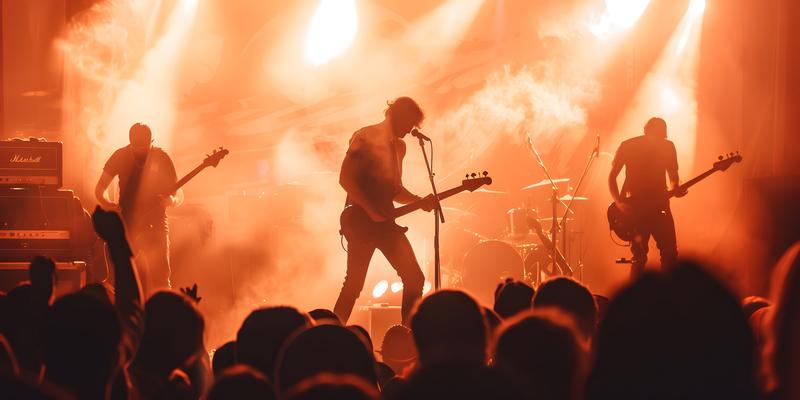
John Mellencamp, the Grammy-winning rocker who has called Indiana home for half a century, brought his on July 25, 2026, performance in Holmdel, New Jersey to a sudden standstill to ridicule President Donald Trump’s executive order rebranding the Gulf of Mexico. The administration’s response on July 27 backfired spectacularly when White House spokesman Davis Ingle dismissed the musician as a member of the Hollywood elite — despite Mellencamp living near Bloomington, Indiana, since the 1970s.
Critics immediately noted the irony of calling the man who penned “Pink Houses” — a song steeped in working-class Midwestern imagery — a coastal celebrity disconnected from ordinary Americans.
The Song, the Gulf, and the Facts
Mellencamp’s choice of battleground was his 1983 anthem “Pink Houses,” which peaked at No. 8 on the Billboard Hot 100 in 1984. While audiences have long embraced it as patriotic, the singer maintains the track serves as social commentary examining the gap between American mythology and everyday struggles. The inspiration struck when he spotted someone sitting outside a humble pink house along an Indiana highway, an image that gave birth to the lyric “Ain’t that America.”
The waterway in question has been known as the Gulf of Mexico since the 1550s. Trump’s January 2025 executive order changed the designation to Gulf of America, with the president asserting U.S. control over 92 percent of the coastline. Geographic experts have challenged that figure, pointing out that the United States, Mexico, and Cuba share the shoreline more evenly — with Cuba accounting for roughly 5 percent of the gulf.
A Pause Mid-Song Says It All
The confrontation erupted during the “Dancing Words” tour performance in Holmdel. As Mellencamp reached the verse mentioning a vacation “down at the Gulf of Mexico,” he interrupted himself with a relaxed “Wait a minute.” His band continued playing as he delivered his verdict on the renaming, calling it a “stupid *** idea.” The New Jersey audience responded with loud approval before the artist returned to the song.
This marked at least the second time Mellencamp challenged the designation on stage. At an earlier show, he polled concertgoers on whether the water still carried its historic name, and their affirmative shouts prompted him to make his rejection of the rebrand explicit.
The White House Swings Back
Video of the concert moment prompted the Monday statement from Davis Ingle, who told Fox News Digital that no one cares what out-of-touch, woke Hollywood celebrities think. Many noted the mismatch between the attack and Mellencamp’s decades-long residence in the heartland, far from the entertainment industry’s coastal centers.
The Indiana musician has criticized Trump publicly for years. Before Farm Aid in 2018, he labeled the president a “madman” and predicted his tariff approach would damage American agriculture. During a 2022 interview with The Washington Post, he voiced frustration with the country’s trajectory and remarked that the troubles shouldn’t surprise anyone given the leadership voters had chosen.
The Tour Rolls On — and So Does the Tension
Mellencamp’s current “Dancing Words” tour celebrates a career that includes 29 entries on the Hot 100 chart, among them the four-week number-one “Jack & Diane,” along with 22 albums that landed on the Billboard 200. The tour concludes on Aug. 12 at the Shoreline Amphitheatre in Mountain View, California.
The confrontation adds to escalating clashes between Trump officials and recording artists. Katy Perry objected after discovering “Firework” soundtracking a White House TikTok post that merged battle scenes with the song’s “Boom boom boom” hook. Perry clarified that she had given no permission and believed the use contradicted the track’s intent. Instead of removing the material, the administration published another clip set to Perry’s 2012 release “Part of Me,” which Trump aide Kaelan Dorr posted on X with a message directed at the pop star. Perry joins a lengthy roster — including Bruce Springsteen, Sabrina Carpenter, Neil Young, Jack White, Céline Dion, Kesha, and Ariana Grande — who have protested the administration’s deployment of their music.
Unlike those disputes over licensing, Mellencamp’s intervention involved no unauthorized usage of his material. He simply halted a beloved anthem in front of thousands, looked his fans in the eye, and declared his position on the matter — making abundantly clear the Gulf of Mexico remains the only name he intends to acknowledge.