
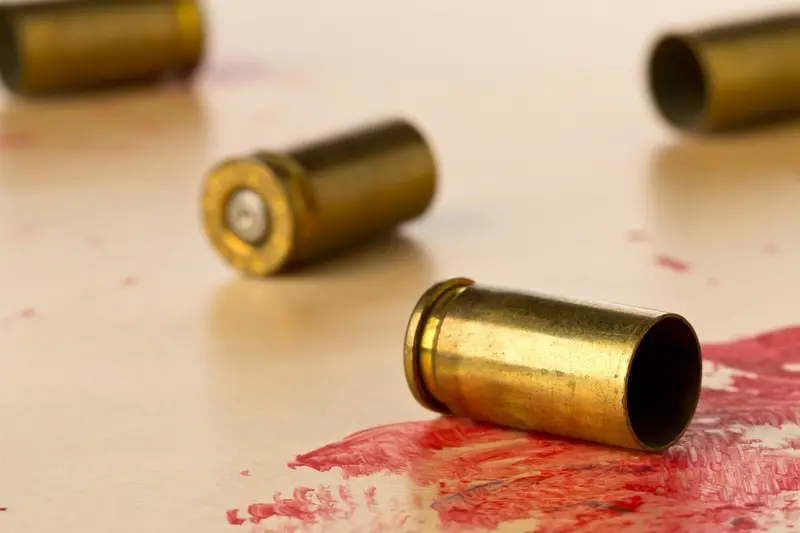
The men accused of firing on mourners inside a village church in southern Jordan lived close by, and authorities say they settled on the attack while they followed the funeral procession.
Jordan’s Public Security Directorate announced Monday, Oct. 26, 2026, that security forces had arrested three men over the attack on St. George’s Greek Orthodox Church in the village of Hammoud, in Karak, where gunmen killed nine people and wounded 34 during a funeral service on Friday, Oct. 23.
Interior Minister Mazen al-Faraya told state-affiliated TV that the attackers were all Jordanians and that they “had been holed up in a building in one of the villages near the site of the attack.”
Cornered at Dawn in Al-Jadida
Officers took all three men alive after a fierce fight at dawn at an abandoned house in Al-Jadida. The gunfire wounded every one of the suspects, and no member of the security forces was hurt.
Al-Jadida, in Karak governorate, sits about 5 kilometers (3 miles) from Hammoud and roughly 120 kilometers (75 miles) south of Amman. Security forces found firearms and rounds of ammunition in the suspects’ possession at the house. Reuters video footage showed a building pockmarked by the exchange of fire in Al-Jadida.
Public Security Director Maj. Gen. Obeidallah al-Maaytah named the suspects Monday as brothers Hazza Zaidan Mohammed and Meshal Zaidan Mohammed, and their relative by marriage, Ahmad Sami Hussein. The three suspects had been living near Hammoud, authorities said, and they settled on the attack as they followed the funeral procession.
Al-Faraya said in a phone interview with state television that investigators identified the three early and that every available means was used to run them down. The suspects put up fierce resistance before officers subdued them, he added, and they are in custody with severe injuries.
“God willing, they only represent themselves,” al-Maaytah said of the suspects at a press conference Monday. Al-Faraya, at the same press conference, said: “The file has not yet been closed; investigations are still ongoing. As of today, there are no indications of any links between them and other cells.”
The suspects espoused takfiri ideology, according to media reports citing Jordanian government and security sources. That extremist outlook brands even other Muslims unbelievers. No group has claimed responsibility, and authorities have accused no armed group. A public prosecutor barred publication of details of the investigation.
Al-Faraya promised accountability for anyone involved and said the government is “reviewing the circumstances that lead young people to embrace violence.”
Shot Again Where They Had Fallen
Authorities said the three men came to the church in a blue pickup truck. One wore a mask and carried a Kalashnikov rifle; the other two carried handguns and kept their faces uncovered.
The attackers opened fire at the main entrance, where mourners had gathered. The shooting ran without a break for about five minutes, and then the attackers drove off.
One person present said up to 200 mourners were inside and around the church, and that most of the victims were between 50 and 70 years old. Arabic-language media reports said the attackers brought large quantities of ammunition, reloaded several times and shot some victims again where they had fallen.
Nasser al-Burqan, a lawyer who survived, recalled one attacker standing about 2 meters (6.5 feet) from him, leveling a handgun and firing. His son was at the service as well and was shot in the leg, which al-Burqan learned in a later call from a hospital.
The casualty counts shifted through the weekend as the wounded were treated. The Health Ministry put the injured at 40 as of Oct. 24, with 27 still hospitalized. Officials gave the number of wounded as 34 on Oct. 26.
The King’s Vow, Then the Airstrikes
The Public Security Directorate declared that terrorism has no place in the country, and Prime Minister Jafar Hassan blamed terrorist ideology and “blind extremism” for the bloodshed. Three days of national mourning were ordered.
At Prince Ali Military Hospital in Karak, King Abdullah II met the wounded during a visit to the governorate. He vowed the harshest penalties and ordered a review of the way the kingdom’s security agencies respond to terrorist attacks. His directive called for an iron fist against what he called the outlaws of Islam and against anyone attempting to undermine the unity of the Jordanian people.
“Those who imagined that treacherous bullets could divide Jordanians have been thwarted by our resilience and unity,” the king said. He praised the security forces for chasing the suspects “to the very end.”
“We vowed the terrorists would not escape punishment, and no proponent of dark ideologies that divide Jordanians will be tolerated,” he posted on X on Oct. 26. Mohammad Momani, the government spokesman, said that an attack on any Jordanian, whatever their faith, amounts to an attack on the whole of Jordanian society.
Jordan’s air force struck militant positions in southern Syria on the evening of Monday, Oct. 26, hours after the arrests. The military linked the groups holding those positions to the attackers.
Jordan first said its fighter jets killed and wounded “several terrorists” and that the strike was coordinated with the Syrian government. Syria said it had no notification. On Tuesday, Oct. 27, Jordan said the strikes had killed about 20 Islamic State group militants, and government spokesman Mohammad al-Momani expressed regret over civilian casualties. Syria’s civil defense said it recovered the bodies of seven civilians killed in Daraa and Sweida provinces, five of them from one family, including three children and a woman.
Damascus condemned the strikes, said they were not authorized and closed the Nassib border crossing, the only passenger and commercial crossing between Jordan and Syria, Syrian authorities said in a statement carried by state media. The closure “includes the complete suspension of passenger and commercial traffic in both directions, to ensure the safety of travellers and workers at the crossing,” the statement said.
The authorities said they had “opened direct channels of communication” with Jordanian officials and launched “comprehensive investigations to establish the full circumstances of the targeting.”
Eight Graves Beside St. George’s
Churches across Jordan rang their bells at noon on Saturday, Oct. 24, answering a request from patriarchs and heads of churches in Jerusalem that the dead be remembered that way. Those leaders condemned the killing of worshippers during a burial and said the violence would not fracture Jordanian society.
Pope Leo XIV prayed for the dead and the injured in his Angelus address on Oct. 25 and spoke of his nearness to a country long known for coexistence between faiths.
Greek Orthodox Patriarch of Jerusalem Theophilos III led the funeral on Sunday, Oct. 25, for eight of the nine victims, who were buried beside St. George’s church. The eight were Dr. Maher Zureiqat, Ihab al-Halsa, Dr. Fadi al-Halsa, Dr. Khaled al-Halsa, Dr. Asim al-Burqan, Alaa al-Masarwa, Marwan Khaitan and Mazen al-Qassous.
The ninth victim, Dr. Mohammed al-Qassous, was buried near Amman on Monday, Oct. 26. Theophilos III called on wounded survivors on Sunday, Oct. 25, and condemned the attack as a “vile, cowardly, and bloody act.”
Hammoud is one of several small Christian communities scattered across Karak. Of Jordan’s 11.5 million people, about 300,000 are Christians.