
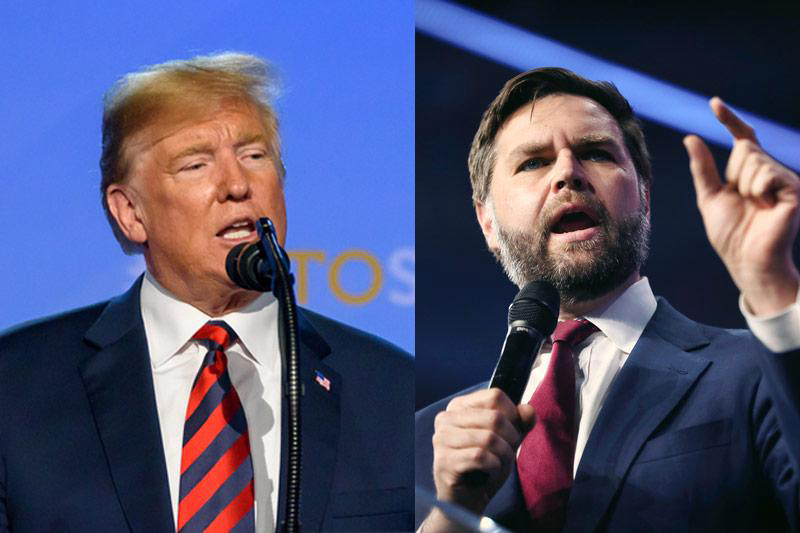
When President Donald Trump joked at the G7 summit that Vice President JD Vance would take the fall if the US-Iran peace deal collapsed, the comment drew laughs. Two days later, it looks less like a punchline and more like a forecast: the first round of US-Iran talks was initially postponed on June 19, 2026, before ultimately proceeding at Bürgenstock on June 21, and the agreement he championed remains under significant strain.
Vice President JD Vance issued a warning on June 18 to members of Israel’s government who were critical of the agreement, cautioning them not to alienate their most important ally. Vance publicly blamed Israel for impeding the negotiations, telling Israeli officials who had criticized Trump: “If I was in the Cabinet of the Israeli government, I might not be attacking the only powerful ally that I have anywhere left in the entire world.” The statement followed intense new Israeli strikes in southern Lebanon that killed at least 18 people overnight, after four Israeli soldiers were killed by a Hezbollah explosive. Iran says the attacks violate the ceasefire and cast immediate doubt on the deal just days after it was signed.
“If it works out, I’m going to take the credit,” Trump said with a grin at his closing press conference in Évian-les-Bains, France, on June 17. “If it doesn’t work out, I’m blaming JD. You better be careful, JD.” The room laughed. But in a Washington already split over the deal itself, the question of who owns it has become one of the most consequential political calculations inside the Trump White House.
The remark came after Fox News White House correspondent Peter Doocy pressed Trump on why he was sending Vance to the formal signing in his place. Doocy laid out the dynamic bluntly: delegate the job, and if it works, Trump looks shrewd; if it fails, Vance holds the bag. Trump’s response confirmed that was the calculus, at least in jest. “I like that idea,” the president said.
The Deal Starts to Wobble
The joke has aged quickly. On June 19, Switzerland’s foreign ministry confirmed that the first US-Iran negotiations, planned for the Bürgenstock mountain resort, would not take place as scheduled, with the White House citing unfinalized logistics. But talks ultimately did proceed on June 21, with Vance traveling to Switzerland to lead the US delegation alongside Special Envoy for Peace Missions Steve Witkoff and Special Envoy for Peace Jared Kushner. The two sides established a roadmap for a 60-day window to hammer out a permanent agreement, though the session was roiled by Trump threats and ongoing Israeli strikes in Lebanon.
A Deal With Vance’s Name on It
The stakes of that ownership are not abstract. Vance has been positioned — by the White House and by figures on Capitol Hill — as the primary architect and public face of the 14-point agreement. The memorandum of understanding was digitally signed over the weekend by Vance and Iranian parliamentary speaker Mohammad Bagher Ghalibaf, with Trump witnessing. Trump signed the document personally days later, before a dinner with French President Emmanuel Macron at Versailles, with Iranian President Masoud Pezeshkian signing remotely.
The memorandum of understanding (MOU) calls for an immediate end to military operations, including Israeli actions in Lebanon, the full reopening of the Strait of Hormuz toll-free for at least 60 days, the lifting of US sanctions on Iran, the unfreezing of Iranian assets, and a Gulf Arab investment and reconstruction fund for Iran, with a 60-day window to negotiate a comprehensive final deal. Its full text was initially withheld from the public, with a senior official reading it to reporters by phone only as Trump spoke in France.
Sen. Lindsey Graham, R-S.C., a longtime Iran hawk and Trump ally, has repeatedly referred to Vance as “the architect of the deal” — language that those tracking 2028 White House ambitions read as carefully chosen. Graham has demanded that Vance present the memorandum to Congress for review, voicing concern that Iran’s understanding of the agreement appeared to differ from the American team’s — a tone measured enough to avoid attacking Trump directly while keeping pressure on his vice president.
A source close to the vice president confirmed it is a “safe assumption” that Vance personally pushed to be the administration’s face in rolling out the deal. Vance, wary of war with Iran from the start, joined the negotiating effort roughly a month into the conflict, traveling to Islamabad, Pakistan, to meet Iranian officials alongside Witkoff and Kushner. A former senior Trump adviser said that Vance understands he will “own” the deal regardless of whether Iran honors it — and that holding the MAGA coalition together may hinge on how he frames the outcome.
Republican Knives Are Out
Republican opposition to the MOU has been sharp and, in some corners, ferocious. Sen. Bill Cassidy of Louisiana, who recently lost his Senate primary after finishing third in a three-way race behind Trump-endorsed Rep. Julia Letlow and state Treasurer John Fleming, called the agreement “the worst foreign policy blunder in decades,” posting on X: “Reagan is rolling over in his grave.” Cassidy argued that Iran’s nuclear ambitions were left unchecked, that Tehran has learned it can wield the Strait of Hormuz as a weapon, and that the war cost 13 American lives and more than $100 billion — leaving the country worse off than before hostilities began on February 28. Sen. Thom Tillis, R-N.C., also withheld judgment, saying he needed to understand the full scope of what the US had committed to.
Trump, for his part, has tried to manage expectations while leaving himself room to claim victory or assign blame. At the June 17 press conference, he insisted the MOU was not final and left the door open to renewed force. “It’s a memorandum of understanding, and if I don’t like it, we’ll go back to shooting at them,” he said. He also waved off questions about the reconstruction fund and the release of frozen Iranian assets, saying the money belonged to Iran and had to be returned to maintain international confidence in the dollar.
A source close to Trump pushed back on the scapegoat framing, saying any suggestion Vance bears sole responsibility is ultimately a proxy attack on Trump himself. The administration is betting the deal will bring down gas prices and lift markets — outcomes that, if they materialize, would blunt much of the Republican criticism and make the blame game largely moot.
For now, those outcomes remain hypothetical. Whether Vance emerges from the Iran process as a statesman or a fall guy depends on something neither he nor Trump fully controls: whether the agreement survives its first real test.