
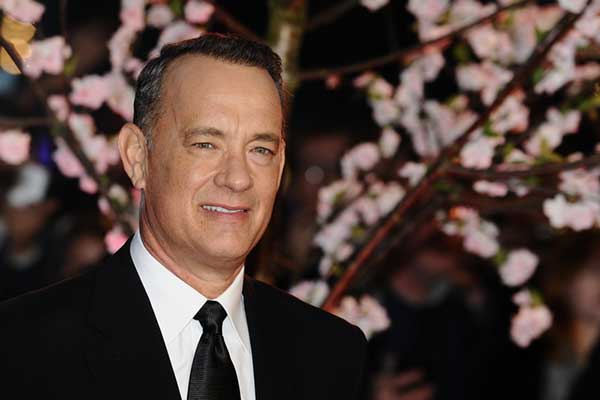
Actor Tom Hanks warned in an interview with Time published May 22, 2026, that indifference poses the greatest danger to American democracy, using his platform promoting a new World War II docuseries to draw stark parallels between historical injustices and present-day crises.
A Lifelong Student of History Speaks Out
When asked what moral courage looks like today, Hanks offered what he called a taxonomy of resistance, arguing that civic engagement doesn’t require everyone to protest but does demand that everyone contribute something.
“Now, for some of us, it’s showing up and raising our fist and saying, ‘not on my watch,'” Hanks explained. “For others, it’s giving money to those who fight the good fight. For many others of us, it just comes down to not ignoring what’s going on and continuing to tell the stories that matter.”
The actor, long known for channeling his fascination with the past into films like “Saving Private Ryan,” positioned storytelling as a form of civic action — one he has pursued throughout his career and continues with his latest project.
“The best petri dish for tyranny is indifference, and we have a choice every single day to do something or not based on what we think is right,” Hanks said. The wide-ranging conversation, highlighted by HuffPost on May 26, touched on civic responsibility, historical memory and what Hanks sees as a crucial test facing the nation.
Drawing a Line From Internment to Today
Hanks drew a direct comparison between the internment of Japanese Americans during World War II and contemporary challenges visible across the country. He argued that Americans have historically rewritten their own complicity, claiming ignorance about neighbors being rounded up and imprisoned during the war.
That same willful blindness, he said, applies to Americans today who claim not to see homelessness on their streets. Both situations are obvious and unfolding in plain view, yet the temptation to look away remains powerful. The country risks recreating something far worse, he warned, if it allows itself to be complicit through inaction.
The comments, widely circulated internationally, come at a politically charged time. President Donald Trump has publicly attacked Hanks as “destructive” and “WOKE,” though the actor has characteristically avoided direct engagement, choosing instead to focus his remarks on history.
A 250th Anniversary and a Country Still Becoming
With the United States approaching the 250th anniversary of its founding on July 4, 2026, Hanks framed the milestone as a moment of reckoning rather than pure celebration.
“We will never be a perfect union but we’ve had 250 years to figure out how we actually get closer to that,” he said.
The anniversary represents what Hanks called “all about the beginning of the two-steps-forward, one-step-back process of making our nation a more perfect union.” Achieving perfection isn’t realistic, he conceded, but moving closer to those ideals remains the work.
Inside the World War II Docuseries
“World War II with Tom Hanks,” a 20-episode series developed in collaboration with the National WWII Museum in New Orleans, prompted the interview. New episodes premiere Mondays on the History Channel, with six episodes now available to stream. The series will roll out across 200 territories in 40 languages later this summer.
The project represents another return to a period that has dominated much of Hanks’ creative output, from “Saving Private Ryan” to “Band of Brothers” to “The Pacific.” But this documentary iteration focuses less on celebrating what he has often called the greatest generation and more on questioning what that generation would think of the Americans leading the country today.
His turn toward documentary from dramatic roles feels purposeful, a shift from portraying history to examining it and challenging viewers to do likewise. The docuseries arrives as Hanks also prepares for the June 19 theatrical release of “Toy Story 5,” in which he reprises his voice role as Woody.
For Hanks, the interview’s core argument sits somewhere between historical analysis and urgent warning. The nation faces daily tests of whether it chooses to pay attention, he believes. Japanese internment camps weren’t constructed secretly, and signs of poverty aren’t concealed today. The choices are visible, he said, and the country’s response to authoritarianism depends on rejecting the quiet comfort of looking away.
As coverage of the interview noted, the warning carries particular weight coming from one of America’s most reliably affable public figures. When Tom Hanks discusses tyranny, people tend to listen. Whether they act on that message, he suggested, remains an open question.