
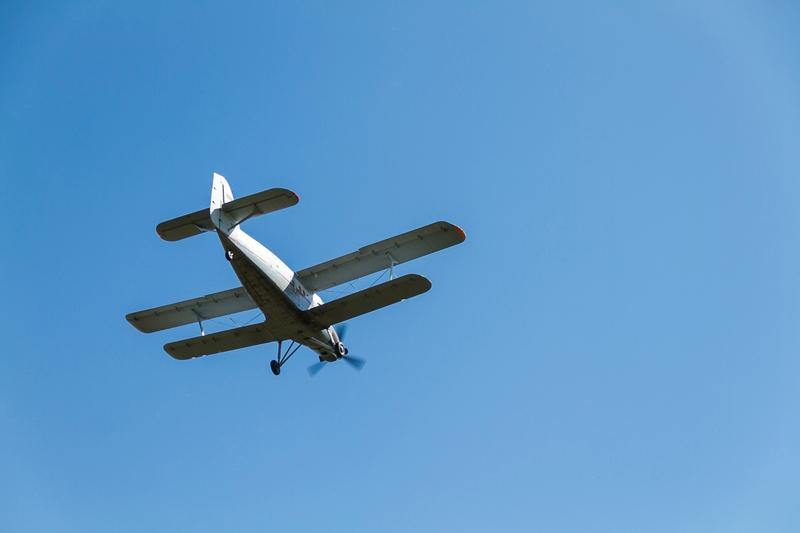
Horrified family members stood at a French airfield on June 28, 2026, and watched helplessly as a skydiving plane carrying their loved ones plummeted from the sky moments after takeoff, killing all 11 people aboard in what France’s aviation safety agency later described as the deadliest general aviation accident in the nation’s history, excluding military and commercial flights.
The single-engine Pilatus PC-6 — a 1991 model registered in Germany and operated by skydiving company Tandemotion Parachutisme — took off from the Nancy-Essey Airfield on the outskirts of Nancy in northeastern France at approximately 11 a.m. local time before going down less than a minute later. The aircraft came to rest about 300 meters from the runway, near a residential neighborhood and a shopping center in the town of Tomblaine. Those aboard included five skydiving instructors, five first-time jumpers, and the pilot — none of whom survived.
Nurses Among the First-Time Skydivers
A detail that added particular poignancy to the tragedy emerged when it was confirmed that five of the victims were nurses — colleagues who had planned the outing together as a way to decompress. Thierry Pechey, head of Meurthe-et-Moselle’s nursing council, said the coworkers had arranged their inaugural tandem skydiving experience as a stress-relieving activity during a challenging period of intense summer heat.
The jumps had been planned as tandem dives, in which a first-time skydiver is harnessed to an instructor for the descent. Friends and family members of the participants had gathered at the airfield to watch the experience unfold — and instead bore witness to the catastrophe.
French Interior Minister Laurent Nunez, who traveled to the crash site, said the emotional toll on those present was immense. Nunez said, “Some of the victims’ families witnessed the aircraft falling with their own eyes. So there is tremendous emotion and an even greater psychological trauma.” Medical and psychological support teams were deployed to the scene to assist relatives and other witnesses.
Plane Fell Nearly Vertically After Takeoff
Witnesses described a chilling sequence of events that unfolded in a matter of seconds. Flight-tracking data showed the aircraft banked to the left after lifting off before dropping to the ground. One unnamed witness told reporters he was driving past when he saw the plane veering to the right, immediately sensing something was wrong. He did not see the crash itself due to an embankment along the road, but heard it, and when he reached the scene, he attempted to help extinguish the burning wreckage.
Resident John Curaku said he was in his yard when the engine noise cut out abruptly, followed almost instantly by a loud bang. He went to the crash site and found two bodies that had been thrown several meters from the plane. Another unidentified witness told reporters the engine appeared to simply stop while the plane was climbing, with no visible fire, explosion, or other external warning sign before the impact.
The wreckage caught fire on impact and was subsequently cordoned off by police. Authorities set up gazebos to cover the remains of the white aircraft while investigators and first responders worked the scene.
Authorities Launch Investigation Into Cause
Yves Séguy, prefect of the Meurthe-et-Moselle region, confirmed that the aircraft appeared to suffer a malfunction before dropping nearly straight down toward the ground. François Pelissier, president of the Nancy-Tomblaine aerodrome, told BFM-TV that the pilot was experienced and appeared to have attempted a turn before the plane went down. Pelissier said the aircraft had already completed five flights that morning before the fatal takeoff. He stressed how narrowly the crash had avoided an even wider disaster, noting that the plane came to rest within meters of a densely populated area. Officials said that had the trajectory shifted even slightly, there could have been casualties on the ground as well.
The Paris prosecutor’s office has taken the lead on the judicial investigation, while the French Bureau of Enquiry and Analysis for Civil Aviation Safety (BEA) has separately opened its own formal technical safety investigation into the cause. Nunez declined to offer any theory about the cause ahead of official findings. Tomblaine Mayor Hervé Feron echoed that caution, saying the plane had fallen from the sky in a manner that currently defied explanation and that it was premature to conclude. He acknowledged that the extreme heat gripping the region could have been a factor — or could have played no role at all.
The timing of the crash coincided with a severe heatwave across France, and authorities noted that the highest temperature ever recorded in Nancy had occurred just one day before the accident. Whether the scorching conditions contributed to whatever caused the malfunction remains unclear, and officials say that question will be part of the broader investigation.
A Historic and Devastating Loss
Transport Minister Philippe Tabarot said the crash represented France’s worst skydiving aviation accident in roughly 30 years.
Chaynesse Khirouni, president of the eastern department of Meurthe-et-Moselle, described the psychological damage suffered by those who witnessed the crash as profound. Nancy Mayor Mathieu Klein said some of the victims had perished in full view of their loved ones, a reality that officials said made an already devastating event even harder to process. Authorities confirmed they were continuing to collect witness statements as the investigation moves forward.