
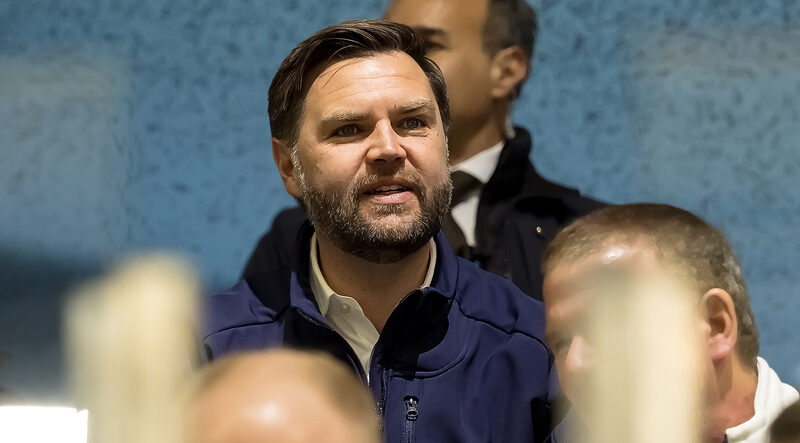
Vice President JD Vance has found himself at the center of back-to-back online controversies — first over remarks he made in October 2025 about his wife’s Hindu faith, and then over a June 14 anniversary post that critics say exposes a contradiction in his abortion stance. The clashes have raised fresh questions about consistency for a vice president who has positioned himself as a champion of both Christian values and family life.
Faith Comments Fuel a Second Controversy
At a Turning Point USA town hall on Oct. 29, 2025, Vance told an audience of about 10,000 people that he hoped his wife, second lady Usha Vance, a Hindu, would one day convert to Christianity. Raised in an evangelical Protestant household, Vance converted to Catholicism in 2019, five years after his marriage to Usha. The vice president explained that he believes in the Christian gospel and wishes she would come to share his views, acknowledging he hoped Usha would eventually be drawn to Christianity the way he was.
The public comments drew criticism from multiple quarters, including Canadian media personality and Rebel News founder Ezra Levant, who wrote on X: “It’s weird to throw your wife’s religion under the bus, in public, for a moment’s acceptance by groypers.” (The post was later deleted.)
On Oct. 31, Vance posted an extensive reply on X, claiming his critics harbored anti-Christian bias and framing his desire as an extension of love, arguing that Christians are compelled to share what they believe to be true.
Vance Defends His Interfaith Marriage
In that statement, the vice president explained his views on his interfaith marriage. “She is not a Christian and has no plans to convert, but like many people in an interfaith marriage—or any interfaith relationship—I hope she may one day see things as I do,” he wrote. “Regardless, I’ll continue to love and support her and talk to her about faith and life and everything else, because she’s my wife.”
While acknowledging that Usha isn’t converting and he doesn’t expect her to, he insisted that hoping to share religious beliefs with one’s spouse is perfectly natural, arguing that holding Christian beliefs necessarily includes wanting to share them with others and suggesting anyone claiming otherwise had ulterior motives.
The Anniversary Post That Raised Eyebrows
The faith controversy came before Vance faced backlash over an anniversary message posted on June 14. Marking 12 years of marriage to Usha Vance, he wrote, “Happy Anniversary to our lovely Second Lady. 12 years and almost 4 kids later, and we’re still going strong. Love you Usha!”
The phrase “almost 4 kids” — referencing Usha Vance’s current pregnancy with their fourth child, a boy due in July — quickly drew scrutiny from critics across the political spectrum. Many felt this language conflicted with Vance’s abortion stance — he previously called for a nationwide abortion ban and opposed rape and incest exceptions, though by 2024 he aligned with President Donald Trump’s position that abortion policy should be left to individual states — and wondered if his phrasing inadvertently suggested an unborn baby isn’t yet a person, an idea that would clash with his stated beliefs.
One commenter wrote, “Bro forgot that he’s supposed to believe life starts at conception,” reflecting a view that spread widely online. “So you agree a fetus in the womb isn’t an actual child,” another user posted.
A Rough Time for the Vice President
The episode unfolded against a broader backdrop involving Turning Point USA, the conservative organization where Vance had made his original faith remarks. The group’s events have faced scrutiny, including an incident in Montana in which Republican Ohio gubernatorial candidate Vivek Ramaswamy encountered overt racism from attendees at another Turning Point gathering.
Not everyone found Vance’s framing convincing. Taken together, the two controversies — the anniversary post and the faith comments — painted a complicated picture for Vance, who has positioned himself as a defender of both family values and religious conviction. Critics argued that his framing of the backlash as anti-Christian bigotry deflected from what were, at their core, questions about consistency and respect. Whether the turbulence fades quickly or lingers as a talking point remains to be seen — but for now, what began as a wedding anniversary tribute has become a flashpoint in Vance’s tenure as vice president.