
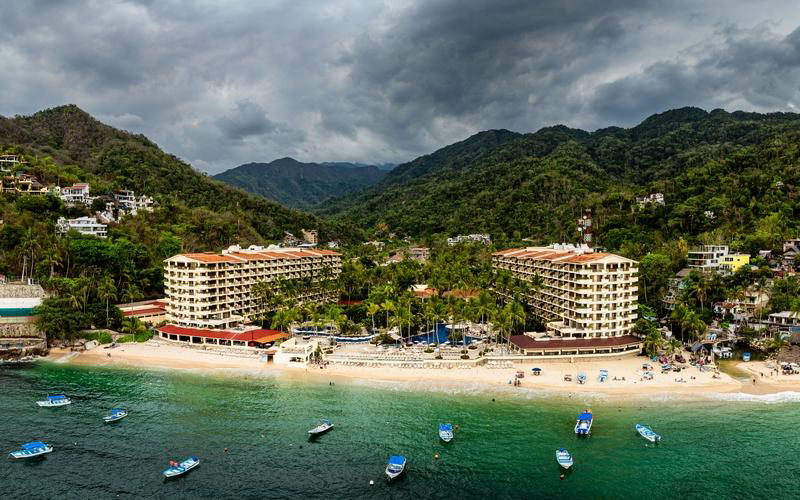
Law enforcement officials in Puerto Vallarta, Mexico, were looking into the possibility that a single perpetrator was behind the deaths of three women whose remains were found in secluded locations near the seaside town between May 10 and May 21, 2026. On May 27, 2026, prosecutors announced there was no evidence pointing to a serial killer.
The tragic sequence started on May 10, 2026, when the first woman’s body was located near Rancho El Piruli, a well-known scenic overlook in Chimborazo. Four days later, a second victim was discovered at a rest stop along the Mismaloya highway. On May 21, a third body was found, which triggered a comprehensive homicide inquiry.
The three victims were all women appearing to be in their 30s; each displayed notable tattoos, and each was found partially clothed in remote areas on the edges of one of Mexico’s premier vacation destinations.
The three victims had differing apparent methods of death — blade trauma, suspected overdose, and suffocation from water immersion.
Worrying Similarities Surface
The most recent victim, named Elizabeth Galindo Martínez, 22, had been reported missing on April 29, 2026. She was discovered with tattoo designs on her neck, hands and arms — including a skull, a horned female figure, and a word. Marks of trauma were also apparent on her body. The distinctive ink had sparked online discussion about her identity, though an apparent age gap between the victim and some online missing-person posts had made identification more difficult.
The commonalities in the three cases — victim demographics, body markings, partial disrobing and abandoned remains in remote locations — prompted investigators to examine whether the killings are connected and whether a single individual may be responsible.
Authorities in Puerto Vallarta, Mexico, are examining video recordings, physical evidence and eyewitness accounts to identify connections among the homicides, the most recent discovered on a gravel road in the Parque Las Palmas area.
Investigators are analyzing video footage from roadways and suburban regions, attempting to trace the paths of the victims as well as whoever deposited them in bushes, roadside areas, and dirt roads at the city’s perimeter.
Authorities are also considering the troubling possibility that the victims were killed elsewhere and their remains relocated to Puerto Vallarta and left behind — a hypothesis that would significantly broaden the investigation’s area.
Adding to the pattern, authorities revealed that in at least two — and possibly all three — of the cases, the victims’ blouses had been pulled up over their bodies when discovered. Yussara Canales, a regional parliament member for Puerto Vallarta’s Fifth District, told the New York Post it was precisely that detail which first raised suspicions of a serial killer operating in the area.
Popular Vacation Spot Facing Challenges
The city concluded 2025 with over six million visitors, predominantly originating from the United States, per regional news sources. By any standard, it was experiencing an unprecedented tourism surge.
Historically, Puerto Vallarta was recognized for beautiful Pacific shorelines, all-inclusive hotel properties and continuous influx of American vacationers.
That image has experienced repeated damage. In February, the surrounding area was devastated by an outbreak of organized crime activity following the killing of Jalisco New Generation Cartel boss Nemesio Oseguera Cervantes, known as El Mencho, during a police raid. Violent gang members burned public transportation, ransacked businesses and set up numerous checkpoints to retaliate, disrupting large portions of Guadalajara through violent demonstrations. Vehicles were ignited. Smoke clouds made the city resemble a combat area, according to eyewitnesses.
Disturbing video documented visitors running through the Guadalajara airport as armed gang members invaded the facility and fired weapons. Tens of thousands of travelers and residents sheltered inside buildings and accommodations as shooting continued for extended periods. American vacationers found themselves unable to leave the city as they witnessed the disorder.
Tourism Sector Recommends Vigilance
Travel professionals note that the combination of organized crime instability and a potential serial-murder case is prompting a reassessment for U.S. tourists considering Mexico’s western coastline. Paul Tumpowsky, Chief Revenue Officer for Fora Travel, suggested that guests practice heightened vigilance, sufficient to remain cautious without derailing their experience, but making informed decisions. Tumpowsky stated in an interview with the New York Post that this period requires visitors to evaluate and decide what degree of potential hazard they are comfortable accepting.
The circumstances could not be more poorly timed for Mexican government leaders. The nation is preparing to jointly host the World Cup, which commences on June 11. Close to 100,000 law enforcement, military personnel and security staff will be stationed throughout various Mexican venues — in Mexico City, Monterrey and Guadalajara — with extensive protective measures covering spectator zones, air terminals and transit points.
Search for Clarity Accelerates
The broader situation has attracted attention beyond the three specific cases. Six women lost their lives in Puerto Vallarta during the opening five months of 2026 — compared to three throughout the previous year — information that has prompted calls for clarity from regional authorities.
One of the three victims discovered in May has not yet been identified. Just the third victim, Elizabeth Galindo Martínez, has been publicly named.
The prosecutors’ denial of the serial killer hypothesis has encountered disagreement. Canales informed the New York Post that she thinks the denial was motivated by financial concerns instead of facts. “Here’s my perspective on why they made this choice: regrettably, this situation is gaining worldwide media focus. It’s damaging our port city’s image,” she stated, proposing that legal authorities were swayed by the city’s nearness to Guadalajara, which will hold four World Cup matches starting June 11.
The cases have also sparked protests in Puerto Vallarta, with demonstrators calling for accountability and a more transparent official response to the escalating violence against women.
U.S. citizens planning vacations in the region should note that the U.S. State Department presently categorizes Jalisco — the state encompassing Puerto Vallarta — as Level 3, recommending travelers “reconsider travel due to terrorism, crime, and kidnapping.”