
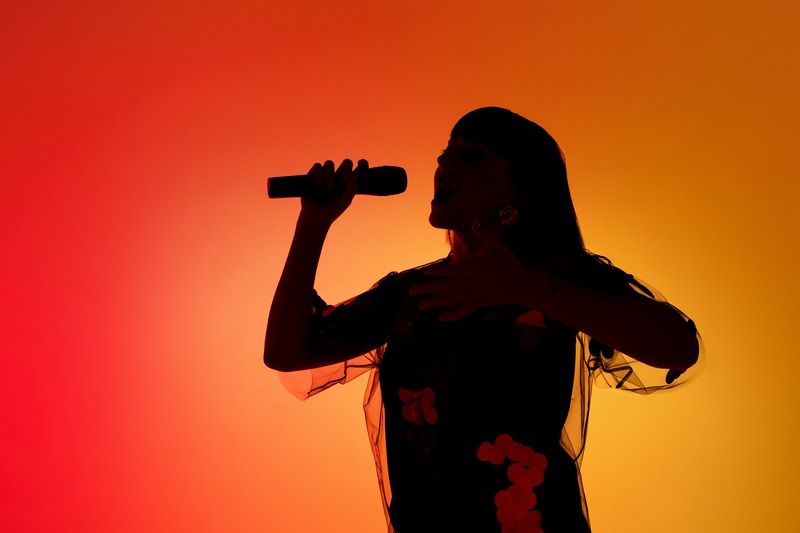
Grammy-winning jazz singer and songwriter Cassandra Wilson, whose deep, smoky voice made her one of the genre’s most influential modern vocalists, died at home in Jackson, Mississippi, at the age of 70. No cause of death was given. Accounts of the date differ: the Associated Press and WLBT, citing Hinds County Coroner Jeramiah Howard, place the death on the morning of September 1, 2026, while WBGO, NPR and the New York Times report of September 2.
Wilson “transitioned peacefully at home, surrounded by family, close friends, and her manager,” Robert Torre, who managed her for 20 years, said in a statement to WBGO, the jazz radio station. Her relatives and close friends were asking for privacy as they grieved, he added. The statement itself carried no date. Howard’s confirmation, reported by the Associated Press and by WLBT the same day, was the first official word beyond her manager’s account.
Wilson started recording in the early 1980s and spent the decades that followed rethinking what a jazz singer could sound like. Blues, folk, country and pop songcraft all fed into a sound she built around that unmistakable low register, and two Grammy Awards followed. Time magazine declared her America’s best singer in 2001, and in 2022 the National Endowment for the Arts (NEA) handed her one of the field’s highest distinctions by naming her a Jazz Master.
From Jackson to the New York Jazz Scene
She was born Cassandra Fowlkes in Jackson on December 4, 1955, the youngest of three children of Herman Fowlkes Jr., a bassist and guitarist who taught music, and Mary Fowlkes, a teacher who went on to earn a doctorate in education. She started piano at six, played clarinet in marching bands and later took up the guitar, the instrument that would anchor the spare, string-driven arrangements of her best-known records. After graduating from Murrah High School, she studied at Millsaps College and earned a degree in mass communications at Jackson State University before committing herself to music.
Wilson moved to New York in the early 1980s and worked her way into a jazz community then crowded with young players hunting for a new vocabulary. She joined Steve Coleman’s M-Base Collective and became its main vocalist. She opened for Miles Davis at the JVC Jazz Festival in Chicago in 1989 and toured with Wynton Marsalis. Albums with fellow musicians Greg Osby and Marsalis followed, as did her vocals on Marsalis’ “Blood on the Fields,” in which she sang the role of Leona. That work was the first jazz composition ever to win the Pulitzer Prize for Music.
The 1980s and ’90s established her as one of jazz’s biggest draws — a performer who could headline a festival and still sound as though she were singing in a hushed, dimly lit club.
A Voice That Crossed Genres
Blue Note Records signed her, and the run that came to define her career followed. “Blue Light ’Til Dawn,” released in 1993, set the template: a hushed, atmospheric production and a repertoire indifferent to genre borders. “New Moon Daughter” gave her a commercial breakthrough, selling more than 400,000 copies by the New York Times’ count and winning Best Jazz Vocal Performance at the February 1997 Grammy ceremony. Blue Note issued it in March 1996, though several reference works date it to 1995.
Her choice of material accounted for much of the appeal. Songwriters well outside the jazz repertoire ended up sounding wholly hers — Joni Mitchell’s “Black Crow” on “Blue Light ’Til Dawn,” Cyndi Lauper’s “Time After Time,” and, on “New Moon Daughter,” her reading of Neil Young’s “Harvest Moon,” which became a signature. Reaching across styles won her listeners who might never have bought a jazz album, and it kept her recordings in rotation long after the records that carried them arrived.
A second Grammy came in 2009, when “Loverly” took Best Jazz Vocal Album; across her career she was nominated four times and won twice. Touring kept her visible throughout — she played the JVC Jazz Festival in Newport, Rhode Island, in August 2003, and she performed at the Songwriters Hall of Fame’s 48th annual induction and awards gala in New York in June 2017. In April 2015 she presented Billie Holiday’s Apollo Walk of Fame plaque on what would have been the singer’s 100th birthday, headlined a centenary concert at the Apollo four days later, and released her final album, “Coming Forth by Day.”
Mississippi Mourns a Native Daughter
In Mississippi, the news landed less like the death of a celebrity than the loss of a relative. Wilson “carried the sound, spirit and history of Mississippi with her wherever her music reached,” said Jackson Mayor John Horhn, who said an extraordinary native daughter had been lost to the city and a singular musical voice to the world.
Alpha Kappa Alpha Sorority, Incorporated, also counted Wilson among its members; her initiation came through the Beta Delta Omega chapter, chartered at Tougaloo College in 1934. On its official social media account, the sorority acknowledged her death, extending condolences to her family, her friends and the members of Beta Delta Omega and describing her life as one lived beautifully and boldly.
Wilson never treated the jazz tradition as a museum piece; to her it was a living language, one flexible enough to hold a Mississippi childhood, a folk-rock ballad and a Blue Note session in the same breath.
Musician Jon Batiste, who toured with her as a 22-year-old, paid tribute on social media the day her death was announced. “I learned so much from her and I am so sad she has passed away,” he wrote. “She had an unmistakable vocal tone, phrasing and her approach of weaving folkloric, R&B and diasporic music together with experimental and popular genres had a major impact on me. She sounded like the south. Her Mississippi heritage was always present in everything no matter how expansive her artistry evolved.” Arrangements have since been set. Collins Funeral Home will hold a visitation from 3 to 6 p.m. on Thursday, September 10 at Collins Northside Chapel on West Northside Drive in Jackson. An Ivy Beyond the Wall service — the Alpha Kappa Alpha memorial rite — follows at 10:30 a.m. on Friday, September 11 at New Horizon Church International on Bobby Rush Boulevard, with a celebration of life there at noon.