
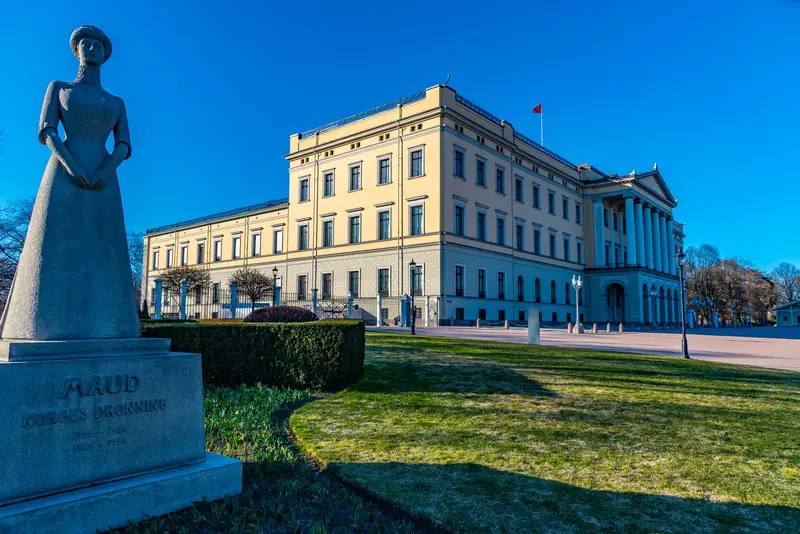
Norway’s King Harald V, Europe’s oldest monarch, died on August 28, 2026, at 6:35 a.m. local time at Rikshospitalet in Oslo. He was 89, and his 35-year reign remade the country’s monarchy.
The Royal House of Norway posted the announcement on its website. Doctors had admitted the king on August 17 to treat hemolytic anemia, in which the body destroys red blood cells faster than it can replace them. The palace said he arrived with a buildup of fluid caused not by the disease itself but by the cortisone he had been given to treat it. An infection followed, and in his final days his health declined sharply.
His only son, Haakon, 53, succeeds him and takes the regnal name Haakon VIII. The new king has adopted the motto “All for Norway,” which his great-grandfather Haakon VII carried from the independence year of 1905. Later on August 28 he met his ministers in a specially convened session of the council of state, and on September 1 he swore the constitutional oath before the Storting, promising to govern “in accordance with its Constitution and Laws; so help me God.” Haakon’s daughter, Ingrid Alexandra, Harald’s granddaughter, becomes crown princess and heir to the Norwegian throne.
A Nation in Mourning
Haakon VIII gave his first speech as monarch on Saturday, August 29, broadcast live on public television, eulogizing his father. “I’m going to miss him. I’ll miss his laughter. His good-natured way of dealing with people and situations,” the king said. Holding back tears, he vowed to give everything for the country, saying that means “in the ultimate sense — being willing to risk everything, even one’s life, for Norway’s freedom and independence.”
Harald’s coffin arrived at the royal palace in Oslo late on Friday, August 28, from the hospital. The royal flag above the palace came down to half-staff, and Norway entered a period of national mourning that runs until after the funeral. The royal court announced on August 30 that the service would be held at Oslo Cathedral at 1 p.m. on Wednesday, September 9, followed by burial at the royal mausoleum in Akershus Fortress, with a national minute of silence at 1 p.m. The king lies in state at the Palace Chapel, open to the public from September 3 to 8. Mourners filled the palace grounds and left flowers and flags at the gates.
Tens of thousands of Norwegians lined up at cathedrals and churches nationwide for memorial services on Sunday, August 30, and the royal family attended a service at Asker Church, southwest of Oslo — without Queen Mette-Marit, who is recovering from a lung transplant in June. Opening the service at Oslo Cathedral, its provost, Pål Kristian Balstad, said: “This Sunday is different. His Majesty King Harald is dead. A family has lost their spouse, father, grandfather, father-in-law.”
Church bells rang across Norway and flags were lowered to half-staff. Norwegian Prime Minister Jonas Gahr Støre said “a whole nation is in mourning,” and he said Norwegians were left with profound thankfulness for a lifetime given over to the service of the country. “An era has ended. A new era is beginning. The King is dead. Long live The King!” Støre said.
The Swedish, Danish and British royal households sent condolences, as did political leaders in several countries. Britain’s King Charles III — whose mother, the late Queen Elizabeth II, was Harald’s second cousin — sent his most heartfelt condolences for the loss of a dear cousin. Harald, he said, had guided Norway through times of great change with warmth and humility, and his “kindness, compassion and deep sense of duty” echoed from across the sea. Sweden’s King Carl XVI Gustaf, godfather to the new Norwegian king, said Harald had been a good friend to him, to his family and to Sweden, and he wished the new king success and good fortune. Denmark’s King Frederik and Queen Mary called him “an extraordinary man, with a twinkle in his eye and a big heart.” The Danish royals also recalled an unwavering calm that put others at ease, and a warm, dry sense of humor.
U.S. President Donald Trump paid tribute to King Harald in a post on Truth Social, describing him as a “strong, proud, and greatly respected man” and highlighting the late king’s love for his country and the deep respect he had from the Norwegian people.
Some Norwegians postponed celebrations such as weddings and baptisms until after the mourning period, according to reports on August 30.
A Wartime Childhood in Exile
Harald was born on February 21, 1937, at the Skaugum estate outside Oslo. He was the first Norwegian king born on home soil since the 14th century. The only son among three children, he was in line for the crown under a constitution that then limited the succession to male heirs.
Nazi German forces invaded Norway during World War II when Harald was three years old. His mother, Crown Princess Märtha, fled with her children to Sweden. A few months later, at the invitation of President Franklin D. Roosevelt, the family sailed to the United States. They stayed first at the White House, then settled at Pooks Hill in Bethesda, Md. King Haakon VII, his grandfather, and the future King Olav V, his father, moved separately over the course of the war.
Harald was named crown prince in 1957 and studied social science, history and economics at Balliol College, Oxford, between 1960 and 1962. A lifelong sailor, he kept at the sport through his reign. He sailed for Norway at three Olympics — Tokyo in 1964, where he carried the flag at the opening ceremony, Mexico City in 1968 and Munich in 1972. He never won an Olympic medal, though at World Championships he took gold, silver and bronze.
The King Who Married a Commoner
Harald met Sonja Haraldsen, the daughter of a businessman, at a party, and it took nine years before he was granted permission to marry her. They wed at Oslo Cathedral on August 29, 1968. Caroline Vagle, royal expert at Se og Hør magazine, said the match departed from royal tradition and helped close the chapter on a royal family that had been very male-dominated. The marriage also opened the door for Harald’s two children to marry commoners themselves.
Harald took the throne on January 17, 1991, at the age of 53. He and Queen Sonja had asked for a consecration ceremony to mark the accession, and Nidaros Cathedral in Trondheim hosted it on June 23, 1991, drawing on traditions rooted in the Middle Ages. The couple then toured southern Norway for 10 days, and in 1992 they traveled for 22 days through the country’s four northernmost counties.
Norwegians called Harald the “people’s king,” a label his father had carried before him. The monarchy grew more egalitarian under his reign and more forthcoming about royal finances and health matters, according to Ole-Jørgen Schulsrud-Hansen, a historian and royal correspondent for TV 2. Tove Taalesen, royal correspondent for Nettavisen, described the late monarch as one of the people. Vagle said he had never drifted far from ordinary Norwegians.
“He has never been afraid to show emotion, humour or vulnerability, and that has made him very human,” Vagle said in remarks to the BBC.
In 2011, after a bomber struck Oslo and a gunman opened fire on the island of Utøya, Harald urged Norwegians to stand by one another and not let fear take hold.
A Succession Amid Family Strain
The family takes on the handover at a difficult moment. Haakon’s wife, Mette-Marit, now becomes queen consort. She underwent a lung transplant in June, and hours after her husband swore his oath on September 1 she was taken to the hospital with complications, missing the ceremony. Her earlier contact with Jeffrey Epstein, the late sex offender, became public in February. Oslo District Court convicted her son from a previous relationship, Marius Borg Høiby, on June 15 of two rapes and of abuse in a close relationship, and acquitted him of two further rape charges. The court sentenced him to four years; he and the prosecution have both appealed. He was temporarily released from house arrest on August 31 to help carry the late king’s coffin at the Palace Chapel, which drew public criticism.
Queen Sonja, King Harald’s wife of almost 58 years, survives him, along with their daughter, Princess Märtha Louise; their son, the new king; five grandchildren and a step-grandchild.