
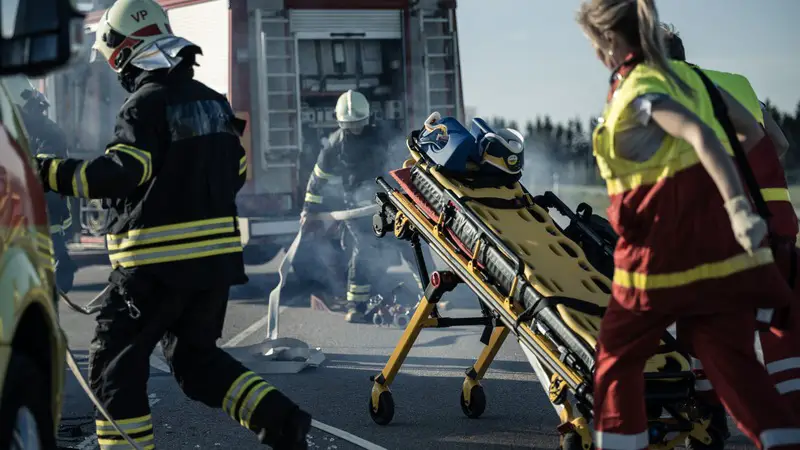
An environmental group said at least 37 people died inhaling petroleum fumes at Okari Jetty in Nigeria’s Rivers State on Thursday, September 3, 2026. Nine days later, the only death toll any Nigerian authority has confirmed is four.
That gap is now the story. The Nigeria Security and Civil Defence Corps recovered four bodies from the creeks beside the jetty, named all four, and said flatly that the figures circulating since the night of the deaths “were not fully verified and may have been overstated.” No mass burial has taken place. No morgue count has been published. No list of victims exists beyond those four names.
The dead are Taribo Levia, buried by his community before the others were found; Ogoloma Tamunoene Fred; Amiso; and Belema Siyerminma of Ngabiri. The corps spokesperson, Olufemi Ayodele, said it was relying on field assessment rather than early reports to establish how many people actually died.
Where the 37 Came From
The figure originates with one organization. The Youths and Environmental Advocacy Centre, a Port Harcourt group registered in 2017 and long active across the Niger Delta, said its volunteers documented no fewer than 37 deaths among men who breathed fumes from an illegal tap while loading a product into boats around midnight. Its executive director, Fyneface Dumnamene Fyneface, said more were missing and bodies had been seen in the water but not recovered.
Every major wire service that carried the story hedged it. Reuters, the Associated Press and the BBC all attributed the toll to the group rather than stating it, and Reuters noted that the corps had called the circulating figures unverified. A higher number, 43, appears in several Nigerian papers; it rests on unnamed community sources and is more thinly supported than the 37.
The police confirmed that people died without saying how many. “A number of people who went to scoop crude oil died in the process,” the Rivers State Police Command spokesperson, ASP Agabe Blessing Kaborlo, told Vanguard. “I cannot volunteer the actual figure now because investigation is still ongoing.” No formal complaint had been made to the command, he said.
Igwe Godswill, identified in local reporting as commander of the Civilian Joint Task Force in the Okrika Local Government Area, gave the only eyewitness count. “We saw about 10 of them,” he told Channels Television. Four had been identified, four were unrecognizable and the rest were too badly damaged to name. Relatives who collected bodies described foam at the mouth, a picture consistent with pulmonary damage from hydrocarbon exposure, though no autopsy has been performed.
“These are not criminals or anything, but they went out in search of their daily meal,” Godswill said.
Nobody Knows What Was in the Pipe
Accounts of the night describe a substance locally called “Indorama fuel,” and several outlets have rendered that as refined petrol or as crude oil. Neither description is established. The corps said the substance involved required technical confirmation, and no laboratory result has been released.
The name itself is misleading. Indorama Eleme Petrochemical Company makes polymers and fertilizer — polyethylene, polypropylene, urea — and produces no motor fuel of any kind. What the company has confirmed is narrower: a spokesman, Justice Bibiye, said its products move through facilities operated by the state oil company, and that Indorama was investigating.
Its pipeline surveillance coordinator was blunter. “If even it was one person that died, please, where is the corpse?” asked Maj. Fidelis Akando, a retired officer, who called the reports embarrassing and rejected any suggestion the company bore responsibility. “If a thief is injured in the course of stealing, will you blame the owner of the house?”
Petrol vapor can kill quickly, and the mechanism is not in dispute. Heavy concentrations depress the central nervous system and sensitize the heart muscle, and vapor heavier than air pools at water level; American health authorities list unconsciousness, ventricular fibrillation and respiratory failure among the outcomes. Whether that is what happened at Okari Jetty nobody has yet answered with evidence.
A Denial That Did Not Survive the Week
On September 4 an organization calling itself LightHope Succor Worldwide Initiative said it had contacted senior officers of the police, navy and army, all of whom “confirmed that no such incident occurred at the jetty on the date in question.” The report, its spokesperson Evelyn Williams said, was “fake news and without credible factual basis.”
The corps named four dead the next day. The group has issued no retraction, and no outlet has corroborated its account. It has no website, no prior public record and no coverage of any kind predating this dispute; one newspaper described it as an oil and gas services firm and another as a community welfare organization.
The Silence Around It
Two institutions have engaged at all. The corps is investigating what it calls possible criminal negligence and has increased security at the jetty. The police inquiry remains open. Everyone else has said nothing: the Rivers State Government, whose chief press secretary did not return calls; the National Emergency Management Agency; the state oil company; the Port Harcourt refinery that operates the jetty.
The environmental regulator has also stayed out of it. Fyneface called for a joint investigation visit by the National Oil Spill Detection and Response Agency; there is no sign one took place. He pressed the pipeline operator to tighten security, warned young people away from oil infrastructure and renewed his group’s demand for alternatives — modular refineries, legalized artisanal refining, a Niger Delta industrial park and a presidential scheme for artisanal crude refining that has been proposed for six years and never established.
Godswill made the simpler argument. Force will not end the practice, he said, because the tap is the only income the community has. People went back to scoop from it after the deaths.
Oil theft has run at industrial scale in the Niger Delta for years, costing Africa’s largest producer billions of dollars annually and leaving the creeks it is drawn from poisoned. The navy’s director of information, Capt. Abiodun Folorunsho, told the BBC that those responsible have “no hiding place” and that their days are numbered. He did not address the toll.