
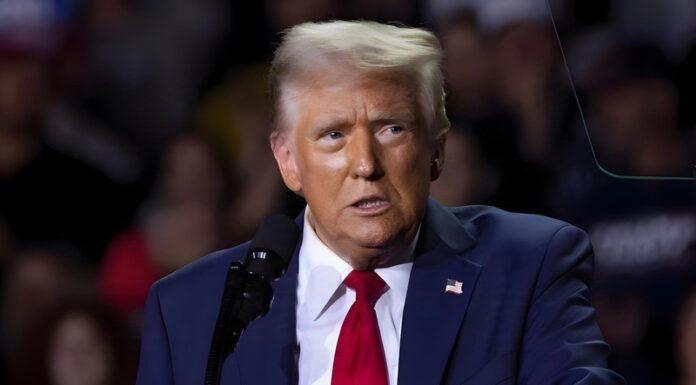
NBC’s decision to keep Seth Meyers on the air through 2028 has ignited a sustained clash with the White House, as President Donald Trump repeatedly demands the late-night host’s termination and threatens to pull broadcast licenses from the network and its corporate owner, Comcast.
The confrontation now involves federal regulators. Federal Communications Commission Chairman Brendan Carr publicly backed Trump’s call to dismiss Meyers, while another commissioner condemned the license threats as violating constitutional protections.
NBC extended the “Late Night with Seth Meyers” contract back in May 2024, locking in the comedian through the end of 2028. Yet when Trump erupted over the arrangement in a roughly 2 a.m. Truth Social message posted on Aug. 27, 2025, he characterized the renewal as a “sick rumor” and pledged: “I don’t know, but I’ll definitely be finding out!!!” He denounced Meyers as “one of the least talented Late Night television hosts” possessing “no ratings, talent, or intelligence” and the demeanor of “an insecure child.”
Regulatory Pressure and Constitutional Questions
Trump’s threats escalated sharply by November 2025, when he demanded Comcast and NBC fire the host “immediately” and suggested revoking licenses from both NBC and ABC. The president had already taken aim at broadcasters in August 2025, questioning why ABC and NBC were not paying what he termed license fees for their spectrum usage and writing that networks should surrender their licenses over allegedly biased treatment of conservatives, or at minimum remit significant fees.
Despite those warnings, no White House probe into NBCUniversal has been publicly disclosed. The president’s ability to force programming decisions or revoke licenses based on content remains legally dubious, a point underscored by dissenting voices at the FCC.
Monologues and Million-Viewer Audiences
Meyers, a former “Saturday Night Live” cast member, uses his “A Closer Look” segment to systematically ridicule White House policy and the president’s social media activity. Over the summer of 2026 alone, he dedicated episodes on July 17, 24, 28 and 31 to dissecting Trump, the final installment lampooning the administration’s record-low approval numbers. His targets have ranged from tariff policy and the push to federalize Washington, D.C., to the Kennedy Center takeover.
“Late Night with Seth Meyers” was attracting 1 million viewers as of April 2026, with clips circulating widely on social platforms. The show crossed the 10-year mark in 2024, when then-President Joe Biden sat for an interview. Trump has dismissed the program’s appeal, complaining in 2025 that he “got stuck watching Marble Mouth Meyers the other night, the first time in months” and calling him a “moron.”
On a 2025 episode of the “Armchair Expert” podcast, Meyers acknowledged that his concerns had evolved from personal performance anxiety to broader doubts about whether the late-night format can survive.
The Colbert Cancellation and Genre Upheaval
Trump’s offensive against late-night comedy comes as the landscape contracts. CBS ended “The Late Show with Stephen Colbert” in May 2026, a move the president celebrated and held up as a model, suggesting ABC should cancel Jimmy Kimmel next.
At NBCUniversal’s upfront in May 2026, Meyers mocked CBS as “so in the pocket for Trump,” a dig that landed as the network’s flagship program was shuttered and its parent company faced criticism over a settlement with the administration.
Origins of the Conflict
The dispute predates Trump’s second term. Before reentering office, he threatened investigations into NBC over what he alleged was slanted 2024 election coverage favoring Democrats, foreshadowing a broader campaign against major broadcasters. The August 2025 tirade about Meyers’ contract renewal marked an intensification, transforming earlier complaints into calls for personnel changes and license action.
The feud now spans contract negotiations, viewership data, regulatory policy and nightly comedy, with Meyers continuing to air segments and the president continuing to issue demands. Whether the standoff produces formal government action or remains confined to rhetorical warfare is unresolved.