
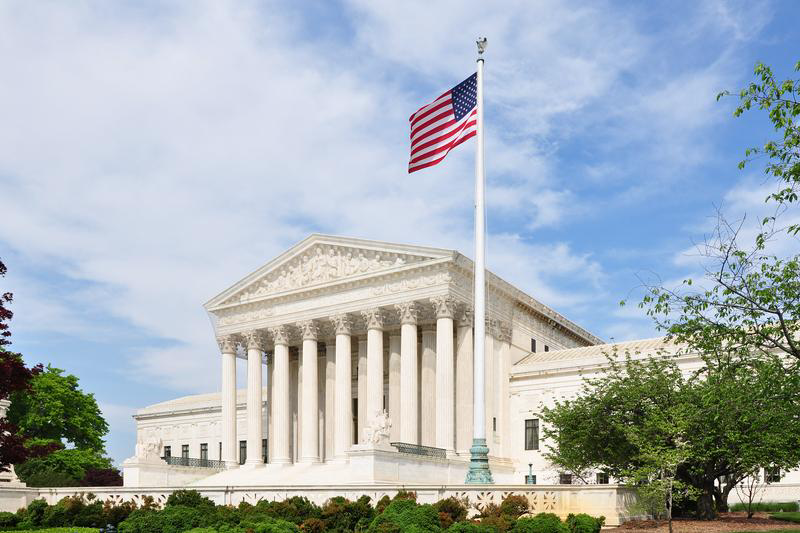
President Donald Trump has run out of room at the Supreme Court. On August 17, 2026, the justices denied his request to reconsider his appeal in the case brought by advice columnist E. Jean Carroll, shutting down — for a second time — his bid to undo a verdict finding him liable for sexually abusing her in 1996. The fight has run for years and has already cost him $5.6 million.
No explanation accompanied the ruling, which arrived as a single-sentence order with no noted dissents. A dispute that began with a 2019 accusation and traveled all the way to Washington, D.C., was, for practical purposes, over — rejected at the last stop.
A Rehearing the Court Rarely Grants
Trump had been here before. On June 29, the justices declined to hear the case outright. Instead of letting that stand, he asked the court to think again — a long-shot maneuver by any measure.
Such requests almost never succeed. The court reserves rehearings for exceptional circumstances that seldom come along, and Trump’s attorneys were asking the justices to revisit a refusal that had already gone against them, hoping for traction that earlier attempts never found.
What came back on August 17 was one sentence, no comment, no noted dissents — precisely the outcome legal observers had reason to anticipate. On this front, nothing further can be appealed.
Behind the petition was a jury’s conclusion that Trump was liable for sexual abuse and defamation, along with an order that he pay Carroll $5 million. That verdict now stands unshaken.
How the Case Began
The public first learned of the allegations in 2019, when Carroll, an advice columnist, laid them out in her book, “What Do We Need Men For?: A Modest Proposal.” She wrote about an encounter she said happened in 1996 at Bergdorf Goodman, a luxury department store in New York City.
By her account, Trump forced her against a dressing room wall, held her in place and raped her. He has consistently denied the accusations, saying in an interview that Carroll was “not my type” and claiming he’d never met her — a denial complicated by photographs showing the two of them together.
Two separate lawsuits followed. Carroll sued Trump for defamation in 2019, then in 2022 filed another suit accusing him of battery and defamation under New York’s Adult Survivors Act. The one-year lookback window that law created let survivors of sexual abuse file claims the statute of limitations would otherwise have blocked, opening a route Carroll would not have had on ordinary timelines.
The Verdict Stands
The rehearing bid amounted to a last-ditch effort — and by August the money was already gone. After the June 29 denial, U.S. District Judge Lewis A. Kaplan found that Trump had exhausted the appellate process and ordered him to pay. Carroll received roughly $5.625 million on July 9 — the $5 million jury award plus three years of accumulated interest.
That is what made the rehearing petition more than a formality. On July 22, Trump’s lawyers filed an emergency request asking an appellate court to order the money returned to escrow, a bid that depended on the Supreme Court agreeing to look at the case again. The August 17 order ended that possibility. Both the payment and the finding of liability remain intact.
Carroll went public in 2019 with allegations that reshaped a national conversation, and the denial closes a legal journey that carried her from the pages of a memoir into a federal courtroom and on to the Supreme Court. Orders of this kind rarely carry reasoning, and with no dissent noted twice in seven weeks, the justices showed no appetite for revisiting a matter they had already turned away.
One track of the Carroll litigation does remain open. In Carroll’s first defamation suit, filed in 2019 over remarks Trump made that year while he was president, a separate jury returned an $83.3 million verdict in January 2024. On July 28 he and the Justice Department asked the justices to hear an appeal of that award, arguing that presidential immunity shields statements he made in office. That petition is still pending.