
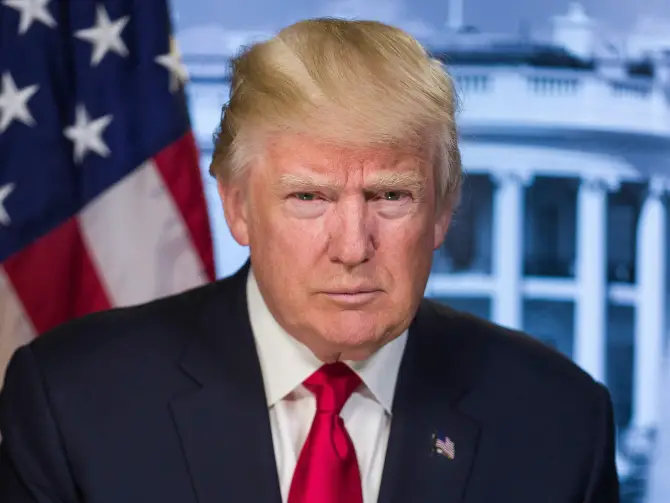
Close to 30 European heads of government convened in Brussels for a tense midnight session in January 2026 to discuss reducing the continent’s security and economic dependence on the United States. The covert summit reflected mounting anxiety over President Donald Trump’s repeated suggestions that he might seek to seize Greenland, an autonomous territory of NATO member Denmark, by force.
The gathering capped months of European efforts to manage a relationship that has pushed Washington’s closest alliances toward the breaking point since Trump returned to the White House in January 2025, forcing foreign governments into elaborate and sometimes nearly comical efforts to remain in his good graces.
A Portrait of an Unpredictable President
That volatility was on full display in February 2025, when Trump hurled a tablet across the Oval Office after a technical glitch prevented him from speaking during a multilateral call with world leaders. French President Emmanuel Macron was visiting the White House at the time, and the two leaders had been using the device to join a call led by Canada’s then-prime minister, Justin Trudeau. Unable to get his audio working, Trump “lobbed the device over the Resolute Desk and onto the floor,” according to an official who was present.
Flattery and Linguistic Pivots
NATO Secretary General Mark Rutte has emerged as the central architect of Europe’s strategy to placate Trump. Rutte has mimicked Trump’s communication style, using short, capitalized messages and urging other leaders to present defense spending increases as Trump’s personal achievement. His fellow leaders, while following his lead, have jokingly described him privately as an actor who never broke character.
Finland’s President Alexander Stubb and Norway’s Prime Minister Jonas Gahr Støre coordinated their messaging strategies, with Støre asking Stubb to send certain communications on Norway’s behalf because Trump has expressed frustration over not receiving the Nobel Peace Prize. European Commission President Ursula von der Leyen adjusted her public language on Russia policy after Trump pushed back on her calls to punish Moscow over Vladimir Putin’s war in Ukraine. Rather than using the word “sanctions,” she began describing the same measures as “tariffs” — a linguistic pivot designed to avoid irritating the U.S. president.
Campaign Merchandise and British Doubts
When German Chancellor Friedrich Merz visited Washington in June 2025, Trump showed him a space next to the Oval Office filled with campaign merchandise, including hats and boxes of shoes. Trump had given the room a nickname — the Lewinsky room — and encouraged his German guests to help themselves, joking that their wives could sell the items for thousands of dollars.
British intelligence, however, has reached a sobering conclusion about all this flattery: it is buying European governments less and less influence. Analysts are said to have compared the atmosphere around Trump’s White House to something between a medieval royal court and the Salem witch trials — an environment where favor is precarious and the rules shift without warning.
Escalating Tensions With Iran and Israel
The revelations about Trump’s behavior inside the Oval Office land against a turbulent international backdrop. In early June 2026, Trump publicly called on Israeli Prime Minister Benjamin Netanyahu to stand down from further military action against Iran, only to be publicly defied when Netanyahu moved ahead with retaliatory strikes on Iran anyway. Speaking from a tarmac in New York after attending an NBA finals game, Trump insisted the situation was under control and that a deal could be finalized within days — even as the facts on the ground told a different story.
Iran fired missiles at commercial ships in the Strait of Hormuz on July 7; over the following days, U.S. Central Command carried out three rounds of strikes, hitting more than 300 Iranian targets and reimposing sanctions on Iranian oil exports, while Iran struck U.S. military sites in Bahrain and Kuwait and widened attacks to Jordan, Qatar and the UAE. Trump declared the ceasefire “over” while speaking at the NATO summit in Ankara. Iran has since declared the Strait of Hormuz closed, though U.S. officials dispute that claim; Qatari and Omani mediators are working to revive talks, with no ceasefire yet restored.
National Counterterrorism Center Director Joe Kent resigned in March 2026, claiming Trump had launched the war against Iran under pressure from Israel. The FBI has since opened an investigation into Kent over allegations that he leaked classified information, according to multiple reports citing administration officials.
White House spokesperson Anna Kelly pushed back on any suggestion that Trump’s approach to foreign policy has been erratic or damaging to U.S. alliances, saying he “has effectively restored America’s standing on the world stage” and “has done more for NATO than anyone else.” A NATO summit began on July 7 in Ankara, Turkey, where Trump renewed his Greenland threats and raised the possibility of drawing down U.S. troops in Europe — the latest flashpoint in the dependency anxiety that drove January’s Brussels summit.