
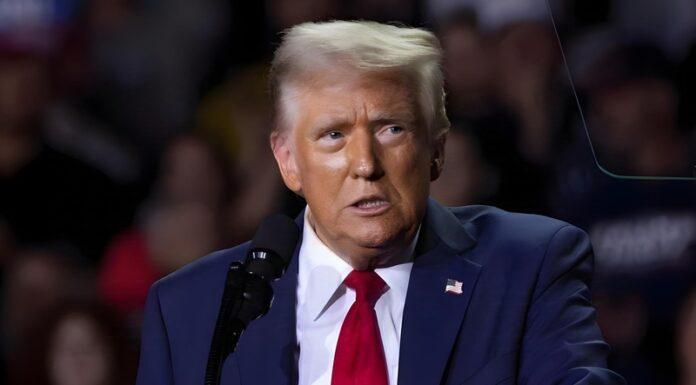
President Donald Trump has privately fixated on his own mortality following the July 11, 2026, death of South Carolina Sen. Lindsey Graham, according to sources close to the 80-year-old commander-in-chief. Graham, who was 71 and showed no outward symptoms of declining health, passed away from natural causes linked to an aortic dissection — a tear in the main artery extending from the heart.
The senator had just returned from Kyiv, where he met with Ukraine’s President Volodymyr Zelenskyy on July 10, before suffering cardiac arrest at his Capitol Hill home. Paramedics responded the night of Saturday, July 11, two days after Graham marked his 71st birthday and hours before a broadcast on “Meet the Press” scheduled for the morning of Sunday, July 12.
Searching for Answers in Private Talks
Behind closed doors, Trump has questioned whether the senator’s demanding schedule of international flights contributed to his sudden collapse. According to a report, the president also delved into Graham’s medical ancestry, hunting for hereditary factors that might explain such an unexpected outcome in someone who appeared vigorous.
Those conversations revealed an unusually subdued commander-in-chief wrestling with the shock of losing an ally nearly a decade younger than himself. Graham’s passing has forced Trump to confront the reality of aging in ways he typically avoids when speaking to the public.
Trump received what may have been the lawmaker’s final phone conversation around 7 p.m. after Graham landed from Ukraine. The senator wanted to address proposed voter eligibility legislation bearing the SAVE America name. Trump later said Graham sounded weary but normal — fatigue anyone would experience after crossing time zones — and the two arranged to reconnect soon.
Physical Struggles and Cognitive Tests
While the president routinely declares himself mentally sharp and physically capable, troubling indicators have surfaced during his second administration. Dark bruising on his hands has often been masked with cosmetics, and photographs show swelling around his ankles. Public episodes of falling asleep have also drawn scrutiny.
Trump frequently cites three separate cognitive evaluations meant to detect early dementia as evidence of his intellectual prowess, claiming he “aced” each one. Neither he nor White House officials have clarified why multiple screenings were necessary.
His June 14 birthday milestone came with ambivalence. Trump acknowledged turning 80 with little enthusiasm and has voiced uncertainty about the hereafter, telling a February audience in Georgia that while he hopes for heaven, he harbors doubts.
From Critic to Confidant
Graham had represented South Carolina in the Senate since 2003 and ran for the Republican presidential nomination in 2016, during which he emerged as one of Trump’s fiercest intraparty opponents before dropping out. The senator later transformed into one of the president’s most steadfast defenders and a regular companion on the golf course.
In a July 12 appearance on NBC’s “Meet the Press,” Trump described Graham as “like family” and called his death “a tough loss.” Vice President JD Vance praised the late lawmaker as someone who battled passionately for his beliefs and possessed the sharpest wit in the chamber.
Trump told NBC’s “Meet the Press” anchor Kristen Welker that the evening phone exchange could have been Graham’s last conversation. Sen. Tim Scott, South Carolina’s other Republican senator, characterized the tragedy as a stark illustration of life’s fragility.
At the president’s direction, flags remained at half-staff through 6 p.m. on July 18 to honor Graham’s memory.
Death and Legacy Concerns
This introspective period comes after Trump survived two attempts on his life. A July 2024 shooting at a Butler, Pennsylvania, rally left a bullet graze on the president and killed supporter Corey Comperatore. Another assailant tried to strike in April at the White House Correspondents’ Association dinner. Following both incidents, Trump’s immediate public response emphasized unity.
Political commentator David Rothkopf, appearing on The Daily Beast Podcast, suggested Trump’s habit of affixing his surname to buildings and erecting monuments reflects anxiety about his historical reputation, with the president feeling mortality’s shadow. Regardless of whether that interpretation is accurate, Trump’s approach to eulogizing follows a predictable script. Those he held in high regard receive sincere remembrances. Adversaries receive caustic comments.