
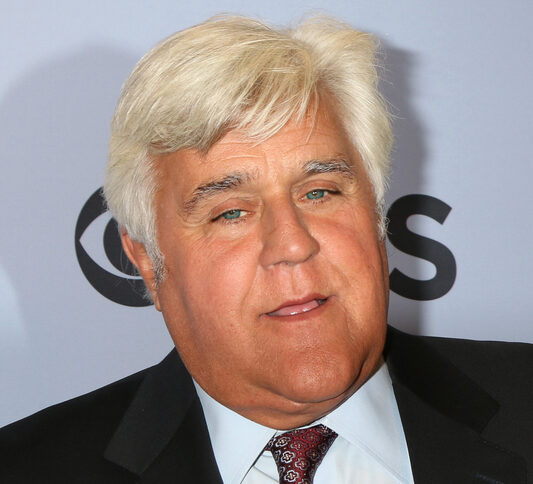
Jay Leno, the 76-year-old comedian, has opened up about his decision to serve as caregiver for Mavis Leno, his wife of more than 40 years, describing the responsibility as the true test of devotion rather than an obligation to escape. More than two years have passed since former “The Tonight Show” host Jay Leno obtained court permission to oversee his wife’s financial matters after she received a dementia diagnosis, and he continues to frame his choice as fundamental to what marriage means.
“I mean, that’s really what love is. That’s what you do. I mean, I’m glad I didn’t cut and run,” Leno said. He dismissed any notion of abandoning his wife as silly nonsense, emphasizing he would rather stay with Mavis than pursue anything else.
A Different Kind of Guardianship Story
His approach to caregiving has attracted notice precisely because it diverges sharply from the bitter guardianship disputes involving Britney Spears and Wendy Williams that have fueled widespread distrust of such legal arrangements. The word conservatorship carries fraught associations after those high-profile controversies dominated recent headlines.
Leno’s case has emerged as an illustration of how the mechanism can serve as a legitimate protection when circumstances justify its use. His petition proceeded with backing from Mavis’ own legal representative and medical documentation establishing her condition, avoiding the adversarial battles that sparked public skepticism elsewhere. The court designated him “suitable and qualified” and concluded the arrangement represented the “least restrictive alternative” possible.
What Love Demands
Rather than step back from the challenge, the entertainer has embraced his position, explaining that looking after his wife represents his understanding of true devotion. His public statements about the personal meaning and cost of caregiving underscore a journey that contrasts with more contentious guardianship stories.
NBC’s Stephanie Gosk reported on the conservatorship filing while correspondent Vicky Nguyen explained how the conservatorship system works during a segment that aired on January 29, 2024, bringing the couple’s situation into public view. The news drew attention both for Leno’s fame and for the emotional weight of an entertainer facing his wife’s cognitive decline.
Court Proceedings and Medical Evidence
In late January 2024, Leno submitted paperwork to the Los Angeles Superior Court seeking permission to act as conservator of Mavis’s estate. She was 77 at the time. Court filings described his wife’s condition in stark terms, stating she had been “progressively losing capacity and orientation to space and time for several years,” a decline that “renders her incapable of executing the estate plan.”
His stated objective was establishing a living trust to ensure Mavis would have managed assets supporting her care should he predecease her. He cited his longstanding role handling the couple’s finances as additional justification for the arrangement.
A neurologist’s evaluation dated November 28, 2023, supported the petition by recording Mavis’ progressive cognitive impairment. That report determined she lacked mental capacity to understand court proceedings or participate meaningfully in them. Her court-appointed attorney, Ronald Ostrin, recommended approval, noting that Mavis “sometimes does not know her husband, Jay, nor her date of birth.”
Crucially, Mavis did not oppose the request. Through her attorney, she indicated agreement with Jay’s appointment as conservator of her estate. On April 9, 2024, Judge Brenda Penny of the Los Angeles Superior Court granted Jay’s request after finding that sufficient evidence demonstrated the necessity of the conservatorship. The court concluded that Mavis’s dementia made it impossible for her to properly handle her financial matters.
On January 13, 2026, the Keystone Law Group updated an analysis — vetted by partner Roee Kaufman and finalized by managing partner Shawn Kerendian — that drew on this case to demonstrate how conservatorships function when a family member develops dementia.
The legal firm observed that taking such significant legal steps could potentially have been prevented if estate planning had been completed while Mavis still possessed the mental capacity to do so. For Leno, however, the legal machinery remains secondary. His attention stays fixed on the woman he married. The conservatorship grants him legal power to safeguard her finances, but his public statements reveal that the deeper commitment was never in doubt.