
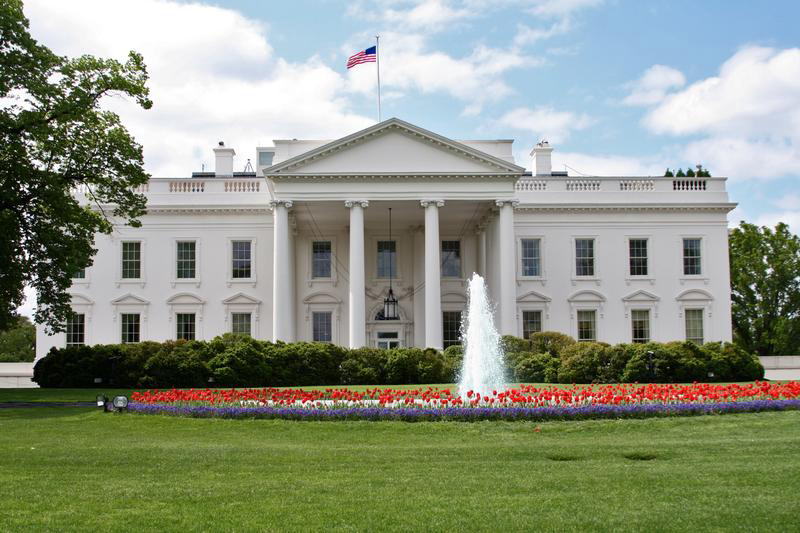
President Donald Trump’s ambitious plan to construct a massive ballroom at the White House has hit a personal roadblock: Melania Trump is not on board. The first lady has privately expressed her objection to the demolition of the historic East Wing, informing associates that the project is not her initiative and disassociating herself from the construction that has sparked significant criticism across the nation.
Trump himself has publicly acknowledged his wife’s dissatisfaction with the ongoing work, telling reporters she hears “pile drivers in the background, all day, all night.”
The East Wing held special significance for Melania during her husband’s first term. The space, which conventionally housed the Office of the First Lady, the East Colonnade, and the Jacqueline Kennedy Garden, functioned as the focal point of her Christmas initiatives during the previous administration. In 2018, she placed 40 controversial blood-red trees in the East Colonnade, while the customary Gold Star Family Tree honoring deceased military service members was positioned at the wing’s entrance.
The first lady has remained entirely quiet on the public record regarding the destruction of the area where she and her team previously worked. Her unwillingness to support the project represents a significant shift from past White House renovations, which sources indicated were executed with the first lady’s involvement. Alterations such as the redesign of the Rose Garden during Trump’s first term were executed with Melania’s complete endorsement.
The historic wing was demolished in approximately a week to create space for a large-scale 90,000-square-foot ballroom designed to accommodate 1,000 standing attendees or 650 seated guests. The magnitude of the destruction became apparent from aerial views, with heavy machinery removing piles of drywall, windows, insulation, wires, rubble, and debris from the White House grounds.
Trump has maintained aspirations for an elegant White House ballroom for over 15 years. In 2010, while Barack Obama held the presidency, Trump reached out to Democratic strategist David Axelrod to introduce the concept. According to Axelrod, Trump expressed frustration about hosting state dinners in temporary structures and offered to exhibit his Florida ballrooms as references. Axelrod recounted noting that the nation was experiencing an economic downturn, and the proposal was shelved.
During his first term, Trump intended to build the ballroom but encountered obstacles from other initiatives, including renovating the White House sports complex that Obama had constructed. Instead, he commissioned a tennis pavilion in 2020 to enhance the current facilities.
Following his return to office for his second term, Trump acted decisively to pursue the ballroom initiative. In July 2025, his administration removed three Biden appointees from the 12-member National Capital Planning Commission, the committee responsible for overseeing White House construction. Trump subsequently appointed supportive board members who readily endorsed the ballroom design, enabling the project to bypass what is typically an extended authorization timeline.
The demolition has received pushback from various sources, including Stephanie Grisham, who functioned as Melania’s chief of staff throughout Trump’s first term. Appearing on CNN’s OutFront, Grisham conveyed her sadness about the destruction and expressed worry regarding the permanent consequences of the damage. She underscored that the project circumvented customary authorization requirements and was executed with exceptional speed, noting she did not anticipate the wing would be demolished like an abandoned structure within roughly three days.
The East Wing’s destruction took place while a government shutdown obligated hundreds of thousands of federal workers, including aviation controllers and Transportation Security Administration personnel, to work without compensation. The project’s projected expenditure has risen from $200 million to $400 million, with Trump asserting private contributions will finance the construction after initially claiming he would finance it independently.
After a shooting at the White House Correspondents’ Dinner on April 25, 2026, Senate Republicans used the incident to justify taxpayer funding for the project. On May 4, the Senate Judiciary Committee proposed $1 billion for security-related features, with Majority Leader John Thune clarifying that only $200 million would go toward the physical structure itself.
A New York Times report issued March 29, 2026, uncovered substantial architectural concerns in the ballroom blueprint, leading Trump to introduce a modified design the subsequent day. The National Trust for Historic Preservation had previously cautioned that the intended construction’s scale and proportions would dominate the White House structure and could compromise the historically balanced neoclassical composition of the presidential residence.
The project’s judicial and administrative challenges have intensified considerably since early 2026. U.S. District Judge Richard Leon originally denied the National Trust for Historic Preservation’s attempt to suspend construction in February, determining the organization was unlikely to prevail based on legal grounds. Nevertheless, on March 31, 2026, Judge Leon changed his decision and issued a provisional restraining order, momentarily suspending above-ground construction on the premise that it mandates legislative authorization.
Two days thereafter, on April 2, the National Capital Planning Commission greenlit the final project blueprint in an 8–1 decision despite the judge’s ruling. A federal appellate tribunal subsequently permitted construction to advance until April 17 while the administration contested the restraining order. On April 17, Judge Leon delivered a modified ruling once more halting above-ground construction, though permitting subterranean national security and bunker development to advance.
The subsequent day, a three-judge committee on the D.C. Circuit Court of Appeals suspended that ruling, permitting both above-ground and below-ground construction to proceed and persist through June. Appellate proceedings addressing the ballroom’s constitutionality are arranged for June 5, 2026.
Opposition persists across multiple dimensions, encompassing the lack of community participation before destruction commenced, unresolved asbestos protection claims initiated by the Asbestos Disease Awareness Organization, and larger concerns regarding circumventing the legislative branch to finance a $400 million renovation of a federally protected structure with nongovernmental finances.
White House representative Davis Ingle has justified the initiative, asserting that President Trump is endeavoring to enhance the White House without drawing on public funds and that the enhancements will serve successive presidents and American visitors for years ahead. As construction is permitted to continue through June and judicial arguments draw near, the ballroom was visibly rising above ground as of May 15, 2026, even as the outcome of the most disputed restoration initiative in White House heritage stays in judicial hands.