
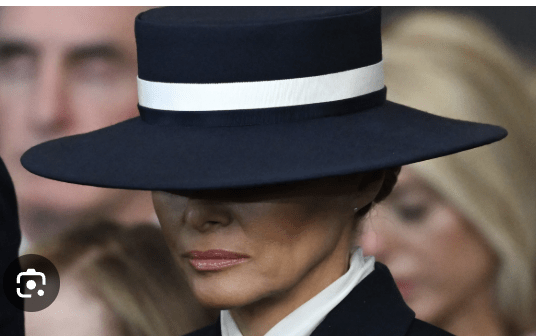
A first lady’s favorability rating hitting -12 would be stunning under any circumstances. For Melania Trump, according to CNN’s senior data analyst Harry Enten, it represents the worst number ever recorded for a modern first lady at this stage in a presidency. The CNN/SSRS survey, conducted between March 26 and March 30, 2026, shows unfavorable views outpacing favorable ones by a dozen points.
Traditionally, first ladies poll better than their husbands, maintaining a cushion of goodwill even when presidents face deep polarization. Melania Trump has shredded that cushion entirely, landing in territory no first lady has occupied before.
Enten summed it up on air with a line that will probably follow Melania for a while: “Melania Trump breaking records in the way that you don’t want to break records — historically awful. The American people really don’t care for her.”
Back in May 2018, during Trump’s first term, she actually polled at +30. For someone married to one of the most divisive presidents in American history, that was impressive. She had carved out a lane for herself — quiet, mostly apolitical, keeping her distance from the daily circus of Washington. A lot of Americans respected that approach, or at least didn’t have strong feelings about her one way or another.
But that goodwill evaporated steadily. By January 2025, that +30 had shrunk to +3. Still technically positive, but barely. And then, sometime between January 2025 and late March 2026, the floor fell out. A 15-point swing from slightly positive to deeply negative territory in just over a year is a dramatic collapse for any public figure, let alone someone in a traditionally ceremonial role.
When CNN’s Kate Bolduan pressed Enten for an explanation behind the slide, he pointed to one very expensive answer: “Melania: Twenty Days to History,” a self-titled documentary that hit theaters on January 30, 2026. Directed by Brett Ratner and produced by Amazon MGM Studios, the film followed Melania Trump in the days leading up to her husband’s second inauguration.
Amazon paid about $40 million for the acquisition — roughly $26 million more than the next closest bidder, according to The New York Times. Then they dropped another $35 million on marketing. That’s a $75 million bet on a documentary about a first lady.
The film pulled in about $7 million on its opening weekend, which beat initial projections that ranged from $1 million to $5 million. President Trump hyped it, calling it the “hottest” movie in the country and repeatedly referring to his wife as a “movie star.” But after that first weekend, the wheels came off fast.
Total ticket sales came in around $17 million against that $75 million budget. In Hollywood math, that’s a catastrophic loss. By Feb. 25, less than a month after its release, “Melania” had disappeared from the domestic box office charts entirely, dropping from 3,300 theaters at wide release down to just 505.
On Rotten Tomatoes, the film sits at an 11 percent critics’ score. The audience score, meanwhile, stands at 99 percent — a record-breaking gap between critic and fan reception on the platform. That disparity raised eyebrows immediately, and the film was flagged for showing signs of “fake” ticket sales being purchased in bulk.
On Letterboxd, the documentary got review-bombed before it even came out. Critics called it shallow, lifeless, and compared it to propaganda. Advertising posters in cities like Los Angeles were hit with what was described as “extensive and severe” vandalism. It became a cultural flashpoint — and not in the way Melania or Amazon had hoped.
The choice to hire Brett Ratner as director became its own controversy. In the last two months of the film’s run, Ratner’s name appeared multiple times in the latest batch of the Epstein files released by the Justice Department. The documentary was also publicly slammed by members of its own crew, and filmmakers were accused of using musical numbers without permission.
Enten argued that when you combine the polling data with the documentary’s commercial and critical failure, both streams of evidence tell the same story: Melania Trump is “historically unpopular for a first lady.” A lot of Americans saw the documentary as a political vanity project, even if Melania didn’t intend it that way. And in a political environment this charged, that kind of perception sticks.
Enten didn’t just drop Melania’s number in a vacuum. He stacked it against every second-term first lady in recent memory, and the comparison is brutal. At the same point in their husbands’ second terms, Nancy Reagan was sitting at +50. Laura Bush was at +46. Michelle Obama had +42. Even Hillary Clinton — who was navigating the political fallout from Bill Clinton’s sex scandal — managed a +25 rating.
Melania’s -12 isn’t just below those numbers. It’s 37 points worse than Hillary Clinton’s, who was previously the lowest-rated second-term first lady on record. That’s not a gap. That’s a canyon. And Jill Biden, at the comparable point during Joe Biden’s first term, also remained above water.
On April 9, 2026 — the same day the devastating CNN poll numbers went public — Melania Trump made a highly unusual public appearance. She delivered a tightly controlled press statement from the Grand Foyer of the White House denying any personal connection to Jeffrey Epstein. She didn’t take questions from reporters and gave little explanation for why the statement was happening at that particular moment.
Melania forcefully denied any meaningful connection to the convicted sex offender and his accomplice Ghislaine Maxwell. “The lies linking me with the disgraceful Jeffrey Epstein need to end today,” she declared, adding that she and the president had occasionally attended the same parties as Epstein due to overlapping social circles in New York and Palm Beach.
Addressing a 2002 email she sent to Maxwell — in which she praised a magazine profile of Epstein and invited Maxwell to call her, signing off “Love, Melania” — the first lady characterized the exchange as nothing more than casual correspondence, calling it a trivial note. Maxwell addressed her as “sweet pea.”
She also stated that Epstein did not introduce her to Donald Trump, saying she met her husband by chance at a New York City party in 1998, as she explained in her book, “Melania.”
Notably, President Trump told a reporter he was unaware of the statement before it was delivered — an unusual detail that only deepened the mystery surrounding why Melania chose to speak out at all. CNN later reported that the first lady’s remarks were driven by a monthslong fixation on press coverage about her alleged Epstein ties, and that the president declined to tune into her remarks in real time.
The day after the statement, House Oversight Chairman James Comer committed to holding hearings on Epstein, telling Fox News, “I agree with the first lady. We will have hearings.” A group of 13 Epstein survivors, along with the brother and sister-in-law of another, pushed back on the first lady’s call, accusing her of “shifting the burden onto survivors” instead of pressing those in power for accountability themselves.
Analysts consider the poll and the Epstein statement unrelated events. The poll data was collected before the statement was made, but the optics of both landing on the same day certainly didn’t help.
Enten’s analysis also tied Melania’s numbers to a broader picture. Her approval ratings now closely mirror those of President Trump, whose own numbers have hit record lows in recent weeks. A CNN/SSRS poll found that approval of Trump’s handling of the economy is the lowest it’s been in either of his terms, with just 31 percent approving. A separate Harvard CAPS/Harris survey found 53 percent of respondents say the economy is worse now than during the Biden administration.
Reuters/Ipsos polling found just 29 percent approved of Trump’s economic performance. The ongoing war in Iran has added another layer of public frustration. In this environment, the traditional buffer that first ladies enjoy — being seen as above the political fray — has completely evaporated for Melania.
Enten couldn’t resist bringing up one of the most infamous moments of Melania’s time in Washington. During Trump’s first term, she wore a jacket to a migrant detention facility that read “I Really Don’t Care, Do U?” It was one of those moments that gets seared into the public memory, the kind of thing that gets brought up in every conversation about who she really is and what she actually thinks.
The irony, Enten suggested, is that the slogan has now turned back on her. The American public, by the numbers, really doesn’t seem to care for Melania Trump. And with midterms approaching, those numbers represent a real problem — not just for her image, but for the entire Republican apparatus trying to hold onto power.
The White House’s response to the poll was characteristically on-brand. Spokesperson Davis Ingle told reporters: “No other President in history has accomplished more for the American people than President Trump.” Which, you’ll notice, didn’t mention Melania at all.