
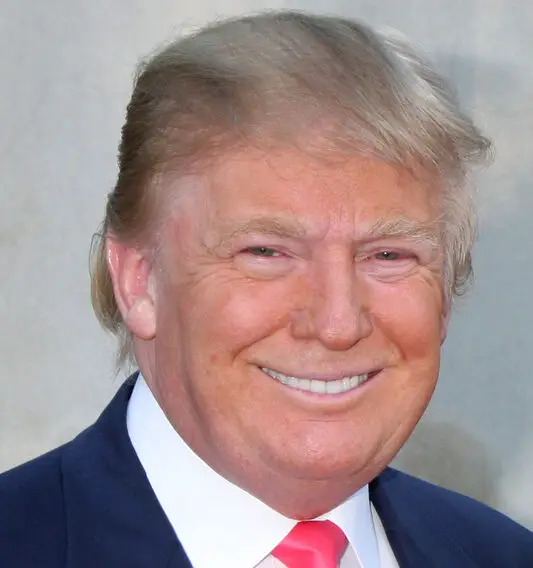
The Economist’s striking cover showing a bare-chested President Donald Trump riding a polar bear across the Arctic has been spreading online, grabbing attention amid one of the most chaotic stretches in recent U.S. history.
The British magazine published the cover on January 22, 2026, cautioning that US partners should brace for possible isolation if NATO’s future is uncertain. The image followed days of Trump’s threats to seize Greenland, heightening friction between the US and European allies.
Matt Stopera, a Deputy Editorial Director at BuzzFeed who has been at the outlet since the George W. Bush era, pointed out the viral cover artwork that dominated online discussion.
Social media users quickly weighed in on the magazine’s artistic choice. “Could be the motto for his whole life,” one commenter wrote about the cover. Others labeled it “Accurate” and “Perfect!”
The cover’s comeback arrives during a volatile period for the Trump administration, which is now facing a war with Iran, rising gasoline costs, and a government shutdown that has disrupted air travel. Average fuel costs are $3.84 per gallon, a 31% increase from a month earlier. Oil is trading near $107.40 per barrel amid the Middle East fighting.
More than three weeks into the U.S. and Israel’s conflict with Iran, there is no clear end in sight. The United States and Israel struck Iran on February 28, prompting rapid reprisals across the region. Iran has effectively closed the Strait of Hormuz, a key route that usually handles about 20% of the world’s crude oil and natural gas shipments.
President Trump, inaugurated on January 20, 2025, is facing growing criticism over how the war is being managed and its lack of clear goals. Iran analyst Karim Sadjadpour said Trump “said that that took him by surprise when Iran started to attack the Persian Gulf countries or close down the Strait of Hormuz,” noting the conflict began as a “war of choice” without an immediate threat.
The Economist’s cover seems intended to critique Trump’s foreign policy and international alliances. The magazine warned that European nations should prepare for a world where NATO might not hold together, or at least for a United States that is a less dependable partner.
On January 21, 2026, at Davos, Trump walked back his stance, saying he would not use force or tariffs to take Greenland after weeks of threats toward Denmark and other European countries. He said he had developed “the framework of a future deal” with NATO Secretary General Mark Rutte concerning Greenland and the broader Arctic.
The administration’s ties with NATO have been tested during the Iran conflict. No close ally has immediately stepped up. Britain has refused to be pulled into the fighting. European Union foreign policy chief Kaja Kallas said on Tuesday, “This is not Europe’s war. We didn’t start the war. We were not consulted.”
Meanwhile, NATO air and missile defenses in Turkey have intercepted several Iranian ballistic missiles, beginning with an interception on March 4, 2026, and a third missile downed near Incirlik Air Base on March 13. These events show the complicated military involvement even as formal NATO backing for the war has been limited.
At home, the immediate effects are more tangible. One month into a partial government shutdown, hundreds of Transportation Security Administration (TSA) employees working without full pay have resigned, while others have taken unexpected leave, causing travel disruptions. Passengers are enduring long airport security lines, with waits sometimes nearing two hours at major hubs like Atlanta and Houston.
Acting Deputy TSA Administrator Adam Stahl issued a blunt warning: “If this continues, it’s not hyperbole to suggest that we may have to quite literally shut down airports, particularly smaller ones, if call-out rates go up.” DHS says 366 TSA officers have quit since the shutdown began in February.
The Economist, known for its frequently provocative cover art, has long used visual satire to make points about political leaders. Previous covers have depicted world figures in symbolic ways to reflect the magazine’s editorial take. This most recent image achieved the viral reach publishers strive for online.
As the Iran conflict continues without resolution, gas prices rise, and airport queues grow, Americans are finding some dark amusement in satirical political commentary—a fleeting moment of levity amid grim news.