
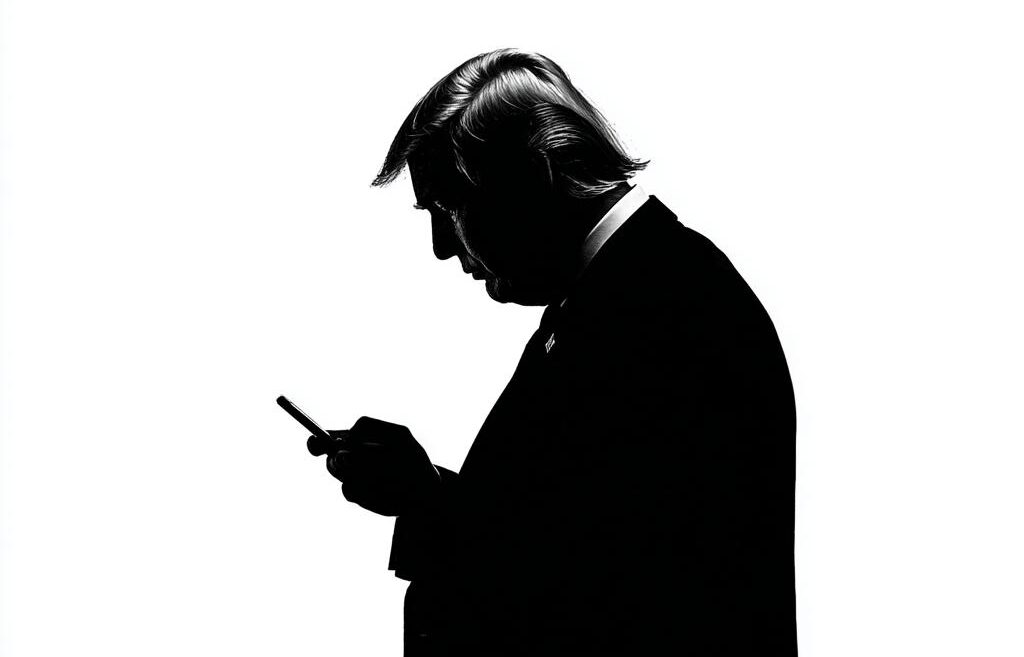
Former President Donald Trump made allegations of treason against his predecessor, President Barack Obama, during a series of posts on Truth Social on the evening of Jan. 28, 2026. The posts were filled with unfounded claims and conspiracy theories, earning him the ire of critics who described his actions as an erratic posting spree.
On his Truth Social site, Trump posted a video from the previous summer, alleging that Obama, along with former President Joe Biden, former Secretary of State Hillary Clinton, and former FBI director James Comey, had attempted to manipulate elections.
“Barack Hussein Obama is the ringleader,” Trump declared in the video. “It’s there, he’s guilty. This was treason, this was every word you can think of,” he continued.
There has been no evidence to back Trump’s allegations. His accusations came after two citizens were killed by federal agents in Minneapolis, Minnesota, leading to demands for Trump to help de-escalate national tensions. Instead, Trump used his platform to share memes, unfounded conspiracy theories, and false claims.
One of Trump’s strange posts suggested that China, Iran, Italy, and others had collaborated with Obama to make Biden their puppet. These claims, like Trump’s other conspiracy theories about the 2016 and 2020 elections, remain unsupported. The president has a history of making baseless claims about electoral integrity.
On the same day, the FBI executed a search warrant at a Georgia election office. This is the same state where Trump notoriously asked the Republican secretary of state to find enough votes for him after he lost the 2020 election. The FBI’s actions underscore Trump’s continuing fixation with discredited claims about the 2020 election.
Also during this spree, Trump posted false claims that Walmart would be closing 500 stores in California due to the state’s minimum wage, which he falsely claimed was $22. California’s actual minimum wage is $16.50. These unsubstantiated claims were part of a series of attacks against California and its Democratic Governor, Gavin Newsom, who is contemplating a 2028 presidential run.
Newsom refuted Trump’s allegations via his press office account, countering what he described as false information disseminated by the president. This exchange highlights the ongoing political tension between Trump and potential Democratic contenders as the 2028 presidential race begins to take shape.
Trump’s posts also targeted individuals and current events. He criticized Alex Pretti, a 37-year-old ICU nurse who was shot and killed by Border Patrol agents during a confrontation in Minneapolis, Minnesota, on Jan. 24. A video surfaced showing a confrontation involving Pretti 11 days before the shooting, and Trump labeled Pretti as a potential insurrectionist in a late-night post.
Pretti’s attorney declared the shooting to be unjustified. Critics lambasted Trump’s post, noting his choice to attack a deceased American citizen in the early hours of the morning rather than addressing concerns about the use of federal force.
Pretti was the second citizen in Minneapolis to be fatally shot by federal agents in January. Renée Good, a 37-year-old mother of three, was killed by Immigration and Customs Enforcement (ICE) officers on Jan. 7. These deaths led to national protests, mirroring growing concerns about federal immigration enforcement tactics and the use of lethal force.
The incidents in Minneapolis, Minnesota, have led to questions about the Trump administration’s approach to immigration enforcement and the rules governing federal agents operating in US cities. Advocates for civil liberties have voiced concerns over what they perceive as an increase in force against American citizens during immigration operations.
This approach has been criticized by Democrats and some Republicans, who argue for more restraint from the president, especially during periods of national tension.
Trump’s use of Truth Social as his primary communication platform illustrates the evolution of presidential communication in the digital era. The platform was established after Trump was banned from mainstream social media sites following the Jan. 6, 2021, events. Since returning to the office, Trump has continued to use his platform to make announcements and express his opinions.
The accusations against Obama represent a ramping up of rhetoric between the current and former presidents. While it’s common for political opponents to criticize each other, accusing a former president of treason is a highly unusual act and speaks volumes about the current state of American political discourse.
Trump’s attacks on Obama continued into early February 2026, when he posted a video on Truth Social depicting Barack and Michelle Obama as apes. The video, posted on February 5 and deleted the following day after bipartisan outcry, drew widespread condemnation, including from Republican Senator Tim Scott, who called it ‘the most racist thing I’ve seen out of this White House.’ The White House initially defended the post before blaming a staffer and removing it.
Legal experts note that treason is defined by the Constitution as providing aid to the enemies of the United States during wartime. Trump’s allegations do not meet this criterion, and no evidence has been produced to substantiate any criminal misconduct by Obama in relation to elections.
The posts included attacks on multiple Democratic figures and the promotion of various conspiracy theories. Critics suggest this is an attempt to divert attention from other issues facing the administration. The volume and content of the posts have raised concerns among some observers about the president’s focus and priorities.
As the 2026 midterm elections draw near and the 2028 presidential race begins to take shape, Trump’s continued emphasis on past elections and attacks on political rivals suggest these themes will remain central to his political strategy. The flurry of posts on Jan. 28 provides a glimpse into a potentially contentious political landscape in the coming months and years.