
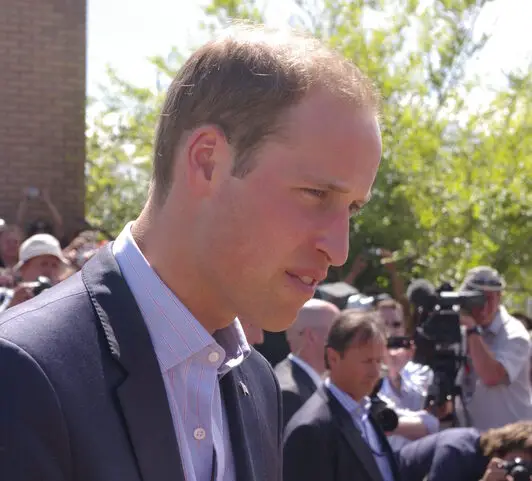
Prince William admitted he was not in a “calm state” during his first public appearance after the arrest of his uncle, Andrew Mountbatten-Windsor, acknowledging that the scandal has placed considerable emotional pressure on the family.
The Prince of Wales shared the candid remark on Sunday evening, Feb. 22, 2026, as he and his wife, Princess Kate Middleton, walked the BAFTA red carpet at London’s Southbank Centre’s Royal Festival Hall.
When reporters asked if he had watched “Hamnet,” the Shakespeare-inspired film directed by Chloé Zhao, William—who serves as BAFTA’s president—hinted at the strain of recent events.
“I need to be in quite a calm state, and I am not at the moment. I will save it,” William told the Daily Mail.
The appearance came just three days after Andrew Mountbatten-Windsor was arrested on Thursday, Feb. 19—his 66th birthday—on allegations of misconduct in public office. Thames Valley Police detained the former prince at his Sandringham Estate home for nearly 11 hours before releasing him pending further inquiries. Searches continued at Royal Lodge and other locations.
Andrew’s arrest is tied to emails released by the Department of Justice in the Jeffrey Epstein files, which appeared to show him sharing details of official trade missions with Epstein while serving as the UK’s trade envoy from 2001 to 2011.
Epstein died by apparent suicide in a Manhattan jail in 2019. Andrew, who remains eighth in line to the throne, became the first senior British royal to be arrested and held in custody in modern times—an event not seen since the era of King Charles I almost four centuries ago.
King Charles III, 77, issued a statement voicing his “deepest concern” over his brother’s arrest while emphasizing the need for the legal process to proceed without interference. He stressed that “the law must take its course” and promised the palace’s “full and wholehearted support and co-operation” with investigators.
The government is currently considering whether to remove Andrew from the line of succession. Such a move would require new legislation in Parliament as well as approval from more than a dozen Commonwealth realms, including Canada, Australia, and Jamaica. The last time a royal was removed was in 1936, when Edward VIII abdicated, allowing Queen Elizabeth II’s father to ascend the throne.
Despite the turmoil within the family, royal duties have continued. Kate Middleton went to a Six Nations rugby match on Saturday at Allianz Stadium in Twickenham, where Ireland defeated England 42–21. She was not joined by Prince William, who had just returned from a three-day official trip to Saudi Arabia (Feb. 9–11), his first visit there as heir to the throne, aimed at deepening UK-Saudi trade and investment ties ahead of their upcoming centennial of diplomatic relations.
King Charles, still undergoing treatment for cancer, made an unexpected appearance at the opening of London Fashion Week on Thursday at 180 Strand—the same day Andrew was arrested. The king sat in the front row for British-Nigerian designer Tolu Coker’s show with Stella McCartney and British Fashion Council CEO Laura Weir.
Body language expert Judi James analyzed the Waleses’ red carpet appearance, noting they seemed “clearly more tactile than usual.” A widely shared video showed Kate tapping William playfully on the backside—an action James saw as a subtle communication signal, adding that their styling conveyed “the look of an A-list power couple.”
Royal insiders say William is frustrated by the scandal, calling it a long-term issue he will likely inherit completely once he becomes king. Sources also say King Charles has been encouraged by William’s conduct throughout the crisis, especially praising how the Prince of Wales handled himself during his recent overseas visit despite the family upheaval.