
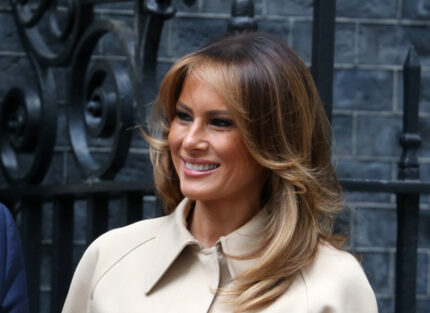
On Tuesday, January 27, 2026, First Lady Melania Trump took an unusual political step by making a statement about the ongoing turmoil in Minneapolis, Minnesota. Her call was for unity and peaceful protests in response to the escalating tensions caused by two fatal shootings by federal immigration agents in the city.
During her appearance on Fox and Friends Tuesday morning, Melania Trump stated, “I’m calling for unity. I know my husband, the president, had a great call yesterday [Monday] with the governor and the mayor, and they’re working together to make it peaceful and without riots. I’m against the violence, so please, if you protest, protest in peace. And we need to unify in this time.”
Her comments come in response to the growing protests sparked by the fatal shootings of American citizens Alex Pretti and Renee Nicole Good, both aged 37, by federal agents during enforcement operations in Minneapolis. Pretti was fatally shot by a federal agent on January 24, and Good was killed by an Immigration and Customs Enforcement agent on January 7. A third shooting involving federal agents took place on January 8 in Portland, Oregon, where Border Patrol agents shot two immigrants.
Usually keeping a low profile on policy issues, the First Lady’s remarks on the Minneapolis events represent an infrequent political intervention.
On January 26, President Donald Trump confirmed his constructive talks with Minnesota Governor Tim Walz and Minneapolis Mayor Jacob Frey. The president also pledged to reduce the number of federal agents in Minnesota, where close to 2,000 have been sent for immigration enforcement operations.
The presence of a large federal enforcement unit in Minneapolis has led to ongoing protests since the agents arrived in the city in December. In response to the shootings, Homeland Security Secretary Kristi Noem announced on February 2, 2026, that all federal immigration officers in Minneapolis will begin wearing body cameras, with plans to expand the program nationwide as funding becomes available. The demonstrations have escalated in the wake of the recent fatal shootings.
The details of Pretti’s death are still disputed. Federal officials initially maintained that Pretti was armed with a handgun and was acting aggressively when he was shot, though these claims have since been contradicted by video evidence.
Greg Bovino, the U.S. Customs and Border Protection chief leading the Minneapolis operations, along with Homeland Security Secretary Kristi Noem, initially claimed Pretti was planning to inflict “maximum damage” and kill law enforcement. These claims have been contradicted by video evidence, and Bovino has been withdrawn from Minneapolis.
Initially, Noem defended the agent’s actions, labeling Pretti’s actions as “domestic terrorism” and stating he “brandished” a weapon. Later, she admitted the administration was “using the best information we had at the time” when the video evidence contradicted the initial claims.
Pretti’s family vehemently denies the administration’s account of the events. They claim the administration has propagated “sickening lies” about the incident, describing these claims as “reprehensible and disgusting.” This counter-claim by the family has heightened public scrutiny of the shooting and the federal immigration enforcement practices in Minneapolis.
U.S. District Court Judge Eric Tostrud issued a temporary restraining order preventing the Trump administration from destroying or altering evidence related to the shooting, ensuring the materials are preserved for investigation. Acting Deputy Attorney General Todd Blanche announced a civil rights investigation into the shooting by the Justice Department, and Minnesota Attorney General Keith Ellison has called for a thorough investigation.
The White House sent Border Czar Tom Homan to Minneapolis to oversee the state’s immigration enforcement operations. Homan, who was not initially involved with the Minnesota operations, is now providing direct updates to President Trump on the situation.
Minneapolis has emerged as a focal point for debates over immigration enforcement tactics and federal-local relationships. City leaders have expressed concerns about the significant federal presence, while protestors have maintained a constant presence in the streets, demanding the agents’ withdrawal. The deaths of Pretti and Good have transformed initial protests over immigration policy into broader debates over the use of force and accountability.
The release of Melania Trump’s documentary project has led to her increased public appearances in recent weeks. The film, directed by Brett Ratner, was acquired by Amazon MGM Studios for a record-breaking $40 million, the highest price ever paid for a documentary. The film premiered at the Kennedy Center on January 29, with a theatrical release on January 30.
The first lady’s increased media presence has coincided with the crisis in Minneapolis, leading to an unusual combination of her promotional activities and commentary on a politically charged situation. Her call for unity stands as one of her most direct comments on a controversial policy matter during her tenure as first lady.
Stephen Miller, White House Deputy Chief of Staff for Policy, initially described Pretti as a “would-be assassin” and defended the federal enforcement operations, although he later admitted that agents “may not have been following” proper protocol.
The situation in Minneapolis continues to evolve as federal and state officials negotiate over the presence of immigration enforcement agents in the city. Governor Walz’s office has indicated that the president has agreed to reduce the number of agents, 700 officers left Minneapolis during the week of Feb. 1.
The controversy has raised questions about the rules of engagement for federal agents during immigration enforcement operations, especially in situations involving protestors or bystanders. The use-of-force policies for U.S. Immigration and Customs Enforcement (ICE) and U.S. Border Patrol agents generally require officers to use deadly force only when facing an immediate threat of death or serious bodily injury. The conflicting accounts of Pretti’s actions and possessions at the time of the shooting have made it a key issue in the ongoing scrutiny to determine if the shooting complied with these standards.
Public reaction to Melania Trump’s statement has been mixed, with some praising her call for unity while others criticize the remarks as insufficient given the circumstances. The first lady’s message centered more on the need for peaceful protest rather than directly addressing the fatal shootings or the families’ concerns about the federal response.
Minneapolis faces ongoing protests and a continuing, though possibly decreasing, federal presence. The situation has become a key point in broader national debates over immigration enforcement, federal authority, and the appropriate use of force by government agents. The preservation of evidence ordered by the federal judge ensures an investigation can proceed, but questions about transparency and accountability remain at the forefront of public discussions about the events in Minneapolis.