
The tenure of former President Muhammadu Buhari, who passed away seven months ago at 82, is back under the lens as his former Attorney General and Minister of Justice, Abubakar Malami, faces a high-profile corruption trial. In late December 2025, Malami was indicted on 16 counts of money laundering involving ₦8.7 billion (about $6 million), with the prosecution claiming the offenses happened during his eight-year tenure under Buhari. The charges have reignited discussions about the anti-corruption legacy of Nigeria’s former leader, who constructed his political career on pledges to combat governmental corruption.
Malami, who served as Buhari’s Attorney General from 2015 to 2023, presented himself before the Federal High Court in Abuja on Dec. 30, 2025, along with his son, Abdulaziz Malami, and wife, Hajia Asabe Bashir. All three proclaimed their innocence to charges of conspiring to hide, retain, and disguise proceeds of illegal activities. The Economic and Financial Crimes Commission suggests the funds were laundered through corporate entities and used to buy luxury properties in Abuja, Kano, and Kebbi states. After over a week in detention, the defendants were each granted ₦500 million bail on Jan. 7, 2026. The trial continues as of early February 2026.
The situation has not escaped the notice of Nigerians. Buhari campaigned for the presidency in 2015 on a robust anti-corruption platform, promising to handle governmental wrongdoing in one of Africa’s largest economies and oil producers. His catchphrase during that campaign—that he belonged to “everybody and nobody”—indicated his intent to rise above Nigeria’s deep-rooted political factions and eradicate corruption. However, the prosecution of his main legal officer for alleged crimes committed during Buhari’s own tenure has cast doubt over those promises.
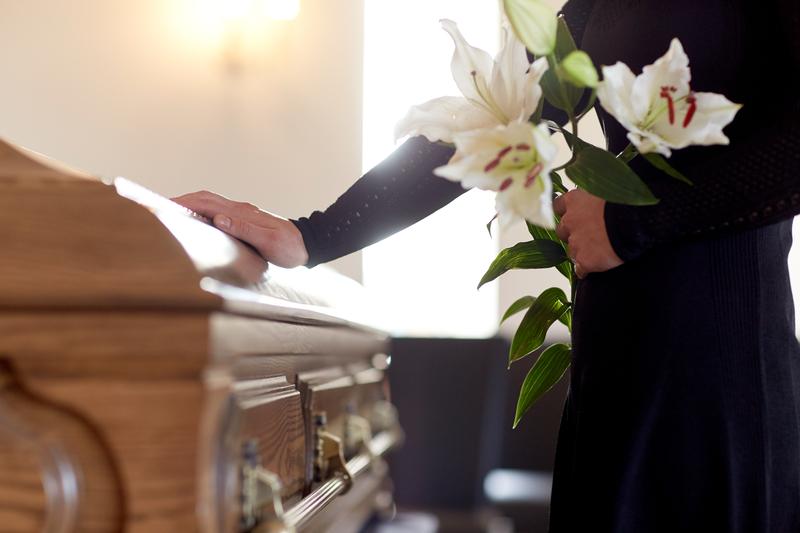
Buhari died on the afternoon of July 13, 2025, in London, where he had been receiving medical treatment for a lingering illness. The news was confirmed by the spokesperson for President Bola Tinubu.
After Buhari’s death, President Tinubu sent Vice President Kashim Shettima to London to accompany the former president’s body back to Nigeria. He also ordered that all national flags be flown at half-mast from July 13 to July 19. An emergency Federal Executive Council session was called as a tribute to the late leader.
Buhari had an extensive political career, leading Nigeria, Africa’s most populous country, twice. His first term as a leader started in December 1983 when he took power through a coup and ruled as a military dictator until August 1985. He then became a democratically elected president from 2015 to 2023. His 2015 election victory, against incumbent Goodluck Jonathan, was a significant event as he was the first opposition candidate to unseat a sitting president.
Buhari was born on Dec. 17, 1942, in Daura, Katsina State. He joined the army at 19 and climbed to the rank of major general. His initial rule was noted for strict discipline and anti-corruption measures. However, his first term only lasted 20 months until he was overthrown by military officer Ibrahim Babangida in August 1985, resulting in a 40-month imprisonment.
He capitalized on voters’ discontent with government corruption and insecurity, vowing to address extremist violence and corruption.
Despite significant achievements, Buhari’s presidency was marred by the same issues he promised to tackle. Extremist violence spread beyond the northeast to other regions, and significant areas slipped out of government control. The economic situation worsened due to declining global oil prices and militant attacks in the Niger Delta region, causing a recession.
By the end of his term in 2023, Buhari’s popularity had waned. Insecurity had grown, and corruption appeared more rampant than when he took office. His administration’s inconsistent response to various crises highlighted the challenges of unifying Nigeria’s predominantly Muslim north with its Christian south.
As a Muslim, Buhari was buried according to Islamic rites in his home state of Katsina. He was a father of ten children and had been married twice. Despite the difficulties during his time in office, President Tinubu praised Buhari as a patriot, soldier, and statesman who served Nigeria with unwavering dedication.
Even as the Malami trial has led to questions about accountability during his administration, Nigeria proceeds with official commemorations of Buhari’s life and service. In the months after his death, assessments of Buhari’s legacy continued. On Dec. 15, 2025, President Tinubu revealed a biography titled “From Soldier to Statesman – The Legacy of Muhammadu Buhari” at a ceremony in Abuja.