
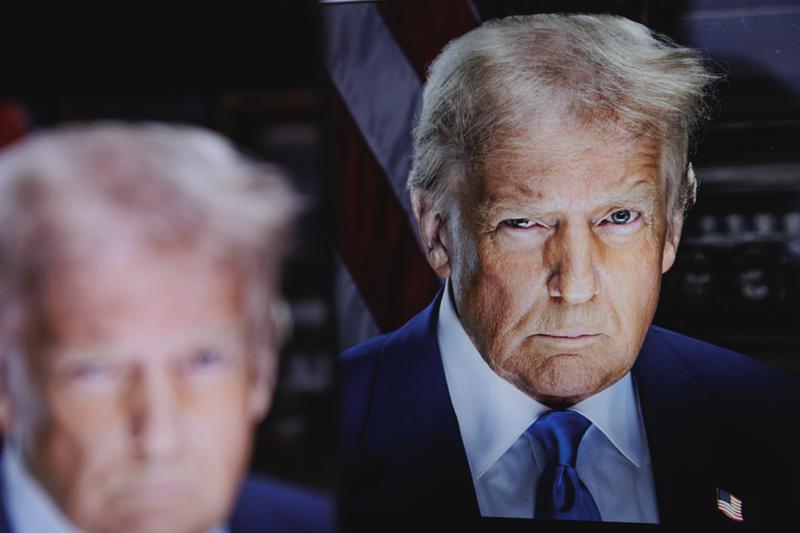
On Jan. 20, President Donald Trump issued a severe warning to Iran in an interview, stating that the country could face annihilation if its government continues to threaten him. This remark adds a new layer of tension to the already strained relations between Washington and Tehran during a period of increased regional instability.
The president, speaking from the Oval Office at the White House on Katie Pavlich Tonight on NewsNation, declared that Iran would face obliteration if anything happens to him. This statement, aired on Tuesday, Jan. 20, at 10 p.m. EST, further underscores the military response plans already in place.
These comments constitute some of the most explicit threats Trump has made against the Islamic Republic since reassuming office.
Katie Pavlich, a conservative commentator who started her show Katie Pavlich Tonight a day before the interview, managed to secure this high-profile discussion with the president. Pavlich, who spent over a decade as a Fox News contributor before moving to NewsNation, has appeared on programs with notable figures such as Sean Hannity, Laura Ingraham, and The Five.
Trump’s stern warning to Iran happens against a backdrop of ongoing hostility between Washington and Tehran, partly due to the 2020 killing of Iranian Gen. Qasem Soleimani. Ordered during Trump’s first term, the repercussions of this action continue to affect U.S.-Iran relations, with Iranian officials vowing revenge for Soleimani’s death.
Trump himself has been the target of domestic threats in various forms. An assassination attempt occurred at a Trump campaign rally in Pennsylvania in July 2024, followed by an armed suspect incident at his Florida golf course in September the same year. While U.S. intelligence agencies have warned of persistent Iranian threats against American officials, including the president, they have not publicly confirmed Iran’s direct involvement in these incidents.
In the interview, Trump criticized former President Joe Biden’s response to Iranian threats, suggesting that Biden did not react robustly enough to Tehran’s aggressive rhetoric.
Iran’s leaders have also issued warnings in recent months. Both Iranian President Masoud Pezeshkian and Supreme Leader Ayatollah Ali Khamenei have indicated that any attack on Iran’s leadership would provoke a significant response. Iranian Foreign Minister Abbas Araghchi warned that the U.S. should not expect restraint in the event of a military operation, citing the 12-day Iran-Israel war in June 2025 as an example of Iran’s readiness for prolonged conflict.
The June 2025 war between Iran and Israel marked a major escalation in Middle Eastern tensions, prompting the United States to deploy an aircraft carrier to the region. This move emphasized the U.S.’s continued military presence and readiness to respond to threats to its interests and allies.
In the interview, when questioned about protests in Minneapolis, Minnesota, related to Immigration and Customs Enforcement (ICE) activities, Trump stated that he was not prepared to invoke the Insurrection Act at this time. These comments followed the ICE-involved shooting of Renee Nicole Good on Jan. 7, which resulted in her death and ignited widespread demonstrations, drawing fresh attention to federal immigration enforcement tactics.
Trump indicated, however, that the Insurrection Act remains a possible option for future use, hinting at the potential for its invocation. This law allows presidents to deploy military forces domestically to suppress civil disorder or rebellion. Its deployment would represent a significant ramping up of the federal response to domestic unrest and is typically reserved for extreme circumstances.
The president also took the opportunity to criticize former CNN host Don Lemon and Rep. Ilhan Omar during the comprehensive discussion, which covered both international and domestic policy topics. The interview format allowed Trump to present his administration’s stances directly to viewers, bypassing traditional news conferences or official White House statements.
For Pavlich, securing an interview with the president in her first week at NewsNation was a significant achievement, demonstrating her continued access to top-tier newsmakers after leaving Fox News. The network is positioning itself as an alternative to established cable news outlets.
The escalating rhetoric between Washington and Tehran raises questions about whether either party intends to act on its threats or if these public warnings primarily serve as deterrence. Both governments face domestic political pressure to appear strong while avoiding a direct military confrontation that could lead to a wider regional war.
Trump’s approach to Iran appears to align with the maximum pressure strategy he employed during his first presidency, which included economic sanctions, diplomatic isolation, and the threat of military force. The success of this strategy in curbing Iranian behavior remains uncertain, especially given Tehran’s proven readiness to engage in proxy conflicts and its ongoing development of regional influence.