
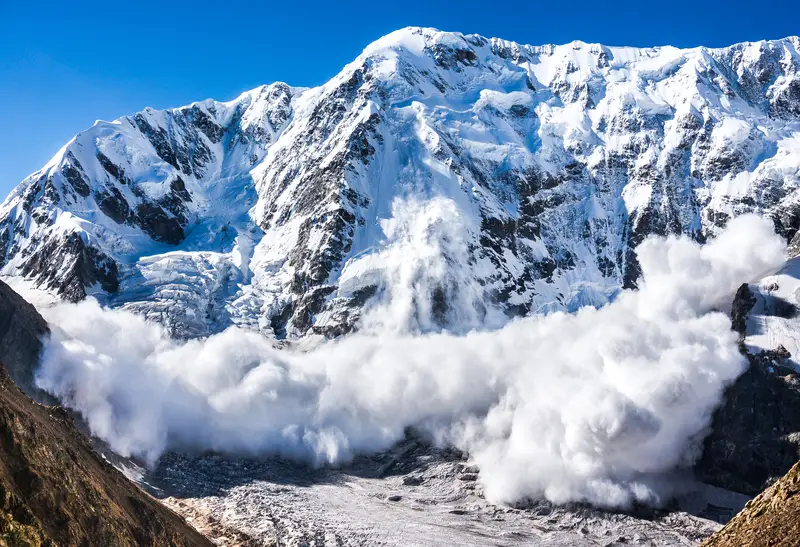
During the past weekend, the French Alps witnessed avalanches which resulted in the tragic loss of six skiers. These unfortunate events unfolded off-piste, even with explicit warnings from local authorities and weather forecasters about the hazardous snow conditions.
On Sunday, Jan. 11, 2026, three separate avalanches claimed the lives of three skiers, following three similar fatalities on Saturday, Jan. 10. One of the deceased was a British man in his 50s who succumbed at the La Plagne ski resort. He was swept off-piste by an avalanche and was buried under an estimated 8.2 feet of snow.
A search operation involving over 50 rescuers took place at La Plagne. Despite almost an hour of relentless searching, once the victim was found, he could not be resuscitated by the emergency services.
A separate avalanche at Courchevel on Sunday also claimed another skier’s life. The body of the buried skier was recovered by the rescue team.
The third victim on Sunday was a 32-year-old ski patroller from Chamonix, a father of two, who was skiing at Vallorcine in the Haute-Savoie region. The force of the avalanche propelled him into a tree, causing fatal injuries.
On Saturday, avalanches at two different resorts resulted in three deaths. At Val-d’Isère in the Savoie department, two skiers were buried under roughly 8.2 feet of snow and subsequently lost their lives. It was reported that the victims did not have avalanche transceivers – electronic equipment that can assist in locating those buried in snow.
Another skier was fatally trapped in an avalanche at the Arêches-Beaufort resort, in Savoie, along with a companion. A ski patroller observed the avalanche and swiftly located the trapped skiers. One was airlifted to a hospital, while the other was pronounced dead at the site. Resort chairman Jean-Pierre Mirabail acknowledged the gravity of the incident.
Beyond these six fatalities, other avalanches occurred over the weekend. A snowboarder was injured at Tignes on Saturday, and two brothers encountered an avalanche at Orelle during skiing.
These tragedies unfolded even though Météo France, the national weather service, had issued clear warnings about the elevated avalanche risk. A level four out of five avalanche warning was issued based on the European Avalanche Danger Scale, and advisories against off-piste skiing had been issued before the weekend.
On Sunday morning alone, officials in the Savoie department recorded at least six avalanches in ski areas. Level 4 avalanche warnings were active in several areas, including Maurienne, Vanoise, Beaufortain, and Tarentaise.
Marie Wencker, the chief of staff at the Savoie prefecture, criticized the skiers who ventured off-piste despite the evident risks. “What I want to emphasise is that by risking their lives, skiers who engage in activities that are currently unsuitable given the situation are also putting the entire rescue operation at risk, as they operate in sometimes difficult conditions,” she said.
Jean-Luc Boch, the mayor of La Plagne, highlighted that off-piste skiing is not illegal at French resorts. “The conditions were challenging for skiers attracted by pleasant weather and pristine snow conditions that masked underlying dangers,” he said.
Off-piste skiing—skiing outside marked and maintained trails—poses considerably higher avalanche risks, as these areas do not receive avalanche control management from resort ski patrols.
Avalanche transceivers, which the victims at Val-d’Isère did not carry, are vital safety equipment for backcountry and off-piste skiing. These devices emit a signal that allows rescuers to pinpoint buried victims much faster than visual searches alone. Quickness is crucial in avalanche rescues—the chances of survival drop dramatically after the first 15 minutes of burial due to potential trauma injuries and suffocation from compacted snow.
The European Avalanche Danger Scale, a five-level system, is used to convey the risk of avalanches to the public. The weekend saw a level 4 warning, indicating “high” danger where avalanches are likely and can be triggered by individual skiers.
The series of fatal avalanches over one weekend underscores how weather conditions can instigate widespread instability across an entire mountain region at the same time. When forecasters issue high-level warnings across multiple resorts and areas, the danger is systemic rather than localized to specific slopes.