
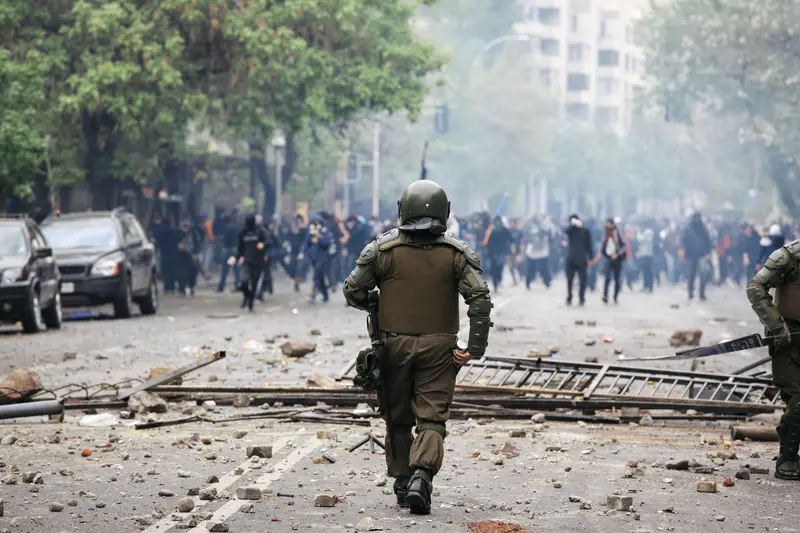
Violent protests against high inflation and economic hardships in Iran have led to the death of at least 51 people, including nine children, in the first thirteen days of demonstrations, according to human rights organizations.
These incidents took place over nearly two weeks and the death toll has significantly increased since a nationwide internet blackout was implemented by the Iranian authorities on January 8, 2026, a measure believed to conceal the actual scale of casualties.
By January 11, the death toll had risen dramatically, with Iran Human Rights confirming at least 192 protesters killed and U.S.-based Human Rights Activists News Agency (HRANA) estimating more than 500 people have been killed, with over 10,600 arrests recorded.
HRANA reported that 38 security personnel were among those killed during the protests. The violence and subsequent deaths have extended across multiple provinces as the unrest continues to grow.
Among the few identified victims, 23-year-old Rubina Aminian, a textile and fashion design student at Shariati College in Tehran, was shot in the head from close range on January 8. Sources close to her family stated that when they went to identify her body, they were confronted with hundreds of bodies of young people killed during the protests. Rubina’s mother said, “It wasn’t just my daughter; I saw hundreds of bodies with my own eyes.” The family was forced to bury her along the roadside after intelligence forces prevented a proper burial.
The protests started due to skyrocketing inflation, which reached 42.5% in December, placing a massive burden on Iranian households already suffering under Western economic sanctions.
The protests have now extended to all 31 provinces of Iran, indicating an unprecedented geographical spread of civil unrest. HRANA reports that by the end of the fourteenth day, protests had taken place in 574 locations across 185 cities in all 31 provinces. Major cities, including Tabriz, Urmia, Ardabil, Mashhad, and Isfahan, have seen demonstrations, with dozens of Iranian universities participating.
On January 8, 2026, as the protests intensified, Iranian authorities imposed a nationwide internet and telecommunications blackout. Internet monitoring organization NetBlocks confirmed that Iran experienced “a nationwide internet blackout” around 8:00 PM local time, with connectivity reduced by approximately 99%. Amnesty International denounced the shutdown, stating that “the Iranian authorities have once again deliberately blocked internet access inside Iran to hide the true extent of the grave human rights violations and crimes under international law they are carrying out.” The organization warned of more bloodshed under the cloak of the communications blackout.
Despite the blackout, some Iranians have managed to bypass restrictions using Starlink satellite internet. Experts estimate that 40,000 to 50,000 Starlink terminals are operating inside Iran, and on January 9, SpaceX activated Starlink service for the country. However, Iranian authorities have deployed military-grade jamming technology that disrupts 30% to 80% of satellite connections in various regions. Possession of Starlink terminals remains illegal under Iranian law, with sentences ranging from six months to two years for personal use, and potentially the death penalty if linked to espionage.
The protests were initially started by shopkeepers and merchants, but quickly spread to include university students and other sectors of society. The bazaars, historically important centers of trade and political influence in Iran, became the epicenter of the discontent. Major bazaars shut down as merchants refused to operate under the current economic conditions.
The protests coincide with a particularly challenging time for Iran’s leadership. Supreme Leader Ayatollah Ali Khamenei addressed the nation on January 9, labeling demonstrators as “saboteurs” who were “ruining their own streets” and stating he would not back down in the face of unrest. Following his remarks, Iranian authorities have escalated their crackdown, with the judiciary chief promising that punishment for protesters would be “decisive, maximum and without any legal leniency.”
In a significant escalation, on January 10, Iran’s attorney general warned that anyone participating in demonstrations could be considered an “enemy of God,” a charge that carries the death penalty under Iranian law. These threats mirror the government’s reaction to previous protests, which were followed by mass executions.
The Basij organization, also known as the Organization for Mobilization of the Oppressed, acts as a volunteer paramilitary force under the command of Iran’s Revolutionary Guards. The organization has traditionally been used to quell domestic unrest and maintain internal security. Its members come from various sections of Iranian society and receive military training to support the regime during periods of civil disorder.
Iranian authorities have tried to control the crisis through a combination of security measures and mixed messaging. President Masoud Pezeshkian has called for addressing protesters’ concerns and showing “utmost restraint,” even though he does not control Iran’s security forces. However, the dominant response has been increasingly violent, with security forces using live ammunition, tear gas, and mass arrests to suppress demonstrations.
International observers note that Iran’s economic challenges show no signs of immediate resolution. The sanctions framework remains in place, with limited prospects for substantial relief absent significant changes in Iran’s nuclear program or regional behavior. This structural reality suggests that the economic pressures fueling current protests will likely persist, potentially triggering additional waves of civil unrest.
Verifying casualty figures is complicated by the internet blackout and restrictions on independent reporting. State media provide limited information, while human rights organizations rely on networks within Iran to document casualties.
As the situation continues to evolve, the Iranian government faces tough choices on how to respond to the sustained civil unrest. Heavy-handed security measures risk exacerbating public anger, while economic concessions may be challenging to implement given the country’s limited fiscal resources and restricted access to international markets. The outcome of this clash between demonstrators and authorities will likely influence Iran’s political landscape for the foreseeable future.