
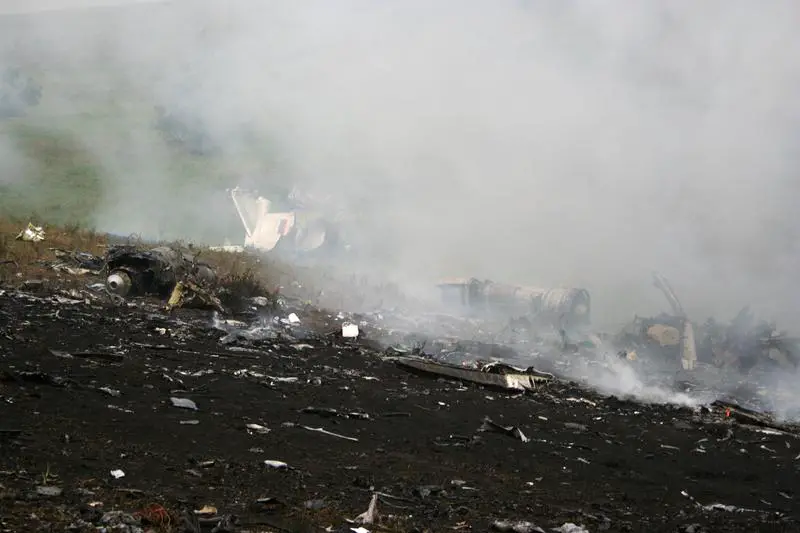
A devastating plane crash near Ankara, Turkey, claimed the lives of Libya’s army chief of staff and seven others, dealing a significant blow to efforts to stabilize the North African nation. Gen. Mohammed Ali Ahmed al-Haddad, Libya’s highest-ranking military officer, died along with four other senior military officials and three crew members when their Falcon 50 business jet crashed in the Haymana district on December 23, 2025.
The aircraft departed from Esenboga International Airport at 8:10 pm local time on Tuesday, bound for Tripoli, Libya. Within minutes of takeoff, the situation turned critical. At 8:33 pm, the crew informed air traffic control of an emergency caused by an electrical malfunction and requested an emergency landing. Air traffic control redirected the aircraft back toward Esenboga International Airport and initiated emergency measures, but the jet disappeared from radar at 8:36 pm while descending for the emergency landing.
The crash site was located near Kesikkavak village, approximately 70 kilometers south of Ankara. Turkish search and rescue teams worked through the night to reach the wreckage. There were no survivors among the eight people on board.
Among the dead were some of Libya’s most senior military leaders. Gen. Al-Fitouri Ghraibil, an advisor to the chief of staff, and Brig. Gen. Mahmoud Al-Qatawi also perished in the crash. Three crew members died alongside the five military officers. The jet was registered in Malta.
The delegation had been returning from defense talks in Ankara. Libyan Prime Minister Abdul-Hamid Dbeibah confirmed the deaths and described the incident as a technical malfunction. “It is with deep sadness and great sorrow that we learnt of the death of the Libyan army’s chief of general staff, Lieutenant General Mohammed al-Haddad,” Dbeibah said, calling the incident a “tragic accident.”
Multiple ceremonies have honored the fallen military leaders. Turkey held a military ceremony at Murted airbase outside Ankara. Turkish military chief Selcuk Bayraktaroglu and Defense Minister Yasar Guler attended the ceremony before five coffins draped in Libyan flags were loaded onto a plane for repatriation. Bayraktaroglu accompanied the bodies back to Libya.
Libya held a military ceremony at the Defence Ministry in Tripoli, Libya, for the victims after the bodies arrived from Turkey. On Sunday, December 28, 2025, hundreds of people attended a funeral ceremony in Misrata, Libya, the hometown of several victims. The coffins were brought into a stadium, where Prime Minister Abdul-Hamid Dbeibah and other military and political leaders paid their respects.
The loss of al-Haddad represents a significant setback for Libya’s fragile political landscape. The general was a key figure in United Nations-brokered efforts to unify the country’s divided armed forces. His death has drawn condolences even from rival factions within the deeply fractured nation.
Khalifa Haftar, head of eastern Libya’s rival administration whose forces al-Haddad opposed during a 2019 advance on western Libya, was among those who extended sympathies. In a statement, Haftar expressed “deep sorrow over this tragic loss” and offered condolences to al-Haddad’s family and “to all the Libyan people.”
Libya has remained in turmoil since the 2011 uprising that toppled and killed longtime dictator Muammar Gaddafi. The country remains split between rival administrations in the east and west, each backed by armed groups and foreign governments. The western government is led by Prime Minister Abdul-Hamid Dbeibah in Tripoli, Libya, while the eastern administration operates separately.
Turkey has emerged as the main backer of Libya’s western government, but has recently taken steps to improve ties with the eastern-based administration as well. The defense talks in Ankara, Turkey, that preceded the fatal crash were part of ongoing efforts to strengthen bilateral military cooperation.
Turkish Interior Minister Ali Yerlikaya and Burhanettin Duran, head of Turkey’s Presidency Communications Directorate, have been coordinating the investigation into the crash. The probe is ongoing, with both Turkish and Libyan authorities working together to determine the exact cause of the technical malfunction that led to the electrical emergency.
The difficulty in replacing al-Haddad cannot be overstated. The general was widely respected across Libya’s divided political landscape, even among those he had fought against. His reputation as a unifying figure and his role chairing a UN-backed truce committee made him uniquely positioned to bridge the country’s deep divisions.
Finding a successor with similar credibility will pose a major challenge for Libya’s western government. The vacuum left by al-Haddad’s death could complicate ongoing efforts to reconcile the country’s competing factions and work toward a unified military command structure.
As investigations continue, both Libya and Turkey are focused on understanding what went wrong in those critical 26 minutes between the emergency call and the loss of radar contact. The findings could have implications for future official travel protocols and aircraft maintenance standards for jets used in diplomatic and military missions.
The tragedy has united Libyans across political divides in mourning. From Tripoli, Libya, to Misrata, Libya, and across the eastern regions, citizens have expressed grief over the loss of military leaders who, despite the country’s divisions, were seen as working toward national reconciliation. The coming weeks will reveal whether this shared tragedy can serve as a catalyst for renewed dialogue between Libya’s competing factions or whether the loss of such a key mediating figure will deepen existing divisions.