
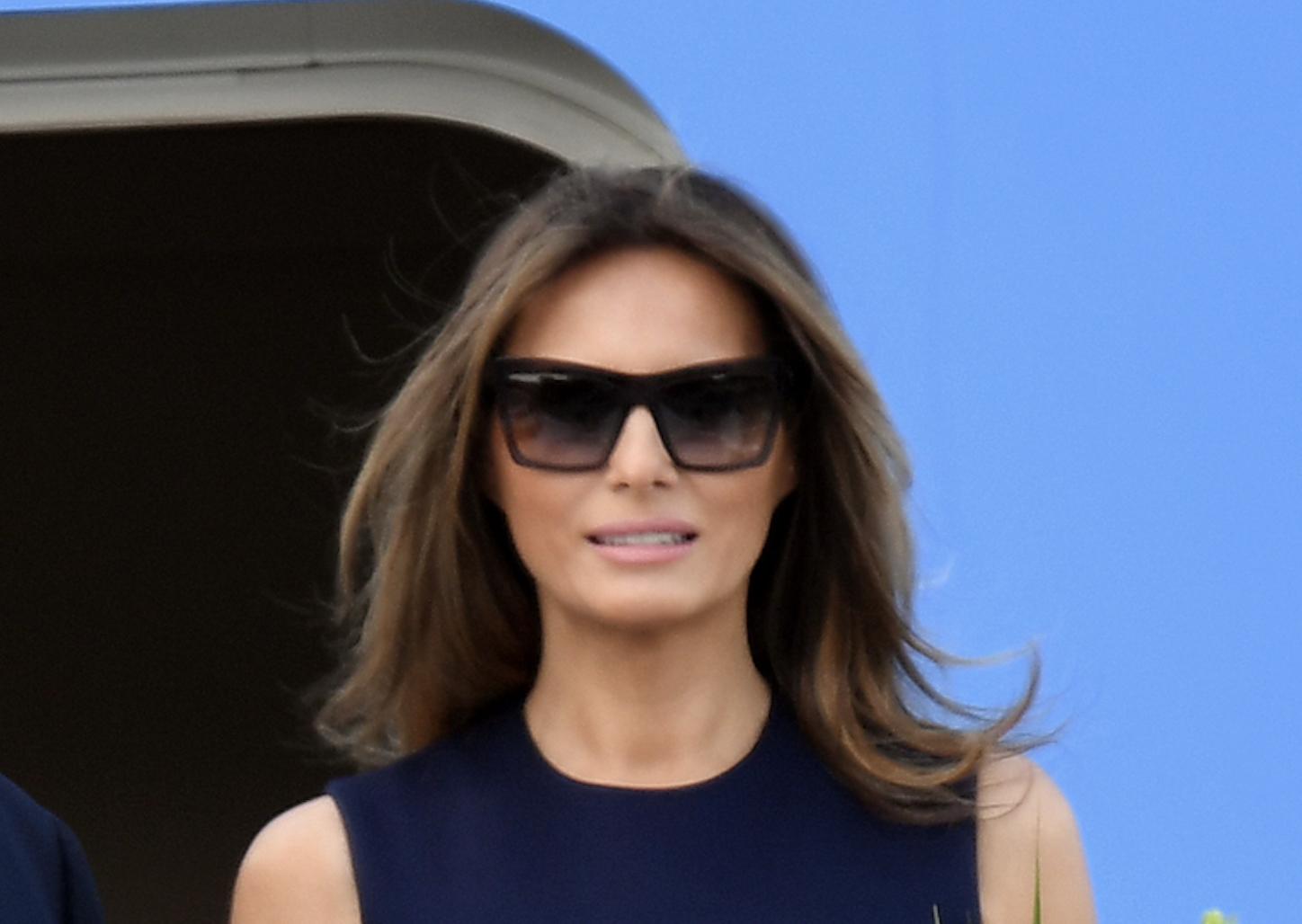
During a speech on Monday, January 6, 2026, President Donald Trump divulged that First Lady Melania Trump is not in favor of two of his most distinctive stage performances: his rally dancing routine and impressions mimicking weightlifters, a tactic employed to criticize transgender athletes in women’s sports.
Addressing House Republicans in a private retreat at the Kennedy Center in Washington, D.C., Trump portrayed his wife as “very classy.” He shared how she repeatedly expressed her disapproval of his theatrical antics. According to Trump, Melania had questioned the appropriateness of a president dancing, pondering if one could visualize Franklin D. Roosevelt dancing.
Trump countered this by highlighting a context his wife might have missed. He acknowledged that FDR was indeed elegant but would not be seen dancing, given that Roosevelt was wheelchair-bound due to polio. Roosevelt’s disability is well-known, although he made significant efforts to limit public knowledge of his condition during his presidency.
The president’s signature dance routine, typically performed to the tunes of the Village People’s “YMCA” or Lee Greenwood’s “God Bless the USA,” became a staple of his public appearances during the 2024 campaign rallies. The dance, complete with fist pumping and arm shimmying, often features Trump pointing at crowd members.
“Everybody wants me to dance,” Trump relayed his words to Melania. “The place goes crazy.”
However, the first lady remained unpersuaded. She hinted to Trump that his supporters were merely being polite and did not actually enjoy it. Trump firmly dismissed this notion, asserting to the Republican lawmakers that crowds eagerly await his dance routine.
Trump had previously spoken of Melania’s disapproval at a 2023 event in Iowa, suggesting that this disagreement between the couple is not a recent development. Despite her reservations, Trump pointed out that he rose to the presidency while incorporating these routines into his campaign, indicating that they did not impede his political ascent.
The weightlifting impression, which Trump uses to criticize the participation of transgender athletes in women’s sports, received more severe criticism from the first lady. This issue has been a political hot topic in recent years.
Trump performed the weightlifting impression during the GOP retreat while discussing transgender athletes. After a brief demonstration, he proceeded to exaggerate the act, sticking out his tongue, panting heavily, and feigning exhaustion before pretending to drop an imaginary barbell. According to Trump, Melania called the weightlifting impression “terrible.”
At the conclusion of his extensive speech, Trump once again defied Melania’s counsel and launched into his signature dance, prompting applause from the Republican lawmakers. This incident provided a glimpse into the dynamic relationship between the president and the first lady, revealing the tension between Trump’s flair for spectacle and Melania’s preference for traditional presidential decorum.
The first lady’s concerns about presidential dignity echo longstanding debates about the appropriate behavior for the nation’s top office. Historical presidents have exhibited a wide range of public personas, from formal austerity to relaxed approachability.
Today’s presidents contend with a radically different media landscape than Roosevelt’s time, with constant camera coverage and social media amplifying every public moment. Trump has adjusted to this environment by creating viral moments through his unconventional behavior, despite criticism from those advocating for a more traditional presidential demeanor.
Despite Melania’s expressed disapproval of his stage performances, Trump showed no signs of discontinuing the routines that have become integral to his political image. The clash between the president’s theatrical tendencies and the first lady’s concerns about presidential dignity seems set to persist as Trump continues his unorthodox approach to the office.
The Kennedy Center retreat provided Republicans with a chance to strategize for the 2026 midterm elections.