
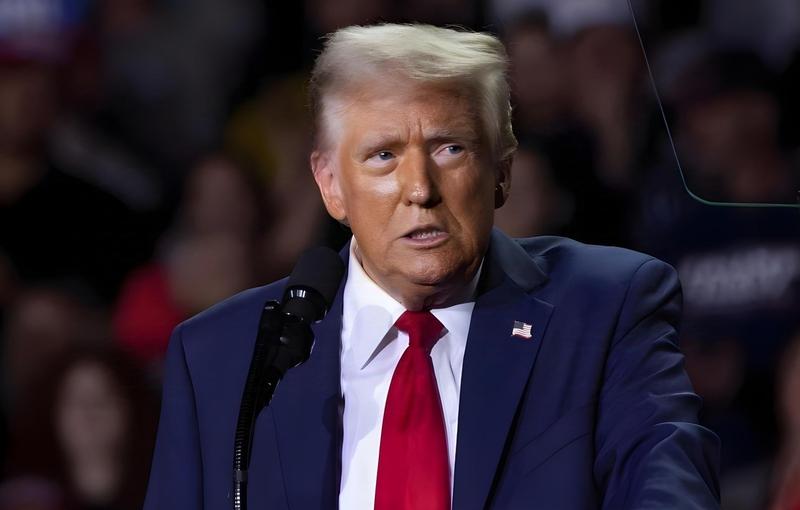
President Donald Trump falsely denied making a comment on camera that he had made days earlier, then launched a personal attack against the reporter who accurately quoted his previous statement. The incident occurred at the White House on Dec. 3 and centered on video footage of a US military strike against a suspected drug-smuggling boat in the Caribbean.
The Sept. 2 military operation targeted a drug boat off the coast of Venezuela. After the initial strike, a follow-up strike was conducted to kill survivors from the first attack. While the Trump administration publicly released video of the initial strike, footage of the follow-up strike has only been shown to members of Congress behind closed doors.
The controversy began when ABC News reporter Selina Wang asked Trump about the unreleased footage. She questioned whether he would release the second video so the American people could see what happened. Trump responded that he didn’t know what footage existed, but indicated no problem with releasing whatever video was available.
Days later, on December 8, another ABC News reporter, Rachel Scott, attempted to follow up on Trump’s statement. When she repeated his comment back to him while trying to ask about the potential video release, the president denied he had said it. Scott noted that Defense Secretary Pete Hegseth says the question of releasing the video is being reviewed, and she asked if Trump was ordering its release.
Trump told Scott that whatever Hegseth decides is acceptable to him. The president then defended the strikes, repeating his claim that each boat destroyed saves 25,000 American lives. He argued that the survivors were attempting to turn the boat back to where it could float, and the administration didn’t want to allow that because the vessel was loaded with drugs.
When Scott tried to return to the issue of releasing the video, Trump called her the most obnoxious reporter in the whole place and a terrible reporter. He also characterized ABC as fake news during the exchange. CNN fact-checker Daniel Dale reported that “Trump denies saying something he said on camera five days ago.”
The pattern of Trump denying statements he made in public has occurred throughout his political career. Such incidents raise questions about accountability and the relationship between the president and the media, particularly when video evidence directly contradicts his denials. The press serves as a crucial check on executive power, and accurate reporting depends on officials acknowledging their own statements.
Another ABC News journalist, Jonathan Karl, publicly confirmed that Scott had quoted Trump accurately. The verification from a colleague at the same network underscored the accuracy of Scott’s reporting and the falseness of Trump’s denial. As CNN noted in its analysis, “Trump’s first year back in office contradicts his ‘free speech’ commitments.”
The incident highlights ongoing tensions between the Trump administration and the news media. Reporters frequently face challenges when attempting to hold the president accountable for his statements, particularly when those statements shift or are later denied. The presence of video evidence makes this particular case especially notable, as it provides clear documentation of what was said.
The September military strikes themselves remain controversial, particularly the follow-up operation that targeted survivors. The administration’s decision to release only one video while keeping the other classified has fueled public interest and congressional scrutiny. Members of Congress who have viewed the classified footage have not publicly disclosed its contents, though the fact that it was shown behind closed doors suggests potentially sensitive material.
Trump’s claim about saving 25,000 American lives per boat destroyed is a frequent assertion from the president, though it lacks independent verification. The statistic appears to be part of the administration’s broader justification for aggressive interdiction operations in the Caribbean and other drug-trafficking routes.
The exchange demonstrates the challenges journalists face when covering an administration where statements are sometimes denied shortly after being made. Video documentation has become increasingly important in political reporting, providing evidence that can contradict later denials or memory lapses. In this case, the brief gap between Trump’s initial statement and his denial was remarkably short, even by contemporary political standards.
The incident occurred as the Trump administration continues to face questions about transparency and access to information. The distinction between what video footage is released publicly versus what is shown only to Congress reflects broader debates about government accountability and the public’s right to know about military operations conducted in their name.
The confrontation with Scott adds to a long history of contentious exchanges between Trump and reporters, particularly those from outlets he has characterized as hostile to his administration. Personal attacks on journalists who ask difficult questions have become a recurring feature of Trump’s interactions with the press, raising concerns among media advocates about the climate for journalism during his presidency.