
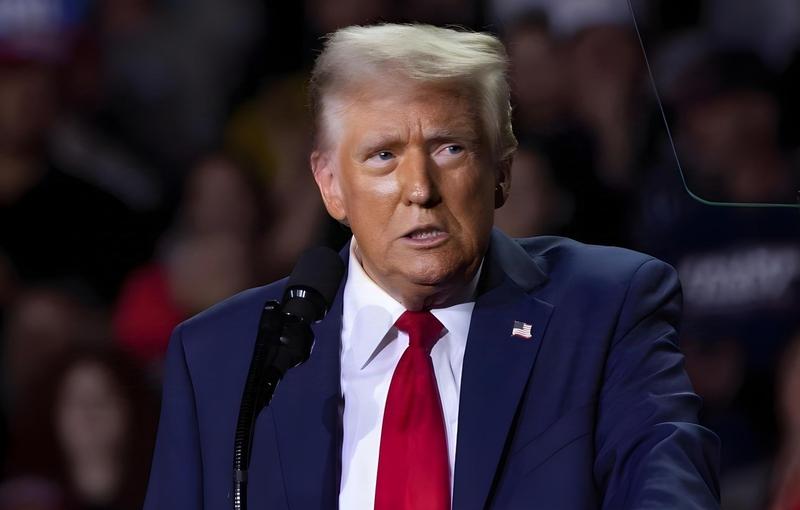
President Donald Trump’s primetime address on Wednesday night, Dec. 17, 2025, sparked an unusual moment of unity among political commentators: widespread criticism from both sides of the aisle over what many called a rambling, substance-free speech.
Conservative podcaster Matt Walsh delivered perhaps the harshest assessment, writing on X: “That was perhaps the most pointless primetime presidential address ever delivered in American history.” His post quickly went viral, receiving over 1 million views as Americans across the political spectrum expressed similar frustration with the address.
Former cable host Keith Olbermann echoed Walsh’s sentiment, also calling the speech pointless in his own post on social media. The rare agreement between the conservative commentator and liberal pundit highlighted just how poorly the address resonated with viewers, regardless of their political leanings.
The speech covered familiar territory for Trump, focusing heavily on the economy and inflation while blaming the previous Democratic administration for the nation’s challenges. Critics noted that much of the content felt recycled, with the president repeating talking points that had become standard fixtures of his public appearances rather than offering new policy initiatives or concrete updates.
Tim Miller dismissed the address as “dumb and pointless,” while Harry Sisson criticized Trump’s delivery and coherence. Even libertarian outlet Reason, while calling it a “pointless speech,” suggested it was nonetheless “the best we could have hoped for,” a backhanded compliment that underscored the low expectations surrounding the address.
According to sources, Matthew Keys characterized the speech in terms that suggested it lacked the gravity expected of a presidential address, comparing it to content more appropriate for informal social media posts rather than a formal communication to the nation.
Jonathan Chait joined the chorus of critics, mocking the premise of the address and questioning why it warranted primetime coverage. The widespread criticism from conservatives and liberals alike demonstrated a rare moment where political observers agreed the speech lacked substance, with many characterizing it as more of a long rant or victory lap than a serious update to the American people.
The address did include one significant announcement: Trump revealed plans for a “warrior dividend” bonus payment to military service members. Approximately 1.45 million eligible troops from the Army, Air Force, Marine Corps, Navy and Coast Guard would receive $1,776 each before Christmas. The symbolically chosen amount references the year of American independence and aims to provide holiday financial support to service members, primarily at lower and mid-level ranks.
The payments will be funded through a $2.9 billion military housing allowance budget that Congress previously approved. Trump framed the bonus as recognition for military personnel, though the announcement represented only a small portion of the overall speech that many found underwhelming.
Presidential addresses typically serve to inform the public about critical policy changes, national emergencies or significant developments requiring immediate attention. They offer presidents an opportunity to speak directly to Americans about matters of national importance, bypassing the usual media filters and commentary that accompany routine political communication.
The negative reaction to Wednesday’s address suggests many viewers felt it failed to meet that threshold. Rather than presenting urgent new information or outlining clear policy directions, critics argued the speech retreaded familiar ground without offering meaningful substance or direction. The combination of recycled talking points, attacks on political opponents and what observers characterized as rambling delivery left many questioning whether the address warranted interrupting regular programming.
The bipartisan nature of the criticism proved particularly notable in an era of deep political polarization. While conservatives and liberals rarely agree on Trump’s performance or policies, Wednesday’s address managed to unite disparate voices in shared frustration over what they viewed as a missed opportunity to address the nation with purpose and clarity.
For a president who has long prioritized television ratings and public spectacle, the lukewarm reception across the political spectrum represented an unusual stumble. Whether the criticism will influence Trump’s approach to future addresses remains unclear, though the overwhelming consensus suggests this particular speech failed to resonate with its intended audience, regardless of their political affiliation.