
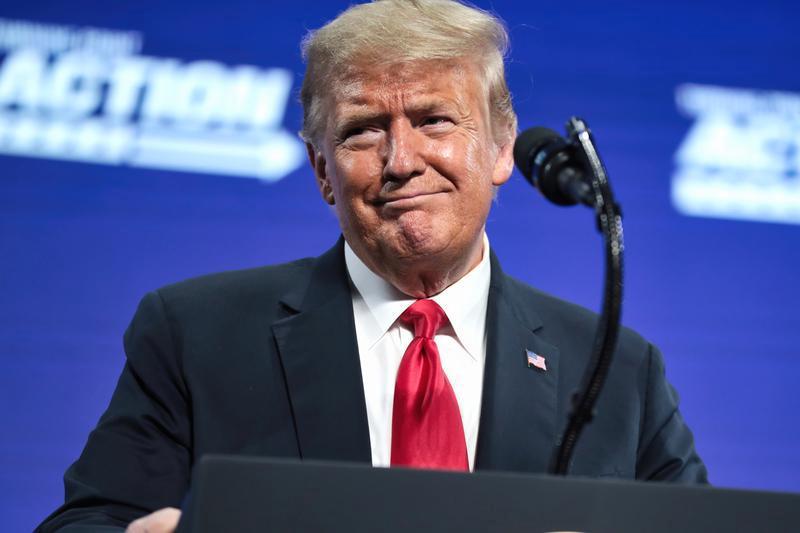
President Donald Trump’s name now adorns the United States Institute of Peace headquarters in Washington, DC, marking a controversial turn for an independent agency his administration has spent months trying to dismantle. The renaming, announced on Wednesday, Dec. 3, 2025, transforms the federally funded institution into the Donald J. Trump Institute of Peace, a move that has drawn sharp criticism from former officials and legal representatives.
The State Department shared photos of the building’s new facade on social media, calling Trump “the greatest dealmaker in our nation’s history.” Secretary of State Marco Rubio defended the decision, stating that Trump will be remembered by history as the President of Peace and suggesting it was time for the State Department to reflect that legacy. The president participated in a signing ceremony at the newly renamed building on Thursday to mark a peace agreement between the presidents of Rwanda and the Democratic Republic of Congo, following an earlier peace deal signing between the two nations in June.
Trump acknowledged the honor during Thursday’s event, noting the name change had generated significant attention. He expressed appreciation for having his name displayed on the building, calling it a great honor. The timing of the renaming coincides with ongoing legal battles over control of the institute itself, raising questions about the administration’s authority to make such changes while litigation continues.
The US Institute of Peace has existed since Congress established it in 1984, serving as a nonpartisan independent agency dedicated to promoting peace internationally and resolving violent conflicts. According to the research arm of Congress, the agency has served as an intermediary among foreign governments, civil society and US government officials, working in conflict zones with stakeholders at various levels to connect different peace initiatives. The institute operated with an annual budget of approximately 50 million dollars.
The Trump administration’s efforts to eliminate the institute began in March 2025, when most of the institution’s staff was let go. The Department of Government Efficiency attempted to forcibly obtain access to the building that month, later returning accompanied by police. The administration also terminated the institute’s board members during this period, leaving only three ex officio members: Defense Secretary Pete Hegseth, Secretary of State Marco Rubio and National Defense University President Peter Garvin.
A federal judge blocked the dismantling of the institute in May 2025, ruling against the administration’s takeover efforts. However, an appeals court reversed that decision in June, allowing the government to maintain control. The appeals court panel determined that the president faces irreparable harm from not being able to fully exercise his executive powers, adding that because the Institute exercises substantial executive power, the government is likely to succeed on its claim that the board’s removal protections are unconstitutional. An appeals court hearing on the merits had been scheduled for December but has been postponed.
Control of the institute’s building has been transferred to the General Services Administration, which manages federal buildings. Employees who initially received termination notices in late March were formally terminated in July. The institute’s website has been stripped of much of its content, marking a dramatic shift for an organization that previously provided extensive public foreign policy analysis.
George Foote, an attorney representing former leaders and staff of the institute, strongly criticized the administration’s actions. “Renaming the USIP building adds insult to injury,” Foote said. He noted that a federal judge had already ruled the government’s armed takeover was illegal, and that judgment is stayed only while the government appeals. Foote expressed confidence that the rightful owners will ultimately prevail and restore the US Institute of Peace and the building to their statutory purposes.
White House spokesperson Anna Kelly defended the renaming, characterizing the original institute as a bloated, useless entity. She argued that the newly renamed Donald J. Trump Institute of Peace, named after a president who she claims ended eight wars in less than a year, will stand as a powerful reminder of what strong leadership can accomplish for global stability. The president has repeatedly touted his role during his second term in helping to resolve multiple conflicts, arguing it should earn him the Nobel Peace Prize.
Trump has claimed this week that he has ended eight wars, including conflicts between the Democratic Republic of Congo and Rwanda, Pakistan and India, and Israel and Hamas. However, there is no consensus on the number of conflicts the president has brought to an end. Fighting has continued between Israel and members of Hamas in Gaza amid what has been described as a shaky ceasefire, and Trump has complained that resolving the Ukraine-Russia war has been a challenge.
The administration’s budget request for the next fiscal year called for the elimination of federal funding for the institute. Since USIP is not technically a federal agency and owns and manages its own headquarters, the takeover of the building and its assets has created complex legal questions that remain unresolved. A former institute official commented on the situation, noting the irony of Trump putting his name on an institution he destroyed.
The renaming represents one of several instances where Trump has attached his name to government properties and initiatives during his presidency. The move comes as the administration continues to reshape federal agencies and institutions, often facing legal challenges to its authority. The final resolution of who controls the institute and its building remains pending in federal appeals court, where a decision will determine whether the Trump administration’s actions were constitutional and whether the original mission of the US Institute of Peace can be restored.