
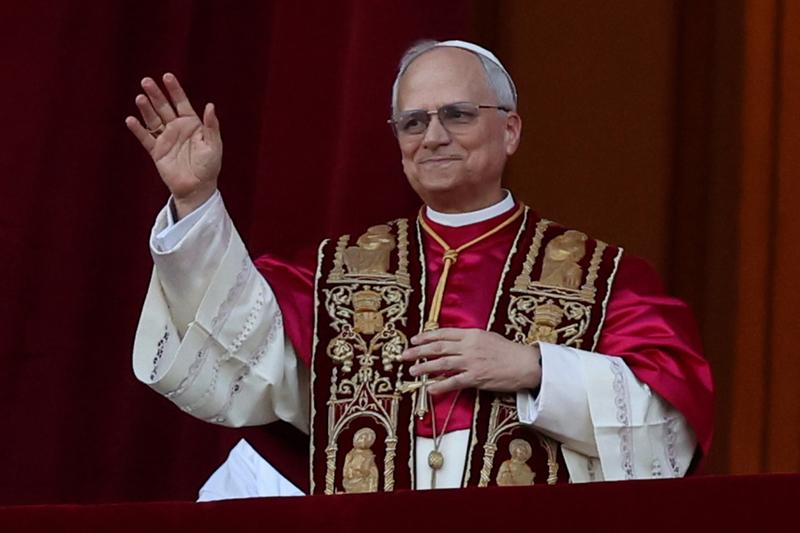
Pope Leo XIV delivered a forceful message on Tuesday, Dec. 9, 2025, insisting that Europe must play an essential role in any peace agreement to end the war in Ukraine. Speaking to reporters after meeting with Ukrainian President Volodymyr Zelenskyy at Castel Gandolfo, the Pope’s vacation home south of Rome, the American pope criticized what he characterized as the Trump administration’s effort to “break apart” the longstanding U.S.-European alliance.
The meeting with Zelenskyy, the third between the two leaders, occurred as the Ukrainian president continues touring Europe to rally support for Kyiv in its ongoing conflict with Russia. During their discussions, the pope and Zelenskyy addressed the urgent need for a ceasefire and reviewed the Vatican’s efforts to facilitate the return of Ukrainian children taken by Russian authorities.
When questioned about U.S. peace proposals and the apparent sidelining of European powers in the diplomatic process, Pope Leo was unequivocal in his response. “Seeking a peace agreement without including Europe in the talks is unrealistic, given the war is in Europe,” he said as he departed his vacation home. He emphasized that security guarantees being sought for both the present and future necessitate European participation, adding that not everyone fully understands this reality.
The pope’s remarks came in response to broader questions about the Trump administration’s approach to the U.S.-European relationship. Just last week, the administration released its U.S. national security strategy, which questions the traditional U.S.-European alliance while emphasizing a desire to improve relations with Russia. Pope Leo indicated that what he had read would represent a fundamental shift in what has been a true alliance between Europe and the United States for many years.
Addressing President Trump’s comments on the matter, the pontiff noted that some statements suggest an effort to dismantle what he believes should remain a vital alliance both now and in the future. “I think there is a great opportunity for European leaders to unite and seek a solution together,” Pope Leo stated. While acknowledging that some Americans may support this shift in policy, Pope Leo observed that many others would likely view the situation differently.
President Zelenskyy has described a peace framework consisting of three separate documents currently under discussion with U.S. and European partners. These include a 20-point framework document outlining the overall agreement structure, a second document detailing security guarantees, and a third addressing Ukraine’s recovery and reconstruction needs.
The Holy See has maintained a carefully balanced position throughout Russia’s war in Ukraine, attempting to remain neutral while offering solidarity and concrete assistance to what it describes as the “martyred” people of Ukraine. This diplomatic approach has involved engagement with leaders on both sides of the conflict. Pope Leo has spoken by telephone at least once with Russian President Vladimir Putin, and his meeting with Zelenskyy marked their third encounter.
The American pope has consistently called for a ceasefire and specifically urged Russia to make gestures that would promote peace. Beyond diplomatic efforts, the Vatican has worked actively to secure the return of Ukrainian children removed by Russian authorities during the conflict. Last month, Pope Leo met with some of these returned children at the Vatican, demonstrating the Holy See’s commitment to humanitarian concerns amid the broader geopolitical tensions.
The pope’s comments reflect growing concern in Europe about the direction of American foreign policy under the Trump administration. The traditional transatlantic partnership, which has been a cornerstone of Western security architecture since World War II, faces questions about its future configuration. European leaders have expressed anxiety about potential changes to this relationship, particularly as the war in Ukraine continues with no immediate end in sight.
Pope Leo emphasized that European leaders have a significant opportunity to unite and seek solutions together, suggesting that collective action among European nations could be crucial in shaping any eventual peace settlement. His statement underscores the Vatican’s position that lasting peace in Ukraine cannot be achieved without meaningful European involvement in both the negotiation process and any security arrangements that follow.
The pontiff’s intervention adds a significant moral and diplomatic voice to the debate over how to end the conflict in Ukraine. As the first American pope, Leo’s criticism of the Trump administration’s approach carries particular weight, representing both a religious leader’s perspective on peace and an American’s concern about his country’s foreign policy direction.